How to Choose a Micellar Water for Rosacea
Rosacea skin flushes at the smallest provocation, so the appeal of micellar water is obvious: it cleans without hot water, foaming detergents or the scrubbing that sends reactive vessels into a flare. Yet the cotton pad itself is a trigger the marketing rarely admits, and any surfactant left sitting on an already-compromised surface can prickle. This page sets out the profile that keeps a micellar water genuinely calming for rosacea, the additives most likely to provoke a flush, and the technique that removes makeup without friction. We describe ingredient profiles instead of ranking brands, because a rosacea-prone face responds to what is in the bottle, not to the name on it.
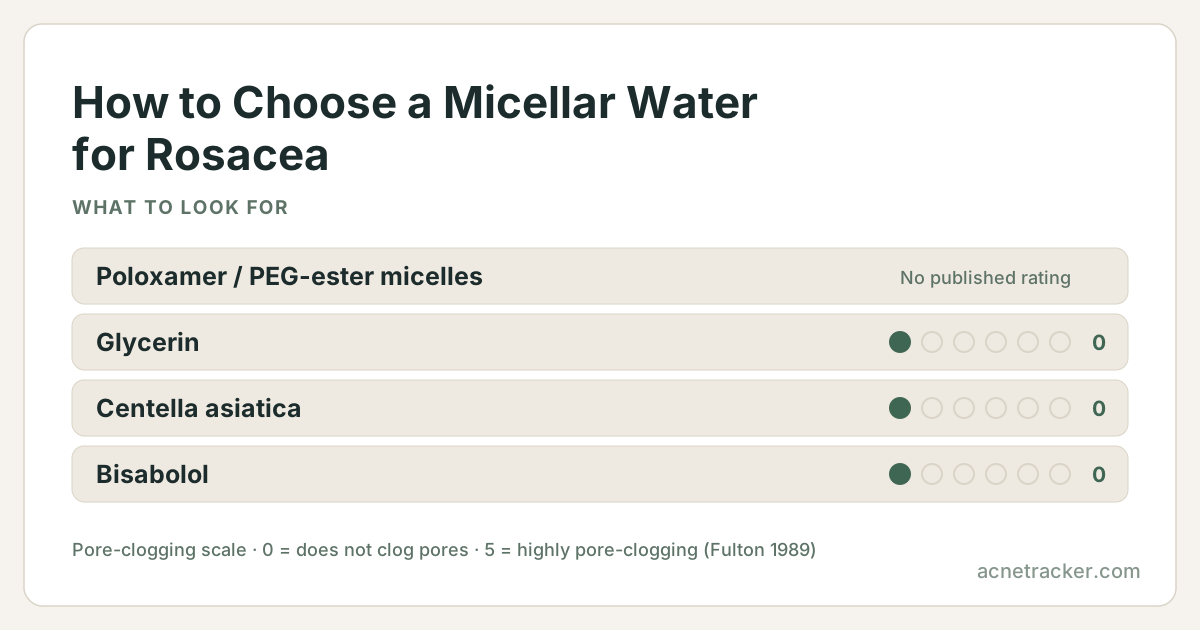
Ingredients to look for
| Ingredient | Why it matters |
|---|---|
| Poloxamer / PEG-ester micelles | The non-ionic surfactants doing the cleaning; at low strength they lift makeup without the lipid-stripping that provokes a rosacea flush. |
| Glycerin | A humectant that keeps the surface soft and comfortable, offsetting the faint tug of the surfactant on thin, reactive skin. |
| Centella asiatica | A botanical linked to calmer, less reactive skin, well suited to a leave-on product used on flush-prone cheeks. |
| Bisabolol | A chamomile-derived calming agent that suits skin quick to redden from routine cleansing. |
| Allantoin | A mild soother that eases the feeling of irritation and pairs well with the low-fragrance formulas rosacea needs. |
| Panthenol | Provitamin B5 that supports the barrier, valuable when the product stays on reactive skin without a rinse. |
Ingredients to avoid
| Ingredient | Why it matters |
|---|---|
| Added fragrance and essential oils | Perfume is a leading rosacea trigger and does nothing to clean; on flush-prone skin it is pure risk. |
| Denatured alcohol high on the list | It evaporates fast and can sting, provoking the exact warmth and redness rosacea skin is trying to avoid. |
| Menthol, camphor and 'cooling' agents | The cool tingle is neurosensory irritation that reads as a flush signal to reactive vessels. |
| Rough or reused cotton pads | Friction, not just chemistry, sets off rosacea; a dry or coarse pad dragged across the cheeks is a mechanical trigger. |
How to choose
Judge a rosacea micellar water by how little it tries to do beyond cleaning. The functional core is short: water, one or two poloxamer/PEG-type surfactants, a humectant such as glycerin, and a preservative. Everything past that — fragrance, colourant, warming or cooling extras — is a gamble on skin that flares easily, so favour the plainest formula you can find with a credible fragrance-free claim rather than merely 'unscented'. Steer clear of alcohol-forward versions, recognisable when alcohol denat sits near the top of the list. A faintly milky, mildly hydrating micellar water tends to sit better than a fast-drying watery one, because the trace it leaves is a humectant rather than raw surfactant. Calming botanicals like centella or bisabolol are a reasonable bonus, but they do not treat rosacea and should never distract from the priority: no fragrance, no alcohol sting, no cooling agents. Trial it on one cheek for several days and watch for warmth or stinging before committing to daily use.
How to apply
Soak the pad until it is genuinely wet — a dry pad dragged over rosacea-prone cheeks is a friction trigger in its own right. Rest it flat against the skin for a few seconds so the micelles loosen makeup, then glide once in a single direction; never scrub back and forth across the flush-prone zones. Swap to a fresh pad rather than pressing harder. Because lingering surfactant can prickle inflamed skin, a brief cool-to-lukewarm water rinse afterwards is sensible, especially before applying any prescription rosacea treatment. Pat dry and moisturise while the skin is still damp.
Frequently asked questions
Is micellar water good for rosacea?
It can be, because it cleans without hot water, foaming detergents or scrubbing — three common rosacea triggers. The catch is the cotton pad: wipe gently in one direction and choose a fragrance-free, alcohol-light formula, or the friction and additives can undo the benefit.
Can micellar water reduce rosacea redness?
No. Micellar water is a gentle cleanser, not a treatment; it will not shrink visible vessels or calm a flare on its own. Choosing a non-irritating one simply avoids adding to the redness, which is the most cleansing can do for rosacea.
Should I rinse micellar water off rosacea skin?
A light cool rinse afterwards is usually wise, because leftover surfactant can prickle inflamed skin and interfere with prescription creams. Leaving it on is tolerable on low-reactivity days, but rinsing is the safer default for rosacea.
Which micellar water ingredients trigger rosacea flushing?
Fragrance, essential oils, denatured alcohol and cooling agents like menthol are the usual culprits. Each provokes the neurosensory or vascular response behind a flush, so a stripped-back fragrance-free formula is the reliable choice for rosacea.
Is the cotton pad or the formula worse for rosacea?
Both matter, but friction is underrated: a coarse, dry or reused pad mechanically irritates flush-prone skin regardless of how gentle the liquid is. Saturate the pad, wipe once, and let the micelles do the work instead of pressure.
Sources & further reading
There is no single study of this exact question. The guidance here is reasoned from the ingredient profiles below, each of which carries its own references:
- Glycerin3 refs
- Centella Asiatica2 refs
- Bisabolol3 refs
- Allantoin3 refs
- Panthenol3 refs
Show every reference behind this page (10)
- PubChem — Glycerol compound summarycited by Glycerin
- DermNet — Moisturiserscited by Glycerin
- European Commission CosIng database — Glycerincited by Glycerin, Centella Asiatica, Bisabolol, Allantoin, Panthenol
- Bylka W et al. Centella asiatica in dermatology: an overview. Phytother Res 2014 Aug (PubMed)cited by Centella Asiatica
- PubChem — Bisabolol (CID 1549992)cited by Bisabolol
- RIFM fragrance ingredient safety assessment, α-bisabolol, CAS registry number 515-69-5 (PubMed)cited by Bisabolol
- PubChem — Allantoin compound summarycited by Allantoin
- Final report of the safety assessment of allantoin and its related complexes (PubMed)cited by Allantoin
- PubChem — Panthenol compound summarycited by Panthenol
- Safety Assessment of Panthenol, Pantothenic Acid, and Derivatives as Used in Cosmetics (PubMed)cited by Panthenol
Medical disclaimer
Ingredients mentioned on this page
Find your personal acne triggers
Our free Acne Tracker lets you log breakouts, sleep, stress and diet, and shows you which factors correlate with your flare-ups.