How to Choose a Toner for Dry Skin
If your skin is genuinely dry — low in oil, prone to flaking and tightness — the traditional astringent toner is one of the worst things you can splash on. Those formulas exist to remove oil, which dry skin cannot spare. The modern hydrating toner is a different product entirely: a thin, water-based layer of humectants and soothing ingredients that preps the skin to hold moisture from the steps that follow. This guide explains which ingredients help dry skin drink in and hold water, which ones dehydrate it further, and how to slot a toner into a routine so it adds comfort instead of tightness.
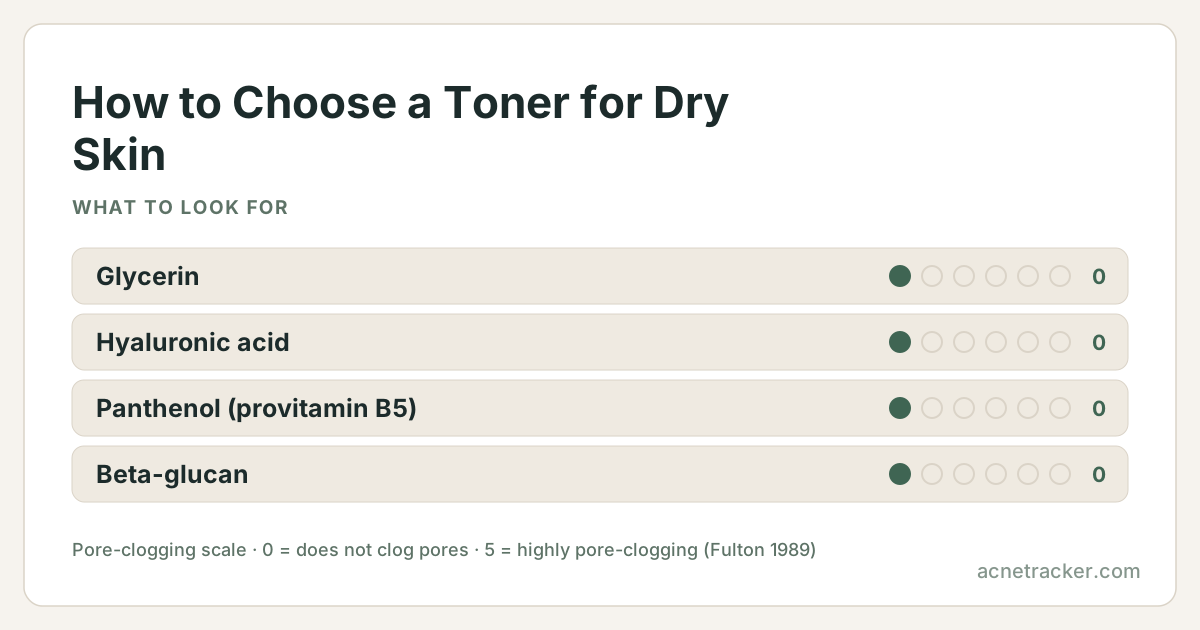
Ingredients to look for
| Ingredient | Why it matters |
|---|---|
| Glycerin | A workhorse humectant that pulls water into the upper layers and helps a dry, tight surface feel supple again. |
| Hyaluronic acid | Holds many times its weight in water, giving dry skin a plumping first layer to seal in with a richer cream. |
| Panthenol (provitamin B5) | Softens and soothes while supporting the barrier, easing the tightness and flaking typical of dry skin. |
| Beta-glucan | A gentle hydrator and soother that calms the roughness and reactivity that often accompany dryness. |
| Allantoin | Conditions and calms rough, flaky skin, adding to the comfort of a hydrating toner. |
Ingredients to avoid
| Ingredient | Why it matters |
|---|---|
| Denatured alcohol (alcohol denat., SD alcohol) | Dissolves the little oil dry skin has and accelerates water loss — the fast track to more flaking and tightness. |
| Strong exfoliating acids at high strength | Aggressive AHAs on already-dry skin can strip and sensitise it; if you exfoliate at all, keep it gentle and infrequent. |
| Astringent 'pore-tightening' toners | Built to degrease, which is exactly the wrong goal for skin that needs more oil and moisture, not less. |
| Fragrance and menthol | Cooling and scent add irritation risk to a compromised, dry barrier for no hydrating benefit. |
How to choose
For dry skin, think of a toner as an extra hydration layer, not a cleansing step, and let that reframe the whole label. You want water and glycerin near the top, followed by humectants like hyaluronic acid and soothers such as panthenol or beta-glucan. Alcohol denat. anywhere near the top of the list is a firm no. Texture is worth noting: slightly thicker, essence-style hydrating toners tend to sit better on dry skin than thin, fast-evaporating splashes. Ignore 'refreshing', 'toning' and 'pore-minimising' language, which usually signals the old astringent style, and read the actives instead. Crucially, a hydrating toner only pays off if you seal it — humectants can draw water from deeper skin in dry air unless you lock them in. Choose one you will always follow with a proper moisturizer.
How to apply
Apply to still-damp skin right after cleansing, while the surface holds water for the humectants to bind. Press it in with your palms rather than wiping, and layer a second pass if your skin feels especially tight. Do not let it dry down bare — follow within a minute with a serum or a richer moisturizer to seal the hydration in, otherwise humectants can pull water out of the skin in dry conditions. Morning and night is fine. Skip acid or astringent toners here; dry skin gains far more from consistent hydration than from exfoliation.
Frequently asked questions
Do I need a toner if my skin is dry?
Only if it adds hydration you want. A hydrating, humectant-rich toner can make dry skin more comfortable as an extra moisture layer, but it is optional. An old-style astringent toner is actively bad for dry skin and best skipped entirely.
Why does my toner make my skin feel tighter?
Almost always because it contains denatured alcohol, which strips oil and speeds water loss. Switch to an alcohol-free hydrating toner, apply it to damp skin, and always seal it with a moisturizer.
Can a hydrating toner replace my moisturizer?
No. A toner adds water-binding humectants but little of the oil and occlusives that dry skin needs to hold that water in. Use the toner first, then a proper moisturizer to lock it down.
Should dry skin use an exfoliating toner?
Cautiously at most. Dry skin is easily over-exfoliated, which worsens flaking and tightness. If you exfoliate, keep it gentle and occasional, and prioritise hydration the rest of the time.
Sources & further reading
There is no single study of this exact question. The guidance here is reasoned from the ingredient profiles below, each of which carries its own references:
- Glycerin3 refs
- Hyaluronic Acid3 refs
- Panthenol3 refs
- Beta-Glucan2 refs
- Allantoin3 refs
Show every reference behind this page (9)
- PubChem — Glycerol compound summarycited by Glycerin
- DermNet — Moisturiserscited by Glycerin, Hyaluronic Acid
- European Commission CosIng database — Glycerincited by Glycerin, Hyaluronic Acid, Panthenol, Beta-Glucan, Allantoin
- PubChem — Hyaluronic acid compound summarycited by Hyaluronic Acid
- PubChem — Panthenol compound summarycited by Panthenol
- Safety Assessment of Panthenol, Pantothenic Acid, and Derivatives as Used in Cosmetics (PubMed)cited by Panthenol
- PubMed — Improving skin function with CM-glucan, a biological response modifier from yeast (Int J Cosmet Sci, 1998)cited by Beta-Glucan
- PubChem — Allantoin compound summarycited by Allantoin
- Final report of the safety assessment of allantoin and its related complexes (PubMed)cited by Allantoin
Medical disclaimer
Ingredients mentioned on this page
Find your personal acne triggers
Our free Acne Tracker lets you log breakouts, sleep, stress and diet, and shows you which factors correlate with your flare-ups.