How to Choose an Eye Cream for Dry Skin
The skin around your eye is dry for a structural reason rather than a personal one: it carries very few sebaceous glands compared with the rest of the face, so it produces almost none of the oil that keeps other areas supple. Add the thinnest stratum corneum on the body and constant movement, and water leaves quickly with nothing holding it in. That is why the eye area feels tight in winter long before your cheeks do. This page covers the lipids that actually fix this, and then a cause of persistent dry, flaky lids that catches an enormous number of people out.
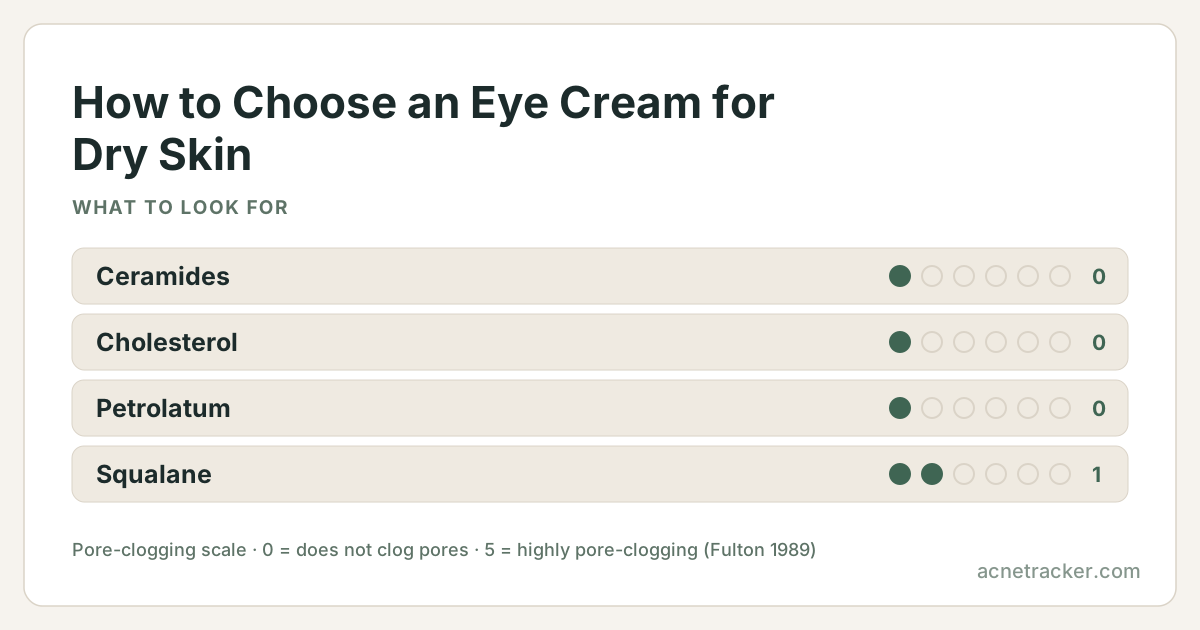
Ingredients to look for
| Ingredient | Why it matters |
|---|---|
| Ceramides | The lipid class the eye area is short of by anatomy. They slot into the spaces between cells and reduce water loss, and this is the single most rational purchase for a genuinely dry eye area. |
| Cholesterol | The barrier needs ceramides, cholesterol and fatty acids in balance rather than any one alone. A formula containing all three restores the mortar rather than a single brick. |
| Petrolatum | The most effective occlusive available, cutting water loss dramatically. Note that its 0 comedogenic rating comes from the reproduced lists rather than Fulton's own table, though milia risk here is largely theoretical. |
| Squalane | Fulton rates it 1. It mimics a component of natural sebum, which the eye area barely makes, and it is light enough not to migrate the way heavy balms do. |
| Panthenol | Humectant and soothing at once, with a good record on irritated dry skin. It is one of the least likely ingredients to sting near the eye, which is not a low bar here. |
Ingredients to avoid
| Ingredient | Why it matters |
|---|---|
| Urea at body-lotion strengths | Excellent for dry limbs and a poor idea near the eye — at 10% and above it stings on thin skin, and any that migrates into the eye is genuinely uncomfortable. |
| Foaming cleansers used up to the lash line | Surfactants strip the little lipid the eye area has. A lot of eye-area dryness is created twice daily at the sink and then treated with an expensive cream. |
| Alcohol-based 'refreshing' eye gels | The cooling comes from evaporation, which takes water with it. A cooling sensation on already dry lid skin is the sensation of it getting drier. |
| Fragrance, even in a rich cream | Dry skin has a compromised barrier, which lets fragrance materials penetrate more easily, which is exactly how dry lids become dermatitic lids. |
How to choose
Buy for lipids, not for actives. A dry eye area needs barrier repair, and the formula that delivers it is unglamorous: ceramides with cholesterol and fatty acids, an occlusive to hold the result in, glycerin or panthenol underneath to give the barrier water to keep. Texture should be a cream or balm rather than a gel, and richer in winter than in summer. Fragrance-free is not negotiable on skin this thin. Beyond the label, check two things nobody tells you to check. First, your cleanser: if you foam up to your lashes twice a day, you are stripping the area faster than any cream repairs it, and switching to washing around the eye fixes more dryness than upgrading the cream will. Second — and this is the big one — persistent dry, itchy, flaky lids that do not respond to good moisturiser are very often eyelid dermatitis caused by something else entirely. Nail polish, shampoo, hair dye, face products and even a partner's aftershave get transferred to the lid by your hands. Eyelid skin reacts to concentrations the fingers themselves shrug off. If a good barrier cream has not resolved it in a few weeks, the answer is a cause to find, not a richer cream.
How to apply
Apply to damp skin so the humectant layer has something to hold, then seal with the richest thing you tolerate. Twice daily in winter, and a heavier occlusive layer at night when you are not fighting makeup. A rice grain per eye on the orbital bone, patted in with the ring finger. If you flake, resist exfoliating — flaking on the eyelid is usually a barrier failure, and scrubbing it removes more barrier. Run a humidifier if you sleep in a heated bedroom; dry air is the whole story for a lot of winter eye-area dryness.
Frequently asked questions
Why is the skin around my eyes so dry?
It is built that way. The periorbital area has very few sebaceous glands, so it makes almost none of the oil that keeps the rest of the face supple, and it has the thinnest outer layer on the body. Water leaves quickly and nothing holds it back, which is why the area dries out first every winter.
Can I use my face moisturiser around my eyes?
Often yes, if it is fragrance-free and has no strong actives in it. That is the honest answer the category avoids: a plain ceramide moisturiser is a perfectly good eye cream for dryness. The reasons to buy an eye-specific product are formulation restraint and ophthalmological testing, not a unique ingredient.
Why do my eyelids keep flaking no matter what I use?
Flaking that resists a good barrier cream is often not simple dryness. Eyelid skin reacts to substances your hands tolerate, and nail polish, shampoo, hair products and fragrance transferred by touch are classic culprits. If weeks of moisturiser change nothing, you are looking for a cause rather than a product.
Is petrolatum safe to use around the eyes?
It is one of the most inert occlusives available and is widely used in ophthalmic contexts, which is why it turns up in products intended for the eye area. Its comedogenic rating of 0 comes from reproduced lists rather than Fulton's original table, and the practical objection to it is aesthetic rather than safety.
When should dry eyelids be seen by a doctor?
If they are persistently red, itchy, weeping or thickened, if the dryness affects one eye only, if the lid margin is crusted or your lashes are affected, or if it comes with eye pain or vision changes. Chronic eyelid dermatitis and lid margin inflammation are common, treatable and not something a cream should be asked to solve alone.
Sources & further reading
There is no single study of this exact question. The guidance here is reasoned from the ingredient profiles below, each of which carries its own references:
- Ceramides3 refs
- Cholesterol2 refs
- Petrolatum3 refs
- Squalane3 refs
- Panthenol3 refs
Show every reference behind this page (11)
- DermNet — Skin barrier functioncited by Ceramides
- PubChem — Ceramide compound summarycited by Ceramides
- European Commission CosIng database — Ceramide NPcited by Ceramides, Petrolatum, Squalane, Panthenol
- PubChem — Cholesterol (CID 5997)cited by Cholesterol
- PubMed — Optimization of physiological lipid mixtures for barrier repaircited by Cholesterol
- PubChem — Petrolatum (petroleum jelly)cited by Petrolatum
- Petroleum jelly: A comprehensive review of its history, uses, and safety (PubMed)cited by Petrolatum
- PubChem — Squalane compound summarycited by Squalane
- DermNet — Emollients and moisturiserscited by Squalane
- PubChem — Panthenol compound summarycited by Panthenol
- Safety Assessment of Panthenol, Pantothenic Acid, and Derivatives as Used in Cosmetics (PubMed)cited by Panthenol
Medical disclaimer
Ingredients mentioned on this page
Find your personal acne triggers
Our free Acne Tracker lets you log breakouts, sleep, stress and diet, and shows you which factors correlate with your flare-ups.