How to Choose a Chemical Exfoliant for Dry Skin
Dry skin benefits from gentle exfoliation — clearing the build-up of dead cells lets moisturizer sink in instead of sitting on a rough surface — but the wrong acid makes dryness worse. The best choice for dry skin does two jobs at once: it exfoliates while helping the skin hold water. Lactic acid and the polyhydroxy acids are humectants as well as exfoliants, which is exactly what parched skin needs. This guide explains why that dual action matters, which acids to skip, and how to fold exfoliation into a dry-skin routine without triggering flaking or tightness. We describe ingredient profiles so the reasoning survives any change of product.
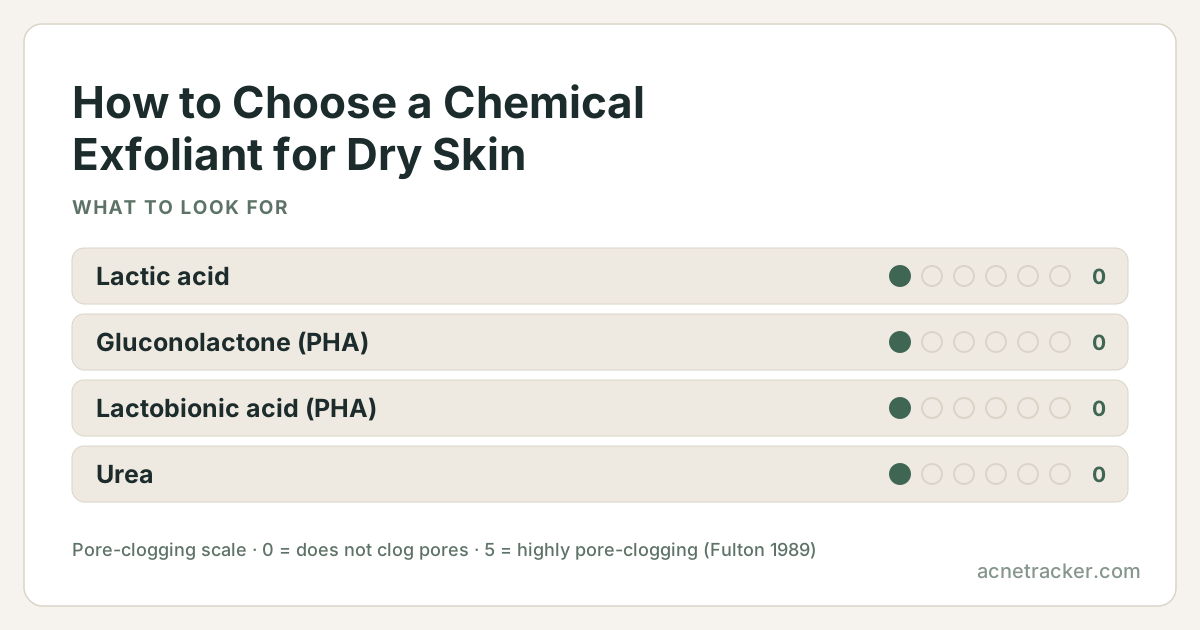
Ingredients to look for
| Ingredient | Why it matters |
|---|---|
| Lactic acid | An AHA that is also a humectant, so it resurfaces while drawing water into the skin — the classic choice for dry, rough skin that needs moisture kept in. |
| Gluconolactone (PHA) | A large-molecule polyhydroxy acid that exfoliates gently and binds water, giving mild resurfacing without stripping a dry barrier. |
| Lactobionic acid (PHA) | A strongly humectant PHA that suits dry skin needing exfoliation and hydration in a single, low-irritation step. |
| Urea | At low percentages it hydrates and gently smooths; it both softens dead cells and keeps water in, ideal for dry, flaky texture. |
Ingredients to avoid
| Ingredient | Why it matters |
|---|---|
| High-strength glycolic used often | Frequent strong glycolic acid strips the already-thin lipid barrier of dry skin, worsening tightness and flaking rather than smoothing it. |
| Alcohol-heavy exfoliating toners | Denatured alcohol high in the formula dehydrates dry skin, undoing the point of exfoliating to help moisture penetrate. |
| Physical scrubs on flaky patches | Scrubbing dry, flaking skin roughens the surface and can create micro-tears, leaving it rougher and more irritated. |
| Over-frequent exfoliation | Dry skin regenerates its lipids slowly; exfoliating too often outpaces repair and locks the skin into a dehydrated, sensitive state. |
How to choose
Look for exfoliants that hydrate as they resurface. Lactic acid is the standout AHA for dry skin because it is also a humectant, and polyhydroxy acids like gluconolactone and lactobionic acid do the same job even more gently. Urea at low concentration is another dual-action option, softening flakes while holding water. Favour a cream or lotion format over a thin, alcohol-based liquid, since the base itself should support moisture. Keep percentages moderate and frequency low — dry skin does not need aggressive resurfacing. Read past claims like 'renewing' and 'radiance-boosting' to the actual acid, and check that the ingredient list also carries humectants and emollients such as glycerin and ceramides. The best dry-skin exfoliant leaves the skin smoother and softer, never tight, immediately after use.
How to apply
Exfoliate in the evening, once or twice a week, on clean skin. Apply the acid, let it absorb, then seal with a richer moisturizer to lock in the hydration the acid helped draw in. On non-exfoliation nights, focus purely on barrier repair with a nourishing cream. Avoid scrubbing dry patches; let the acid do the smoothing. Acids leave skin more sun-sensitive, so broad-spectrum SPF every morning belongs to the same routine as the acid itself — and on dry skin it doubles as one more occlusive layer. If the skin feels tight or looks flaky after exfoliating, reduce frequency and prioritise moisture until the barrier feels comfortable again.
Frequently asked questions
Which acid is best for dry skin?
Lactic acid is a strong choice because it exfoliates and hydrates at the same time. Polyhydroxy acids like gluconolactone and lactobionic acid are gentler alternatives that also bind water, and low-percentage urea softens flakes while holding moisture.
Should I exfoliate if my skin is dry and flaky?
Gentle exfoliation can help by clearing dead-cell build-up so moisturizer absorbs better, but flakiness is often dehydration, not just dead skin. Pair light exfoliation with strong hydration, and if flaking is severe, focus on barrier repair first.
Can exfoliating make dry skin worse?
Yes, if it is too strong or too frequent. Aggressive acids strip the lipid barrier that dry skin already lacks, leading to more tightness and flaking. Choose humectant acids, keep frequency low, and always moisturize afterwards.
How often should dry skin be exfoliated?
Once or twice a week is usually enough. Dry skin repairs its barrier slowly, so more frequent exfoliation tends to outpace recovery. Watch how your skin responds and reduce frequency at the first sign of tightness or flaking.
Sources & further reading
There is no single study of this exact question. The guidance here is reasoned from the ingredient profiles below, each of which carries its own references:
- Lactic Acid3 refs
- Gluconolactone3 refs
- Lactobionic Acid3 refs
- Urea2 refs
Show every reference behind this page (8)
- PubChem — Lactic acid compound summarycited by Lactic Acid
- DermNet — Alpha hydroxy acidscited by Lactic Acid
- European Commission CosIng database — Lactic Acidcited by Lactic Acid, Gluconolactone, Lactobionic Acid
- Clinical and cosmeceutical uses of hydroxyacids (PubMed)cited by Gluconolactone, Lactobionic Acid
- PubChem — Glucono-delta-lactonecited by Gluconolactone
- PubChem — Lactobionic acidcited by Lactobionic Acid
- PubChem — Ureacited by Urea
- DermNet — Emollients and moisturiserscited by Urea
Medical disclaimer
Ingredients mentioned on this page
Find your personal acne triggers
Our free Acne Tracker lets you log breakouts, sleep, stress and diet, and shows you which factors correlate with your flare-ups.