How to Choose a Face Oil for Dry Skin
Dry skin is a lipid problem, not a water problem — the skin is not making enough of the fats that hold the barrier together, so whatever water it has escapes. That makes face oil an unusually good match here: unlike a humectant serum, an oil replaces some of the missing lipids and slows evaporation at the same time. The catch is that oils are not interchangeable. Their fatty acid make-up decides whether they sink in, sit on top, or turn rancid in the bottle. This page describes the oil profiles worth looking for on a label, with the published comedogenic numbers where they exist and an honest note where they do not.
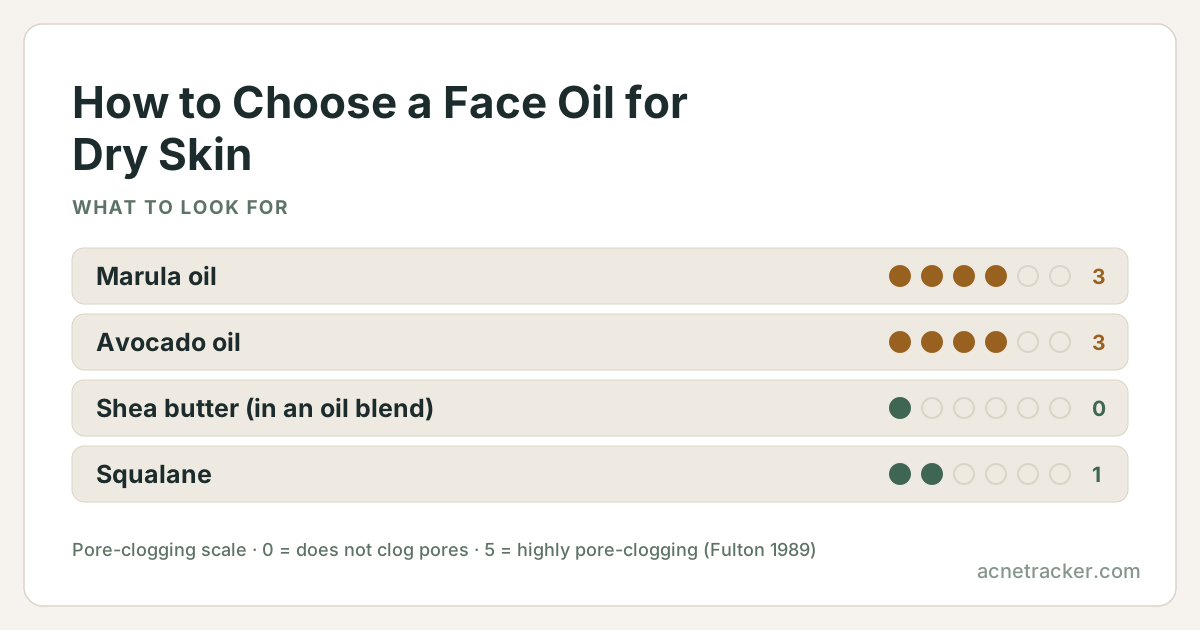
Ingredients to look for
| Ingredient | Why it matters |
|---|---|
| Marula oil | Roughly three-quarters oleic acid, which makes it a cushioning, slow-absorbing oil — exactly the profile dry skin wants and oily skin usually does not. |
| Avocado oil | A heavy, oleic-rich oil that suits flaking and tightness. Fulton (1989) rates it 3, so it earns its place on dry skin but not on congested skin. |
| Shea butter (in an oil blend) | Softens the whole formula and adds unsaponifiables; reproduced comedogenicity tables list it at 0, though it is not in Fulton's own table. |
| Squalane | A saturated hydrocarbon rated 1 by Fulton. It carries the heavier oils without weighing the blend down, and it does not oxidise the way polyunsaturated oils do. |
| Argan oil | A balanced oleic-linoleic oil with tocopherols; a sensible everyday base when a pure oleic oil feels too rich in summer. |
Ingredients to avoid
| Ingredient | Why it matters |
|---|---|
| Essential oils sold as 'face oil' (lavender, rose, citrus) | These are volatile fragrance materials, not fatty oils. They do not replace lipids and they add sensitisers to skin whose barrier is already leaky. |
| Alcohol denat. blended into a dry oil | Some 'dry touch' oils thin themselves with alcohol for a fast finish. On dry skin that undoes the point of applying an oil at all. |
| Face oil used instead of moisturiser, on a dry face | Oils are mostly occlusive. Applied to dry skin with nothing underneath, they seal in the dryness rather than fixing it. |
| Wheat germ oil | Reproduced tables put it at 5 — the highest rating any common cosmetic oil carries. Rich, but a poor bet if you are at all breakout-prone. |
How to choose
Start with the fatty acid label rather than the marketing. Oils dominated by oleic acid — marula, avocado, olive, camellia — are thicker, stay on the surface longer and feel cushioning; that behaviour is a feature on dry skin. Oils dominated by linoleic acid absorb faster and feel lighter, which is why they suit oily skin better than yours. Second, check the antioxidant: an oil with tocopherol in the list keeps better, and polyunsaturated oils without it can go rancid within months of opening. Third, look at packaging. Amber or opaque glass with a dropper protects the oil from light; a clear bottle on a bright bathroom shelf is a formulation compromise you pay for later. Fourth, count the ingredients. A blend of three to six named oils is more useful than a fifteen-oil 'elixir' where each botanical is present in trace amounts for the label. Finally, ignore 'nourishing' and 'replenishing' — neither word has a regulated meaning. The fatty acid table on the back is the only claim that predicts how the oil will behave on your face.
How to apply
Apply the oil last in the evening, onto skin that is still slightly damp from a toner or a hydrating serum — the oil then has water to hold in rather than a dry surface to seal. Four to six drops warmed between the palms and pressed onto the face covers it; rubbing wastes product on your hands. If your skin is very dry, layer it over your moisturiser rather than under it, so the cream delivers the humectants and the oil closes the system. In the morning, one or two drops mixed into your moisturiser avoids the pilling that oils cause under sunscreen.
Frequently asked questions
Can a face oil replace my moisturiser if my skin is dry?
Usually not. Most face oils contain no humectants and almost no water, so they slow water loss but add none. Dry skin does better with a moisturiser for hydration and an oil on top to hold it there.
Which is better for dry skin, oleic or linoleic oils?
Oleic-rich oils, as a rule. They are more occlusive and stay on the surface longer, which is what dry skin needs. Linoleic-rich oils absorb quickly and are the better match for oily and acne-prone skin.
Why does my face oil smell like crayons after a few months?
That is oxidation — the oil has gone rancid. Polyunsaturated oils such as rosehip and hemp are the most vulnerable. Buy small bottles, keep them out of sunlight, and stop using one once the smell changes.
Is coconut oil good for a dry face?
On the body, often. On the face, less so: reproduced tables rate coconut oil 4, and Fulton's own table rates coconut butter 4. If you never break out you may get away with it, but there are safer occlusives.
How many drops of face oil should I use?
Four to six for the whole face is plenty. More does not add more barrier repair; it just sits there, transfers onto your pillow and makes the next morning's cleanse harder than it needs to be.
Sources & further reading
There is no single study of this exact question. The guidance here is reasoned from the ingredient profiles below, each of which carries its own references:
- Marula Oil3 refslimited evidence
- Avocado Oil2 refs
- Shea Butter3 refs
- Squalane3 refs
- Argan Oil3 refs
The ingredients below are described here on the basis of laboratory, systemic or traditional-use sources rather than trials of topical use. Advice on this page that depends on them is correspondingly less certain.
- Marula Oil — Marula oil's fatty-acid profile is well characterised, and its emollient behaviour follows directly from that composition. The antioxidant and barrier-support descriptions come from analyses of the oil's constituents and from research on marula as a food and traditional medicine — not from trials of the oil applied to human skin, of which we found none.
Show every reference behind this page (9)
- European Commission CosIng database — Sclerocarya Birrea Seed Oilcited by Marula Oil, Avocado Oil, Shea Butter, Squalane, Argan Oil
- PubChem — Oleic acid (major marula fatty acid)cited by Marula Oil, Argan Oil
- Marula [Sclerocarya birrea (A. Rich.) Hochst.] products as a food and medicine (PubMed)cited by Marula Oil
- CIR — Persea Gratissima (Avocado) Oil ingredient recordcited by Avocado Oil
- PubChem — Stearic acid (major shea fatty acid)cited by Shea Butter
- Safety Assessment of Butyrospermum parkii (Shea)-Derived Ingredients as Used in Cosmetics (PubMed)cited by Shea Butter
- PubChem — Squalane compound summarycited by Squalane
- DermNet — Emollients and moisturiserscited by Squalane
- Insights on Phytochemistry and Pharmacological Properties of Argania spinosa L. Skeels: A Comprehensive Review (PubMed)cited by Argan Oil
Medical disclaimer
Ingredients mentioned on this page
Find your personal acne triggers
Our free Acne Tracker lets you log breakouts, sleep, stress and diet, and shows you which factors correlate with your flare-ups.