How to Choose a Toner for Dehydrated Skin
Dehydrated skin is short on water, not oil — which is why it affects oily and dry skin alike, showing up as tightness, dullness, and a papery look where fine lines appear more obvious. Because it is a water problem, a hydrating toner is one of the more genuinely useful tools for it, adding a humectant-rich layer that helps the skin hold moisture. The catch is that many toners contain the exact ingredient that causes dehydration: denatured alcohol. This guide describes the ingredient profile that restores water to thirsty skin, the additives that quietly deplete it, and the layering method that makes a watery toner actually last instead of flashing off.
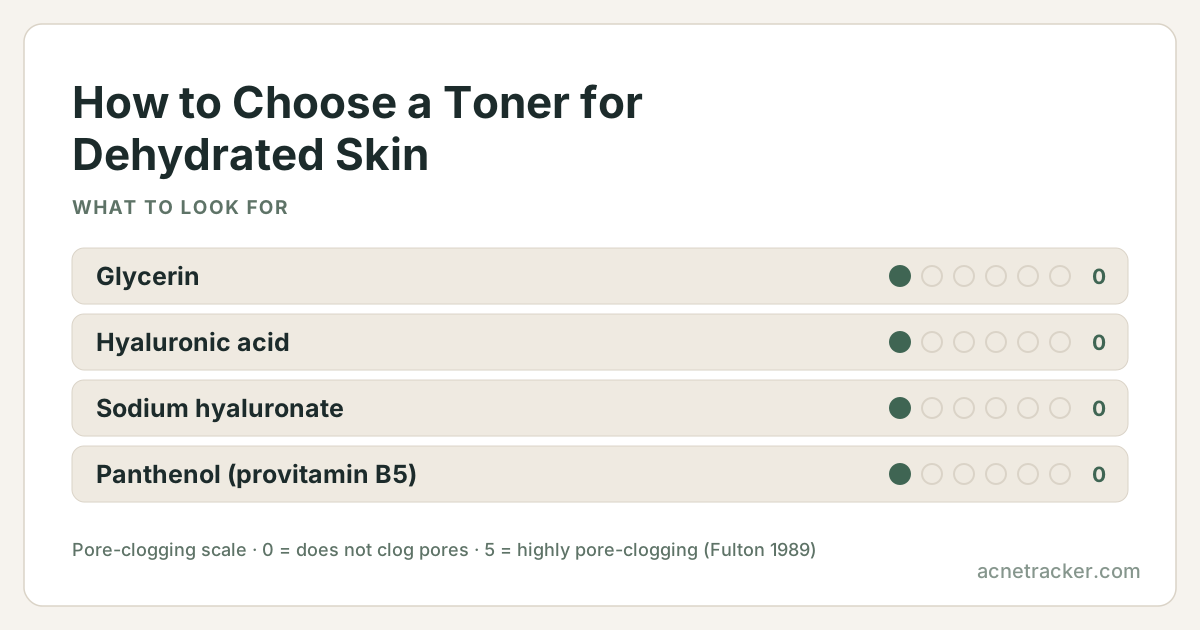
Ingredients to look for
| Ingredient | Why it matters |
|---|---|
| Glycerin | The core humectant for dehydrated skin: pulls water into the surface and relieves the tightness of water loss. |
| Hyaluronic acid | Binds a large amount of water for an immediate plumping effect that eases the papery, dehydrated look. |
| Sodium hyaluronate | A lighter, smaller-molecule hyaluronic acid that absorbs easily and layers well for building hydration. |
| Panthenol (provitamin B5) | Hydrates and soothes while supporting the barrier, so skin holds on to water more effectively. |
| Beta-glucan | A gentle humectant and soother that boosts moisture and calms the reactivity dehydration can bring. |
Ingredients to avoid
| Ingredient | Why it matters |
|---|---|
| Denatured alcohol (alcohol denat.) | A primary cause of dehydration: it speeds water loss and directly counteracts a hydrating toner's purpose. |
| Astringent, oil-stripping formulas | They target oil, which is not the problem, and worsen the barrier that dehydrated skin needs to hold water. |
| Fragrance and irritants | Irritation compromises the barrier, and a weaker barrier loses water faster, deepening dehydration. |
| Applying a humectant toner with no seal | In dry air, unsealed humectants can pull water from deeper skin outward, so a moisturizer over the top is essential. |
How to choose
First understand that dehydrated is not the same as dry: dryness lacks oil, dehydration lacks water, and any skin type can be dehydrated. That means you want a toner focused on humectants — glycerin, hyaluronic acid, sodium hyaluronate, panthenol, beta-glucan — rather than oils or astringents. The single most important thing to avoid is denatured alcohol, a leading cause of the problem, so read the label and reject formulas with alcohol denat. near the top. Fragrance is best avoided too, since a compromised barrier loses water faster. Texture can be a thin splash or a richer essence, whichever layers comfortably for you. Crucially, a hydrating toner only works if you seal it with a moisturizer, because unsealed humectants can draw water out of the skin in dry conditions — so choose one you will always follow with a cream.
How to apply
Apply to damp skin immediately after cleansing, while water is still on the surface for humectants to bind. Press it in with the palms and build two or three thin layers if your skin is very dehydrated, patting each in before the next. Do not let it dry down uncovered — within a minute, follow with a serum and a moisturizer to lock the water in, since unsealed humectants can pull moisture out in dry air. Use it morning and night, and it suits oily dehydrated skin as well as dry, since the issue is water. Support the routine by lowering hot showers and indoor heat where you can.
Frequently asked questions
Why is a toner aimed at dehydration rather than dryness?
Because of where it sits in the routine. Dry skin lacks oil and is a skin type; dehydrated skin lacks water and is a temporary condition any skin type can have, including oily skin. A toner is the first water-phase step onto damp skin, which is exactly the moment humectants have water available to bind — it can deliver water, but it has no meaningful lipid payload. Dryness is answered later in the routine, by oils and richer creams.
Is my toner why my oily skin feels tight?
It can be, if it leads with denatured alcohol. Dehydration is about water, not oil, so oily skin can be shiny and dehydrated at once — and stripping it further often makes it produce more oil. A light, alcohol-free hydrating toner helps without adding grease.
Why does my skin still feel tight after using a toner?
Often because the toner contains alcohol, is applied to dry skin, or is not sealed. Choose an alcohol-free humectant toner, apply it to damp skin, and always follow promptly with a moisturizer to lock the water in.
How many layers of hydrating toner should I use?
One is enough for mild dehydration; two or three thin, patted-in layers help when skin is very dehydrated. The key is sealing the last layer with a moisturizer, since more toner without a seal does not fix the problem.
Sources & further reading
There is no single study of this exact question. The guidance here is reasoned from the ingredient profiles below, each of which carries its own references:
- Glycerin3 refs
- Hyaluronic Acid3 refs
- Sodium Hyaluronate2 refs
- Panthenol3 refs
- Beta-Glucan2 refs
Show every reference behind this page (8)
- PubChem — Glycerol compound summarycited by Glycerin
- DermNet — Moisturiserscited by Glycerin, Hyaluronic Acid
- European Commission CosIng database — Glycerincited by Glycerin, Hyaluronic Acid, Sodium Hyaluronate, Panthenol, Beta-Glucan
- PubChem — Hyaluronic acid compound summarycited by Hyaluronic Acid
- PubMed — Effectiveness of topical hyaluronic acid of different molecular weights in xerosis cutis treatment in elderly: a double-blind, randomized controlled trial (Arch Dermatol Res, 2024)cited by Sodium Hyaluronate
- PubChem — Panthenol compound summarycited by Panthenol
- Safety Assessment of Panthenol, Pantothenic Acid, and Derivatives as Used in Cosmetics (PubMed)cited by Panthenol
- PubMed — Improving skin function with CM-glucan, a biological response modifier from yeast (Int J Cosmet Sci, 1998)cited by Beta-Glucan
Medical disclaimer
Ingredients mentioned on this page
Find your personal acne triggers
Our free Acne Tracker lets you log breakouts, sleep, stress and diet, and shows you which factors correlate with your flare-ups.