Can You Mix Adapalene and Retinol?
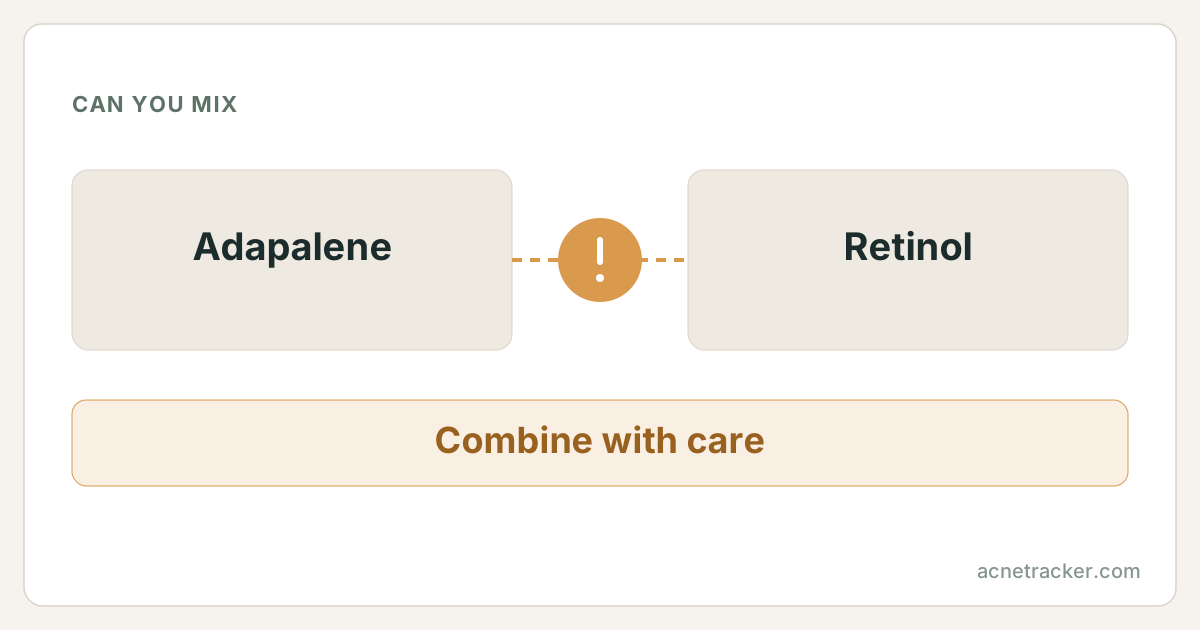
Generally, don't combine them. Retinol and adapalene are both retinoids, meaning they act on the same receptors in the skin. Using them together does not give you double the results; it mostly gives you double the irritation. In almost every case you should pick one — usually the stronger adapalene if acne is your concern — rather than layering both.
How this pairing resolves
The two ingredients, their published numbers, and where they land together.
The numbers beside each ingredient are its published comedogenic rating and effective pH window, taken from its own profile page.
Show the numbers
| Ingredients | Metric | 0–5 |
|---|---|---|
| Adapalene | Comedogenic rating | 1/5 |
| Adapalene | Effective pH | 5.0–6.5 |
| Retinol | Comedogenic rating | 1/5 |
| Retinol | Effective pH | 5.0–6.0 |
Why
This pairing is different from mixing retinol with an acid or a hydrator, because retinol and adapalene are the same class of ingredient. Both are converted to or act as retinoic acid, binding the same nuclear retinoid receptors that control cell turnover, keratinisation and inflammation. Adapalene is a third-generation synthetic retinoid that is more targeted, more potent for acne and actually more photostable and better tolerated than plain retinol at its usual strength. Because they share one mechanism, applying both does not stack into a bigger effect; the receptors are already being driven, so the main thing you add by combining them is cumulative irritation — redness, peeling, burning and a stripped barrier. There is no meaningful chemical incompatibility, just the pharmacological reality that two retinoids together overshoot tolerability for little or no extra gain. The sensible move is to choose the single retinoid that suits your goal and skin, and give it time to work rather than piling a second one on top.
How to combine them
The best practice is not to layer them at all — choose one retinoid and commit to it. If your priority is acne, adapalene is usually the better single choice; if you already tolerate retinol well and mainly want general renewal, keep the retinol. If, for some reason, you are transitioning between the two, do it by switching, not stacking: finish or taper one before starting the other, and never apply both in the same layer. Whichever retinoid you use, start two or three nights a week on clean, dry skin, seal with moisturizer, and build frequency slowly. Recovery nights with only moisturizer help the barrier keep up. Every morning, apply broad-spectrum SPF 30 or higher, because all retinoids increase sun sensitivity. If you feel you need more power than one retinoid gives, that is a conversation for a dermatologist, not a reason to double up at home.
Example routine
| When | Steps |
|---|---|
| Recommended | Choose one retinoid; do not layer both |
| Evening (chosen retinoid) | Cleanser → Retinoid (2–3× per week) → Moisturizer |
| Recovery evenings | Cleanser → Moisturizer |
| Every morning | Cleanser → Moisturizer → SPF 30+ |
Warning signs
Frequently asked questions
Is it dangerous to use retinol and adapalene together?
Not dangerous as such, but pointless and irritating. They act on the same receptors, so combining them mainly multiplies redness and peeling without adding benefit. Choosing one is the sensible approach.
Which is stronger, adapalene or retinol?
Adapalene is generally more potent for acne and is a more targeted, photostable retinoid, while often being better tolerated than equivalent retinol. For acne specifically, adapalene is usually the stronger single choice.
How do I switch from retinol to adapalene?
Switch rather than stack: stop the retinol, then start adapalene a few nights a week and build up as tolerated. Do not apply both at once during the transition.
Are retinol and adapalene both off-limits in pregnancy?
Yes. Both are retinoids, and topical retinoids including adapalene and retinol are generally avoided during pregnancy and breastfeeding. Speak to your doctor about pregnancy-safe acne options instead.
Sources & further reading
There is no single study of this exact question. The guidance here is reasoned from the ingredient profiles below, each of which carries its own references:
Show every reference behind this page (5)
- PubChem — Adapalene compound summarycited by Adapalene
- DermNet — Adapalenecited by Adapalene
- FDA — Drugs (over-the-counter acne products)cited by Adapalene
- Improvement of naturally aged skin with vitamin A (retinol) (PubMed)cited by Retinol
- European Commission SCCS opinion on vitamin A in cosmeticscited by Retinol
Medical disclaimer
Ingredients mentioned on this page
Find your personal acne triggers
Our free Acne Tracker lets you log breakouts, sleep, stress and diet, and shows you which factors correlate with your flare-ups.