Can You Mix Benzoyl Peroxide and Retinol?
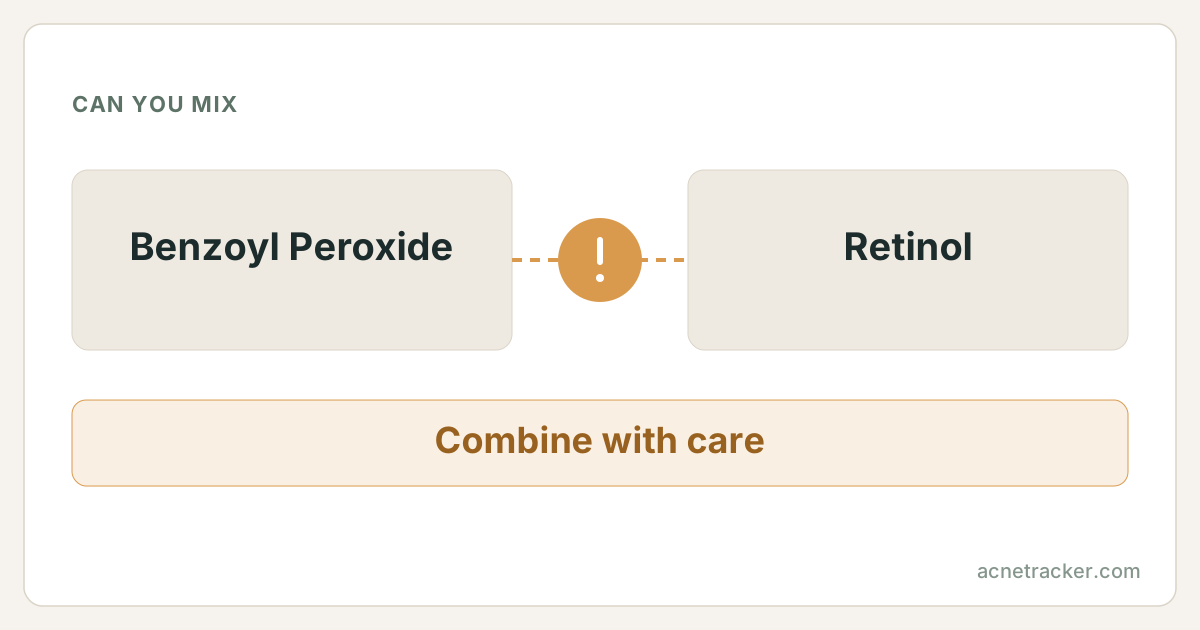
Use them with caution and, as a rule, not at the same time. Benzoyl peroxide is an oxidiser that can break down many forms of retinol on contact, potentially weakening both, and the two together are very drying. The standard workaround is to separate them: benzoyl peroxide in the morning, retinol at night, so each treats acne without cancelling out or over-stripping your skin.
How this pairing resolves
The two ingredients, their published numbers, and where they land together.
The numbers beside each ingredient are its published comedogenic rating and effective pH window, taken from its own profile page.
Show the numbers
| Ingredients | Metric | 0–5 |
|---|---|---|
| Benzoyl Peroxide | Comedogenic rating | 0/5 |
| Benzoyl Peroxide | Effective pH | no published pH |
| Retinol | Comedogenic rating | 1/5 |
| Retinol | Effective pH | 5.0–6.0 |
Why
There are two separate issues here. The first is chemical: benzoyl peroxide works by releasing free-radical oxygen to kill acne bacteria, and that same oxidising action can degrade unstable retinoids. Classic retinol and tretinoin are especially prone to being oxidised when layered directly with benzoyl peroxide, which is why older advice was never to combine them. Some modern retinoids, notably adapalene, are formulated to be stable next to benzoyl peroxide and even sold as fixed combinations, but plain retinol serums usually are not. The second issue is tolerance: benzoyl peroxide is drying and can bleach fabrics, while retinol thins the barrier and causes flaking, so stacking them frequently leaves skin raw, tight and peeling. Separating them by time solves both problems at once — the retinol is applied when no active benzoyl peroxide is present to oxidise it, and the skin is not asked to absorb two harsh actives in a single layer. Both increase sun sensitivity, so daytime SPF is essential.
How to combine them
The cleanest approach is a morning-and-night split: benzoyl peroxide in the morning as a wash or leave-on treatment, then moisturizer and broad-spectrum SPF 30 or higher; retinol at night after cleansing, sealed with moisturizer. This keeps the oxidiser away from the retinol entirely. If you only treat at night, alternate: benzoyl peroxide on some evenings and retinol on others, never in the same layer, with recovery nights in between. A short-contact method also helps for benzoyl peroxide — apply, leave for a few minutes, then rinse — to limit dryness. Start each active slowly, two or three times a week, and build up as tolerated. If you specifically want them together at night, use an adapalene-based product designed to be benzoyl-peroxide-stable rather than a plain retinol.
Example routine
| When | Steps |
|---|---|
| Morning | Cleanser → Benzoyl peroxide → Moisturizer → SPF 30+ |
| Evening | Cleanser → Retinol → Moisturizer |
| Alternative (PM only) | Alternate benzoyl peroxide and retinol on separate nights |
| Adjustment period | Introduce one active at a time, build up slowly |
Warning signs
Frequently asked questions
Does benzoyl peroxide really deactivate retinol?
It can oxidise many unstable retinoids, including classic retinol and tretinoin, when they are layered together. Keeping them apart — benzoyl peroxide in the morning, retinol at night — avoids the problem.
Is adapalene different with benzoyl peroxide?
Yes. Adapalene is more stable next to benzoyl peroxide and is even sold as a fixed combination. Plain retinol serums are usually not formulated for that, so they are best kept separate.
Can I layer them at night if I'm careful?
It is not recommended for standard retinol, because of both oxidation and heavy dryness. If you want both at night, choose a benzoyl-peroxide-stable adapalene product rather than layering a plain retinol.
Are these safe in pregnancy?
Benzoyl peroxide is often considered acceptable in pregnancy, but retinol and other retinoids are generally avoided. If you are pregnant, discuss your acne routine with your doctor before continuing either.
Sources & further reading
There is no single study of this exact question. The guidance here is reasoned from the ingredient profiles below, each of which carries its own references:
- Benzoyl Peroxide3 refs
- Retinol2 refs
Show every reference behind this page (5)
- PubChem — Benzoyl peroxide compound summarycited by Benzoyl Peroxide
- DermNet — Benzoyl peroxidecited by Benzoyl Peroxide
- FDA — Drugs (OTC acne products)cited by Benzoyl Peroxide
- Improvement of naturally aged skin with vitamin A (retinol) (PubMed)cited by Retinol
- European Commission SCCS opinion on vitamin A in cosmeticscited by Retinol
Medical disclaimer
Ingredients mentioned on this page
Find your personal acne triggers
Our free Acne Tracker lets you log breakouts, sleep, stress and diet, and shows you which factors correlate with your flare-ups.