How to Choose a Night Cream for Sensitive Skin
Sensitive skin reacts, so a night cream for it is judged less on what it adds and more on what it leaves out. Night is a good time to repair a reactive barrier, because it is undisturbed by sun, wind, makeup and touching — but it is also when a poorly chosen cream has hours to provoke a slow-building reaction you only notice in the morning. The right formula is short, fragrance-free and built around soothing, barrier-restoring ingredients. This guide describes that minimalist profile so you can spot a genuinely calming night cream and steer around the botanicals and actives that most often set sensitive skin off.
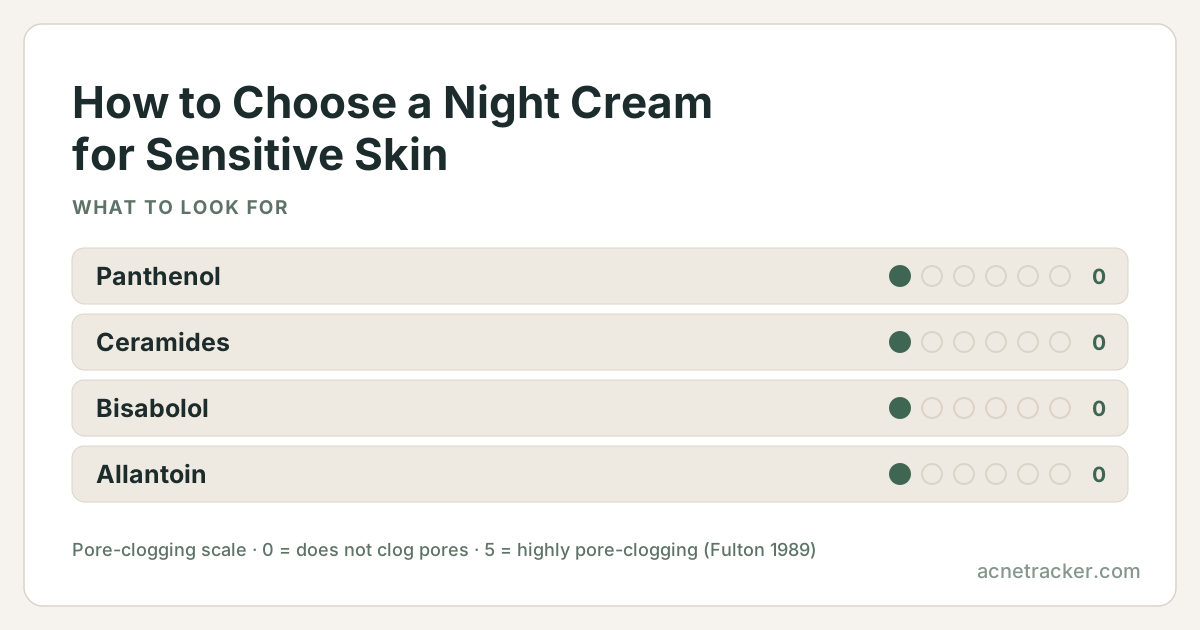
Ingredients to look for
| Ingredient | Why it matters |
|---|---|
| Panthenol | A gentle humectant that soothes and supports healing, well tolerated by even reactive skin overnight. |
| Ceramides | Rebuild the barrier whose weakness is the root of most sensitivity, reducing how much reaches the nerve endings. |
| Bisabolol | A mild chamomile-derived soother that calms redness without the irritation risk of essential-oil fragrance. |
| Allantoin | A quietly calming, skin-conditioning ingredient with a strong safety record for reactive skin. |
| Glycerin | A simple, low-risk humectant that hydrates without adding anything a sensitive barrier has to process. |
Ingredients to avoid
| Ingredient | Why it matters |
|---|---|
| Fragrance and essential oils | The single most common trigger for sensitive skin; 'unscented' can still hide masking fragrance, so read the full list, not the front. |
| High-strength actives built into the cream (retinol, AHAs) | A sensitive-skin night cream should be the calm step; leave actives as separate products you can control and pause. |
| Long botanical extract lists | More plant extracts means more potential allergens; for reactive skin, a short formula is safer than a 'natural' one. |
| Menthol, camphor and 'cooling' agents | That tingling sensation is low-grade irritation, and on sensitive skin it can tip into stinging and redness overnight. |
How to choose
For sensitive skin, choose by subtraction. Favour a short ingredient list, explicitly fragrance-free (not merely 'unscented'), with soothing agents like panthenol, bisabolol or allantoin and barrier lipids like ceramides doing the work. Texture should be a comfortable cream that neither stings on contact nor feels heavy. Read claims sceptically: 'hypoallergenic' and 'for sensitive skin' are unregulated marketing, so the ingredient list is the real test — and 'natural' or 'botanical' can mean more allergens, not fewer. Whenever possible, patch test a new cream on the inner forearm or behind the ear for a few nights before putting it on your face. On whether you need a dedicated night cream: many sensitive-skinned people do well simply reusing a trusted, bland daytime moisturiser at night, and that is often the safest route of all.
How to apply
Keep the evening routine short: a gentle cleanse, then the night cream, with as few other products as your skin needs. Introduce only one new product at a time so that if something reacts, you know the culprit. Apply with clean hands in a thin, even layer, avoiding vigorous rubbing that can itself provoke redness. If you use any active, buffer it by applying the cream first or waiting until it settles. Give a new cream at least a week of calm nights before judging it, and if stinging or redness appears, stop and return to your baseline. Sunscreen still applies every morning.
Frequently asked questions
Is a fragrance-free night cream really necessary for sensitive skin?
For most reactive skin, yes. Fragrance is the leading cause of cosmetic reactions, and overnight contact gives it hours to build one. Look specifically for a 'fragrance-free' label, because products marked 'unscented' may still carry a masking fragrance.
How do I patch test a new night cream on sensitive skin?
Apply a small amount to the inner forearm or behind the ear for a few consecutive nights and watch for redness, itching or bumps. If it stays calm, move to a small area of the face before using it all over.
Can sensitive skin use a night cream with actives in it?
It is safer not to. A sensitive-skin night cream works best as the calming step, with any retinol or acid kept as a separate product you can pause. Actives built into the cream leave you no way to dial them back.
Why does my sensitive skin sting when I apply night cream?
Stinging usually points to fragrance, alcohol, an active or a cooling agent the formula contains, or to an already-compromised barrier. Switch to a short, fragrance-free formula, and if a damaged barrier is the cause, stinging eases as it heals.
Sources & further reading
There is no single study of this exact question. The guidance here is reasoned from the ingredient profiles below, each of which carries its own references:
Show every reference behind this page (11)
- PubChem — Panthenol compound summarycited by Panthenol
- European Commission CosIng database — Panthenolcited by Panthenol, Ceramides, Bisabolol, Allantoin, Glycerin
- Safety Assessment of Panthenol, Pantothenic Acid, and Derivatives as Used in Cosmetics (PubMed)cited by Panthenol
- DermNet — Skin barrier functioncited by Ceramides
- PubChem — Ceramide compound summarycited by Ceramides
- PubChem — Bisabolol (CID 1549992)cited by Bisabolol
- RIFM fragrance ingredient safety assessment, α-bisabolol, CAS registry number 515-69-5 (PubMed)cited by Bisabolol
- PubChem — Allantoin compound summarycited by Allantoin
- Final report of the safety assessment of allantoin and its related complexes (PubMed)cited by Allantoin
- PubChem — Glycerol compound summarycited by Glycerin
- DermNet — Moisturiserscited by Glycerin
Medical disclaimer
Ingredients mentioned on this page
Find your personal acne triggers
Our free Acne Tracker lets you log breakouts, sleep, stress and diet, and shows you which factors correlate with your flare-ups.