How to Choose a Micellar Water for Sensitive Skin
Micellar water appeals to sensitive skin because it promises a rinse-free clean with no foaming detergents and no hot water. That reputation is mostly deserved, but not automatic: the micelles still contain surfactant, and dragging a cotton pad across reactive skin adds friction the label never mentions. This page describes the profile that makes a micellar water genuinely low-reactivity for sensitive skin, the additives most likely to sting, and how to use one without leaving irritating residue behind. We review ingredient profiles rather than ranking brands, because formulas change while the criteria that keep sensitive skin calm stay the same.
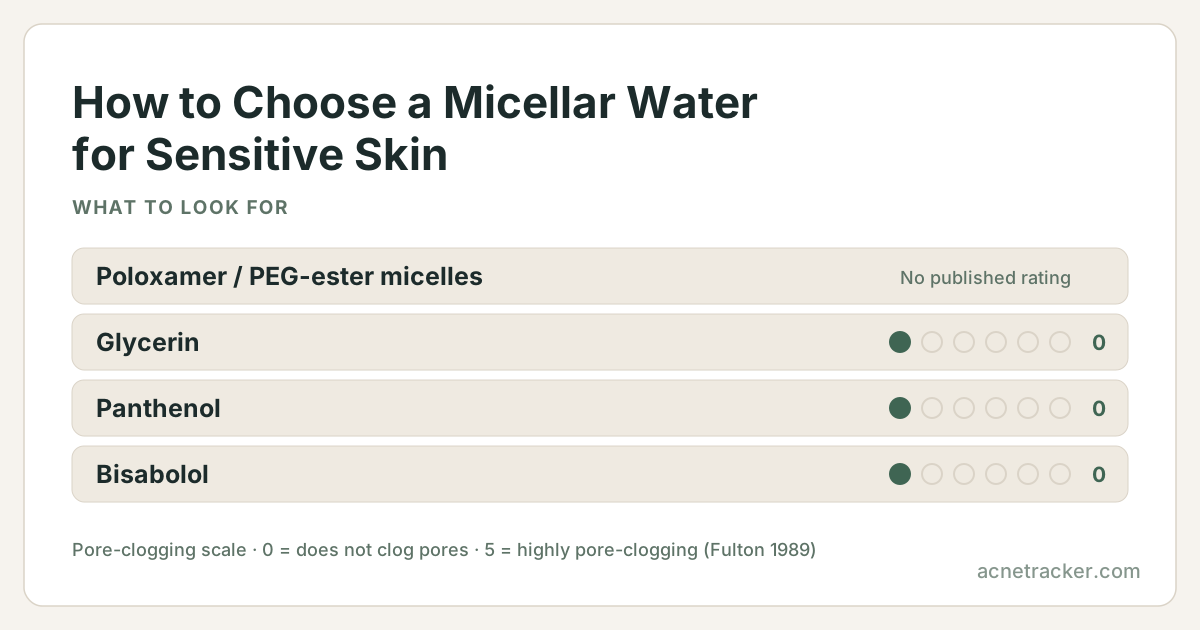
Ingredients to look for
| Ingredient | Why it matters |
|---|---|
| Poloxamer / PEG-ester micelles | The mild non-ionic surfactants that make micellar water work; they lift oil at a low concentration without the barrier disruption of foaming detergents. |
| Glycerin | A humectant that offsets any drying tug from the surfactant and leaves the surface comfortable rather than tight after wiping. |
| Panthenol | Provitamin B5 that soothes and supports the barrier, useful in a product that stays on reactive skin without a rinse. |
| Bisabolol | A chamomile-derived calming agent that suits skin quick to flush or sting from everyday cleansing. |
| Allantoin | A gentle soother that reduces the sensation of irritation and pairs well with low-fragrance formulas. |
Ingredients to avoid
| Ingredient | Why it matters |
|---|---|
| Added fragrance and essential oils | Fragrance is a leading cause of contact reactions and has no cleansing function in a leave-on micellar water. |
| Denatured alcohol high on the list | It speeds evaporation and can sting, undoing the point of a wash-free product for reactive skin. |
| Strong sulfate surfactants | SLS-type detergents defeat the gentle premise and strip lipids that sensitive skin cannot spare. |
| Menthol, camphor and 'cooling' agents | The cooling tingle is neurosensory irritation, not cleaning, and reactive skin reads it as a trigger. |
How to choose
Read a micellar water for sensitive skin from two angles: what does the job and what merely decorates it. The working part is a short list — water, one or two poloxamer/PEG-type surfactants, a humectant like glycerin, and a preservative. The decoration is fragrance, colour and botanical extras, and on reactive skin every extra is a coin toss. Favour a formula whose ingredient list you can read in one breath and that carries a plausible 'fragrance-free' claim (not merely 'unscented', which can mean a masking fragrance was added). Skip alcohol-forward formulas, which you can spot when alcohol denat sits near the top. A slightly hydrating, faintly milky micellar water is usually kinder than a fast-drying watery one, because the residue it leaves is a humectant rather than surfactant. If your skin tolerates it well over a week without tightness or stinging, the formula suits you better than any front-of-bottle promise.
How to apply
Saturate the pad fully — a dry pad dragging across skin causes more irritation than the surfactant does. Press it flat for a couple of seconds to let the micelles loosen oil and makeup, then wipe once in a single gentle direction rather than scrubbing back and forth. Use a fresh pad if the first comes away dirty. Because sensitive skin does not tolerate lingering surfactant well, many dermatologists suggest a quick splash of water afterwards, especially in the morning before actives go on. Follow with your moisturiser while skin is still slightly damp.
Frequently asked questions
Is micellar water safe for very sensitive skin?
Usually yes, if the formula is fragrance-free and alcohol-light, because it cleans at low surfactant strength without hot water or foaming detergents. The friction of the cotton pad matters as much as the formula, so wipe gently and never scrub.
Do I need to rinse micellar water off sensitive skin?
You can leave it on, but reactive skin often does better with a light water rinse afterwards to clear any surfactant residue. Rinsing is especially sensible in the morning before you apply actives or sunscreen.
Why does micellar water sometimes sting sensitive skin?
Stinging usually comes from added fragrance, essential oils or denatured alcohol rather than the micelles themselves. Switching to a stripped-back fragrance-free formula resolves it for most people.
Can micellar water replace my cleanser if I have sensitive skin?
For light days it can be your whole routine, but if you wear sunscreen or makeup it works best as a first step before a gentle rinse-off cleanser. Relying on it alone after a full face of product tends to leave residue that reactive skin dislikes.
Is fragrance-free the same as unscented for sensitive skin?
No. Fragrance-free means no perfuming agents were added; unscented can mean a masking fragrance was used to hide a base smell. For sensitive skin, fragrance-free is the claim worth trusting.
Sources & further reading
There is no single study of this exact question. The guidance here is reasoned from the ingredient profiles below, each of which carries its own references:
Show every reference behind this page (9)
- PubChem — Glycerol compound summarycited by Glycerin
- DermNet — Moisturiserscited by Glycerin
- European Commission CosIng database — Glycerincited by Glycerin, Panthenol, Bisabolol, Allantoin
- PubChem — Panthenol compound summarycited by Panthenol
- Safety Assessment of Panthenol, Pantothenic Acid, and Derivatives as Used in Cosmetics (PubMed)cited by Panthenol
- PubChem — Bisabolol (CID 1549992)cited by Bisabolol
- RIFM fragrance ingredient safety assessment, α-bisabolol, CAS registry number 515-69-5 (PubMed)cited by Bisabolol
- PubChem — Allantoin compound summarycited by Allantoin
- Final report of the safety assessment of allantoin and its related complexes (PubMed)cited by Allantoin
Medical disclaimer
Ingredients mentioned on this page
Find your personal acne triggers
Our free Acne Tracker lets you log breakouts, sleep, stress and diet, and shows you which factors correlate with your flare-ups.