How to Choose a Face Oil for Sensitive Skin
Sensitive skin has a specific problem with face oils, and it is not the oil. It is what comes with it: essential oils sold under botanical names, fragrance blends hiding behind the word 'natural', and polyunsaturated oils that have quietly oxidised in a clear bottle. Any of the three can produce stinging that gets blamed on the oil itself. The good news is that the least reactive oils are also the simplest ones, and a couple of them have almost nothing in them to react to. This page sets out how to read an oil label when your skin argues with most products.
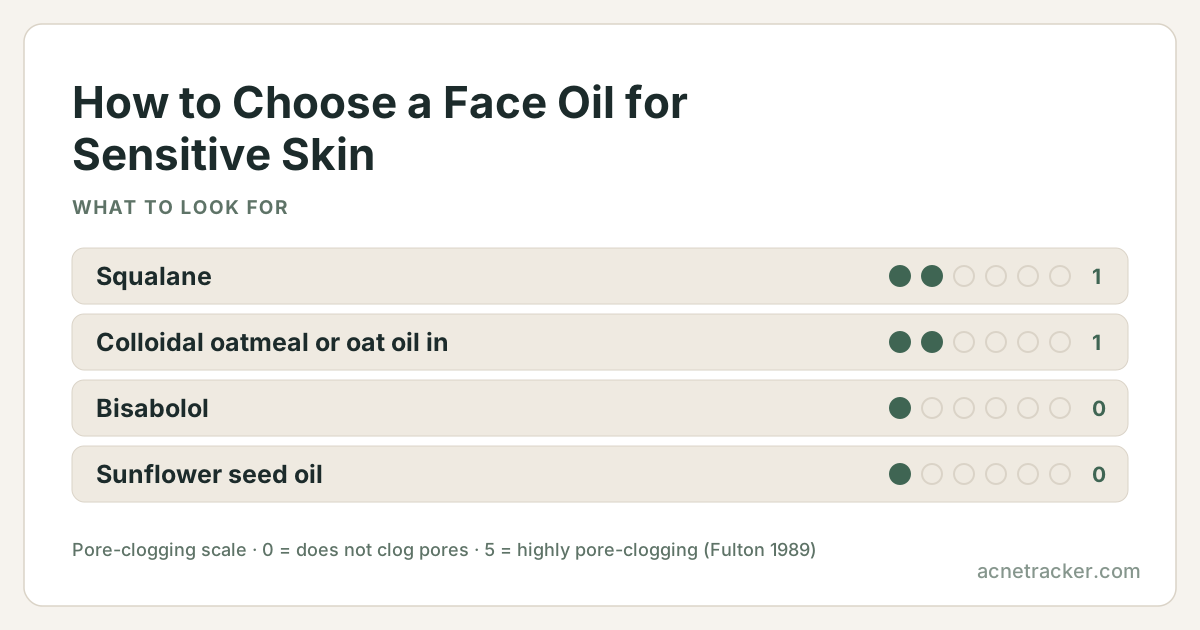
Ingredients to look for
| Ingredient | Why it matters |
|---|---|
| Squalane | The lowest-drama option available: no fragrance, no scent of its own, no unsaturated bonds to oxidise, and a Fulton rating of 1. |
| Colloidal oatmeal or oat oil in the blend | Oat fractions have a long record in the eczema literature for calming reactive skin, and they add no fragrance materials. |
| Bisabolol | The isolated calming component of chamomile — the sensible way to get the botanical's benefit without the allergenic fraction of the whole essential oil. |
| Sunflower seed oil | Fulton rates it 0. Studies on infant skin have found sunflower oil supports barrier function where high-oleic oils did not. |
| Jojoba oil | A wax ester with a very stable structure and no strong scent; rated 0 by Fulton with a 0–2 range in reproduced sources. |
Ingredients to avoid
| Ingredient | Why it matters |
|---|---|
| Essential oils of any kind | Lavender, rose, ylang-ylang, citrus peel and tea tree are common contact sensitisers. On sensitive skin the risk-to-benefit ratio here is indefensible. |
| Fragrance / parfum, including 'natural fragrance' | The word covers an undisclosed mixture. Whether it came from a plant or a lab makes no difference to a reactive immune system. |
| Oxidised polyunsaturated oils | Rancid rosehip or hemp oil stings and can irritate more than the fresh oil calms. A changed smell means the bottle is finished, whatever is left in it. |
| Citrus oils and bergamot in particular | Some are phototoxic in addition to being sensitising, which is a poor combination with any daytime routine. |
How to choose
The shortest ingredient list wins. Sensitive skin is a numbers game: every additional botanical is another molecule your skin might object to, and a fifteen-oil blend gives you fifteen suspects if it goes wrong. Aim for a single oil or a blend of two or three, all named as INCI plant oils rather than as 'essential oil of'. Second, scan for the giveaway allergens the EU requires to be declared: linalool, limonene, geraniol, citronellol and eugenol appearing at the end of the list mean fragrance, no matter what the front says. Third, prefer oils with natural stability. Squalane and jojoba do not go rancid the way linoleic oils do, which removes an entire failure mode. Fourth, buy small. A 30 ml bottle you finish in three months is safer than a 100 ml bottle that oxidises for a year. Finally, patch test on the inner forearm or behind the ear for five consecutive days before it goes near your face — irritation shows up quickly, but true contact allergy can take repeated exposure to declare itself.
How to apply
Add the oil to a routine that is otherwise stable, and change nothing else for two weeks. Three or four drops at night onto slightly damp skin, pressed rather than rubbed — friction is itself a trigger on reactive skin. Avoid the eyelids and the corners of the nose where oils migrate and sting. If your skin flushes within minutes of application, that is irritation rather than allergy and usually means the formula contains something volatile; if a red itchy patch appears a day or two later, stop and consider a fragrance allergy. Neither reaction means oils in general are wrong for you.
Frequently asked questions
Are natural oils gentler than synthetic ingredients?
Not reliably. Plants make their own defensive chemistry, and essential oils are among the most common causes of cosmetic contact allergy. Squalane, which is often refined from sugarcane, is far less reactive than most botanical blends.
Why does my face oil sting?
Three usual suspects: an essential oil or fragrance in the blend, an oil that has oxidised, or a compromised barrier that lets everything in. Check the ingredient list and the smell of the bottle before blaming your skin.
Can I use tea tree oil if my skin is sensitive?
It is a poor choice. Tea tree oil is a recognised sensitiser, and oxidised tea tree oil more so. If you want its antibacterial angle for spots, there are better-tolerated actives to reach for first.
How long should I patch test a face oil?
Five days on the same small patch, once daily. A single application catches obvious irritants but misses delayed allergic reactions, which need repeated exposure over several days before they appear.
Sources & further reading
There is no single study of this exact question. The guidance here is reasoned from the ingredient profiles below, each of which carries its own references:
- Squalane3 refs
- Colloidal Oatmeal2 refs
- Bisabolol3 refs
- Sunflower Seed Oil3 refs
- Jojoba Oil2 refs
Show every reference behind this page (10)
- PubChem — Squalane compound summarycited by Squalane
- DermNet — Emollients and moisturiserscited by Squalane
- European Commission CosIng database — Squalanecited by Squalane, Bisabolol, Sunflower Seed Oil, Jojoba Oil
- FDA OTC monograph — skin protectant drug products (colloidal oatmeal)cited by Colloidal Oatmeal
- PubMed — Colloidal oatmeal formulations as adjunct treatments in atopic dermatitis (J Drugs Dermatol, 2012)cited by Colloidal Oatmeal
- PubChem — Bisabolol (CID 1549992)cited by Bisabolol
- RIFM fragrance ingredient safety assessment, α-bisabolol, CAS registry number 515-69-5 (PubMed)cited by Bisabolol
- PubChem — Linoleic acid (major sunflower fatty acid)cited by Sunflower Seed Oil
- Safety Assessment of Helianthus annuus (Sunflower)-Derived Ingredients as Used in Cosmetics (PubMed)cited by Sunflower Seed Oil
- Pazyar N et al. Jojoba in dermatology: a succinct review. G Ital Dermatol Venereol 2013 Dec (PubMed)cited by Jojoba Oil
Medical disclaimer
Ingredients mentioned on this page
Find your personal acne triggers
Our free Acne Tracker lets you log breakouts, sleep, stress and diet, and shows you which factors correlate with your flare-ups.