How to Choose an Eye Cream for Sensitive Skin
The eyelid is the most reactive skin site on the body, and it is reactive to a degree that surprises people: it will flare from concentrations of a substance that your cheeks, forehead and hands accept without complaint. There is a second twist that catches almost everyone. A large share of eyelid reactions are caused by products never applied to the eyelid at all — they arrive on your fingers. This page covers the genuinely low-reactivity ingredient profile, decodes the claims that sound protective but are not regulated, and explains why finding the culprit matters more than finding the right cream.
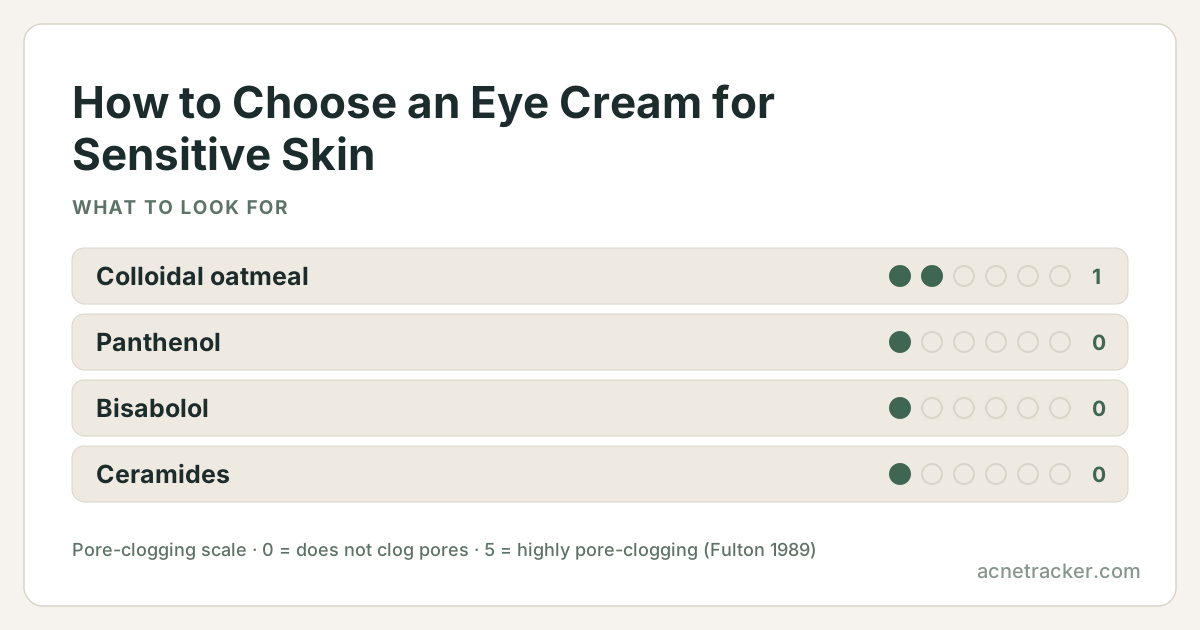
Ingredients to look for
| Ingredient | Why it matters |
|---|---|
| Colloidal oatmeal | One of the few soothing ingredients with a long regulatory and clinical track record in irritated skin, and it adds no fragrance materials to react to. |
| Panthenol | Hydrates and calms with a very low reaction rate. It is among the least likely things in a formula to sting on a compromised lid, which is the key criterion here. |
| Bisabolol | The isolated calming component of chamomile. It gives you the botanical's benefit while leaving behind the allergenic fraction of the whole essential oil — exactly the right trade on lid skin. |
| Ceramides | Sensitivity is often a barrier that lets irritants in too easily. Rebuilding the barrier reduces reactivity itself rather than just soothing after the fact. |
| Squalane | Fulton rates it 1. No scent, no unsaturated bonds to oxidise into irritants, and almost nothing in it to react to — the lowest-drama emollient available. |
Ingredients to avoid
| Ingredient | Why it matters |
|---|---|
| Fragrance and essential oils, without exception | The single most common cause of eyelid contact dermatitis. 'Natural fragrance', 'parfum' and botanical oil blends are the same problem under different names. |
| Methylisothiazolinone and formaldehyde releasers | Well-documented contact allergens. They are more common in rinse-off products, but a leave-on product on the eyelid is the worst place to encounter them. |
| Trusting 'hypoallergenic' and 'dermatologist-tested' | Neither term is regulated or defined. 'Ophthalmologist-tested' at least implies testing near the eye, but none of the three are a promise that you will tolerate it. |
| Introducing several new products at once | If you react, you will have no idea to what, and you will end up eliminating things that were fine while keeping the culprit. |
How to choose
Shorten the list before you evaluate it. On lid skin, the number of ingredients correlates with the number of chances to react, so a ten-ingredient bland cream genuinely beats a forty-ingredient one with a botanical complex. Require fragrance-free, and read the list yourself rather than trusting the front of the pack, since 'unscented' can mean a masking fragrance was added. Prefer preservative systems like phenoxyethanol over isothiazolinones. Then patch test properly: inner forearm for a few days tells you almost nothing about eyelids, so if you are prone to lid reactions, test on the skin just outside the orbital rim for several days before going near the lid itself. But the most valuable thing on this page is this: before buying anything, audit what touches your eyes indirectly. Shampoo and conditioner run over your face in the shower. Hair spray drifts. Nail polish sits on fingers that rub your eyes. Face serums migrate upward overnight. Eyelid dermatitis is frequently caused by one of those and not by your eye cream at all, and if you are reacting persistently, a doctor and patch testing will find the answer that trial-and-error shopping will not.
How to apply
Use less than you think and place it on the orbital bone, not the lid — most of the exposure the lid gets is from migration anyway, so applying directly is doubling a dose. Pat with a clean ring finger; wash your hands first, which matters more here than anywhere. Introduce one new product at a time and wait two weeks before adding another. If you flare, stop everything except a bland moisturiser rather than adding a soothing product on top, since the additions are what created the problem. And keep the routine boring on purpose; sensitive lid skin rewards stability far more than it rewards ingredients.
Frequently asked questions
Why do my eyelids react to products my face is fine with?
Eyelid skin is dramatically thinner than facial skin and has a correspondingly weaker barrier, so the same concentration penetrates far more readily. Dermatologists see this constantly: a product used for years on the cheeks causes a lid reaction the first time it migrates upward.
Does hypoallergenic mean an eye cream is safe for sensitive skin?
No. The term has no legal definition and no testing requirement behind it, so any brand may use it. 'Ophthalmologist-tested' is slightly more meaningful because it implies testing near the eye, but none of these claims predict whether your particular skin will tolerate a particular formula.
Can shampoo cause eyelid dermatitis?
Yes, and it is one of the classic missed causes. Products rinse over the face in the shower and are transferred by hands throughout the day, and the eyelid reacts where the scalp and fingers do not. This is why eliminating eye creams one by one so often fails to solve the problem.
Should sensitive skin use fragrance-free eye cream?
Yes, and this is close to the only hard rule in the category. Fragrance is the most common cause of eyelid contact dermatitis, and there is no benefit it provides to justify the risk on the body's thinnest skin. This applies equally to essential oils and to blends marketed as natural.
When should a reaction around the eyes be seen by a doctor?
If it recurs despite simplifying your routine, if the skin is weeping, blistering or thickening, if there is swelling that affects vision, or if it affects one eye only. Persistent eyelid dermatitis is worth patch testing, because identifying the actual allergen ends the problem in a way that switching products repeatedly does not.
Sources & further reading
There is no single study of this exact question. The guidance here is reasoned from the ingredient profiles below, each of which carries its own references:
- Colloidal Oatmeal2 refs
- Panthenol3 refs
- Bisabolol3 refs
- Ceramides3 refs
- Squalane3 refs
Show every reference behind this page (11)
- FDA OTC monograph — skin protectant drug products (colloidal oatmeal)cited by Colloidal Oatmeal
- PubMed — Colloidal oatmeal formulations as adjunct treatments in atopic dermatitis (J Drugs Dermatol, 2012)cited by Colloidal Oatmeal
- PubChem — Panthenol compound summarycited by Panthenol
- European Commission CosIng database — Panthenolcited by Panthenol, Bisabolol, Ceramides, Squalane
- Safety Assessment of Panthenol, Pantothenic Acid, and Derivatives as Used in Cosmetics (PubMed)cited by Panthenol
- PubChem — Bisabolol (CID 1549992)cited by Bisabolol
- RIFM fragrance ingredient safety assessment, α-bisabolol, CAS registry number 515-69-5 (PubMed)cited by Bisabolol
- DermNet — Skin barrier functioncited by Ceramides
- PubChem — Ceramide compound summarycited by Ceramides
- PubChem — Squalane compound summarycited by Squalane
- DermNet — Emollients and moisturiserscited by Squalane
Medical disclaimer
Ingredients mentioned on this page
Find your personal acne triggers
Our free Acne Tracker lets you log breakouts, sleep, stress and diet, and shows you which factors correlate with your flare-ups.