Bisabolol: Comedogenic Rating & Ingredient Analysis
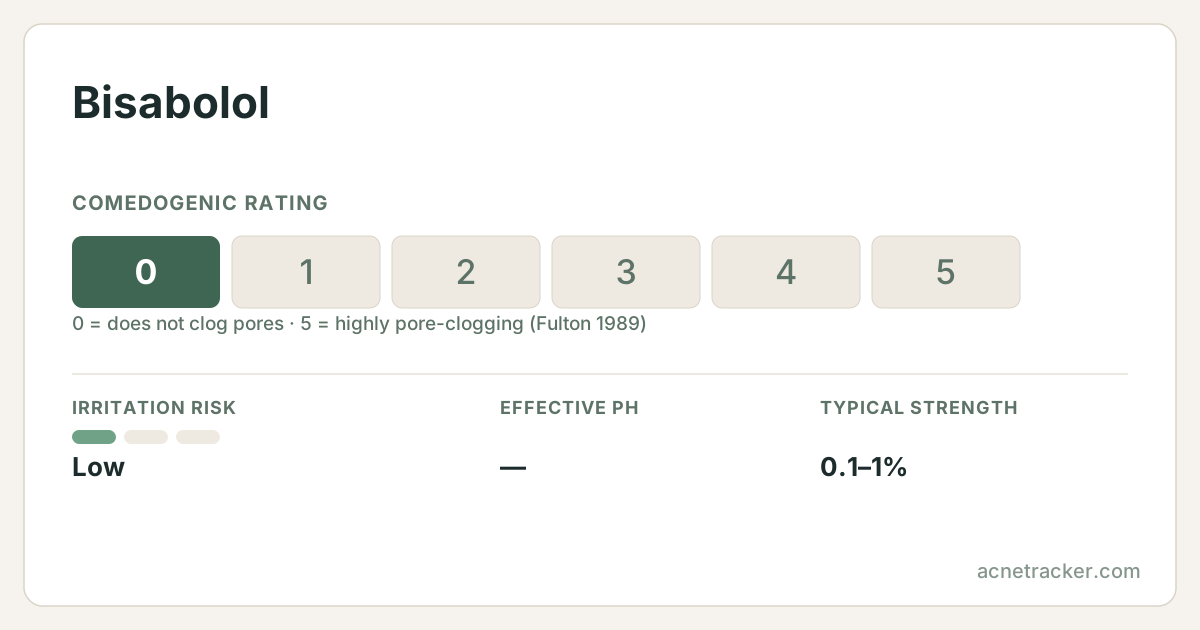
Bisabolol is one of skincare's most reliable soothing ingredients, best known as the calming active naturally found in chamomile. It is also sourced from the candeia tree and can be made synthetically, but its reputation comes from that gentle, anti-inflammatory chamomile character. Bisabolol is prized for calming redness, easing irritation and improving the overall comfort of sensitive and reactive skin. It is frequently added to formulas that also contain stronger actives, where its soothing quality helps offset the irritation those ingredients can cause, making it a quiet but valuable team player rather than a headline performer.
Quick facts
- Comedogenic rating
- our estimate — not measured
- Irritation risk
- Low
- Effective pH
- —
- Typical strength
- 0.1–1%
- Pregnancy
- Considered safe
- Suits skin types
- sensitivedrynormalcombinationacne-prone
Where this number comes from
No one has published a comedogenic rating for this ingredient. Fulton's 1989 table tested about 250 raw materials and this was not among them, and we found no later study measuring it. The figure shown is our own reasoning from the ingredient's chemistry and how it is used — treat it as an estimate, not a measurement.
Fulton read his own scale as 0-1 not significant, 2-3 borderline, 4-5 positive. The assay is the rabbit ear at 10% dilution, which the paper itself calls extremely sensitive and not fully predictive of human skin. Ratings describe the raw ingredient; concentration and formulation change real-world behaviour.
Caution profile
The four published fields on this page, on one 0–5 scale. Further from the centre means more care is needed — never that the ingredient is worse.
Derived, not measured: pore-clogging is the published comedogenic rating; irritation maps low/moderate/high to 1/3/5; pregnancy maps safe/caution/avoid to 0/3/5; skin-type limits is how many of the seven skin types this entry does NOT list. Every input is printed in words in the quick-facts card above.
Show the numbers
| Metric | 0–5 | Published field |
|---|---|---|
| Pore-clogging | 0 | 0/5 |
| Irritation | 1 | Low |
| Skin-type limits | 1.4 | 5/7 |
| Pregnancy | 0 | Considered safe |
Working pH and typical strength
Where this ingredient is formulated to sit, and at what concentration.
Both bars come from the fields above: the pH window and the typical strength range published for this ingredient. The tinted column is healthy skin's surface pH (about 4.7–5.75).
Show the numbers
| Metric | 0–5 |
|---|---|
| Typical strength | 0.1–1% |
What is it?
Chemically, bisabolol is a type of alcohol from the terpene family, and the form used in skincare is usually alpha-bisabolol, sometimes labelled levomenol. It occurs naturally in German chamomile and in the bark of the candeia tree. Its main documented actions are anti-inflammatory and soothing: it helps reduce the appearance of redness and calms the skin's response to irritation. It also has some antioxidant and mild antimicrobial properties, and it can enhance the penetration of other ingredients. Because it is oil-soluble, gentle and pleasant, it appears across a huge range of products, from moisturisers and serums to sunscreens and after-sun care, typically at low concentrations.
Benefits
Calms redness and irritation
Bisabolol's well-documented anti-inflammatory action helps soothe redness and ease the discomfort of sensitive, reactive or irritated skin, improving overall comfort.
Offsets stronger actives
Its soothing quality makes bisabolol a useful companion to potentially irritating ingredients like retinoids and acids, helping the skin tolerate them more comfortably.
Gentle skin conditioning
As a mild, skin-friendly ingredient, bisabolol conditions and comforts the skin, supporting a healthy, calm feel that suits even delicate complexions.
Antioxidant and antimicrobial support
Bisabolol offers modest antioxidant activity and mild antimicrobial properties, adding supportive benefits that complement its main soothing role.
How to use
Bisabolol is very easy to incorporate, since it is gentle and compatible with almost everything. Use products containing it once or twice daily, morning or night, on clean skin; there is no adjustment period. It is especially useful in routines that include stronger actives such as retinol or exfoliating acids, where its calming effect can reduce irritation — look for it in your moisturiser or soothing serum. It pairs naturally with other comforting ingredients like niacinamide and panthenol. Because it is typically used at low concentrations and often supports the main actives, you will usually find it partway down an ingredient list, which is completely normal.
Side effects
Bisabolol is among the gentlest and best-tolerated soothing ingredients, and reactions to it are rare. It is generally suitable even for sensitive and reactive skin, and its purpose is to calm rather than to challenge the skin. As with any ingredient, allergy is possible but uncommon, so if you have very reactive skin a short patch test of a new product is still worthwhile to confirm your individual tolerance.
Who should avoid it
There is little reason for most people to avoid bisabolol; it is designed for comfort and suits sensitive, dry, acne-prone and combination skin alike. The only real caveat is that, on rare occasions, some people are sensitive to botanical-derived ingredients, so anyone with known chamomile or plant allergies should patch test first. That calming profile is regarded as safe to keep using through pregnancy and breastfeeding too.
Pairs well with
Frequently asked questions
What is bisabolol used for?
Bisabolol is used mainly to soothe and calm the skin, reducing the appearance of redness and easing irritation. It is a gentle, chamomile-derived anti-inflammatory ingredient.
Is bisabolol good for sensitive skin?
Yes. Bisabolol is one of the gentlest soothing ingredients and is well suited to sensitive, reactive and irritated skin, helping to keep it calm and comfortable.
Can bisabolol help with retinol irritation?
Yes. Its calming, anti-inflammatory action can help offset the redness and irritation that retinoids and acids sometimes cause, making stronger routines more comfortable.
Is bisabolol natural?
It occurs naturally in chamomile and the candeia tree, though it can also be produced synthetically. The synthetic and natural forms are used similarly for their soothing benefits.
Is bisabolol safe in pregnancy?
Topical bisabolol is generally considered safe during pregnancy and breastfeeding. Raise it with your healthcare provider anyway if you are unsure, since bisabolol is usually one soothing ingredient among many in a finished formula.
Where this ingredient shows up here
Counted across this database, not the web — these are the pages on this site that reason about this ingredient.
Buying guides 7
- How to Choose a Body Wash for Sensitive Skin
- How to Choose a Face Oil for Sensitive Skin
- How to Choose a Micellar Water for Redness
- How to Choose a Micellar Water for Rosacea
- How to Choose a Micellar Water for Sensitive Skin
- How to Choose a Night Cream for Sensitive Skin
+1 more on the site
Sources & further reading
Medical disclaimer
Find your personal acne triggers
Our free Acne Tracker lets you log breakouts, sleep, stress and diet, and shows you which factors correlate with your flare-ups.