How to Choose a Night Cream for Dry Skin
Dry skin lacks oil, and night is when that shortfall bites hardest: water loss climbs while you sleep, so skin that felt merely tight by day can wake up flaky and rough. This is the one concern where a richer, more occlusive night cream genuinely earns its place over a lighter daytime lotion. The job is to layer humectants that pull in water, emollients that smooth, and occlusives that seal the lot in until morning. This guide describes that lipid-rich profile so you can tell a truly nourishing night cream from a thick-feeling one that is mostly water and thickener.
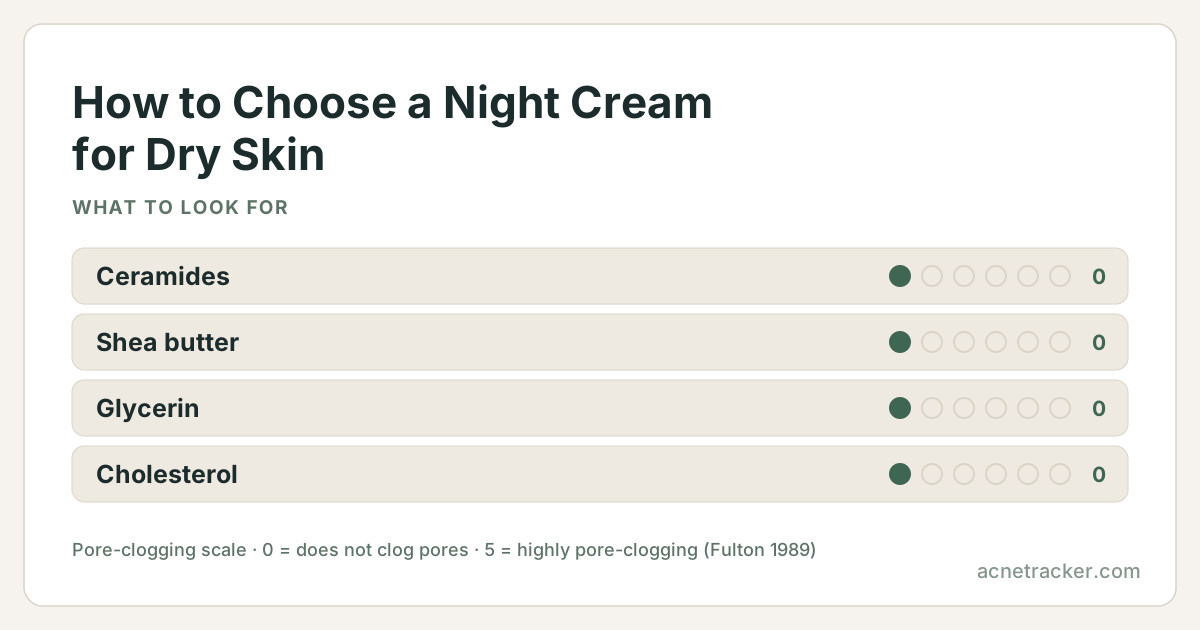
Ingredients to look for
| Ingredient | Why it matters |
|---|---|
| Ceramides | The core barrier lipid dry skin is short on; replacing it overnight is what stops the morning flaking and tightness. |
| Shea butter | A rich emollient that fills and smooths dry, rough skin and gives a night cream its genuinely nourishing feel. |
| Glycerin | Pulls water into the skin so the richer occlusives have moisture to seal in, rather than sealing in dryness. |
| Cholesterol | Works alongside ceramides in the barrier's natural lipid ratio, making repair more complete than ceramides alone. |
| Squalane | A skin-mimicking emollient that softens without heaviness, rounding out a rich formula for dry skin. |
Ingredients to avoid
| Ingredient | Why it matters |
|---|---|
| Denatured alcohol high on the list | It gives a quick-absorbing feel but strips the little oil dry skin has, worsening overnight tightness and flaking. |
| Foaming or high-fragrance 'spa' formulas | Heavy fragrance and surfactant-style feels irritate and dehydrate the very skin a night cream should be repairing. |
| Thin water-gel textures marketed as night cream | For genuinely dry skin a light gel evaporates without sealing, so morning tightness returns; dry skin needs occlusion. |
| Astringent botanicals (witch hazel, menthol, citrus oils) | They add a tingling 'active' feel but dry and sensitise skin that is already short on moisture. |
How to choose
For dry skin, richness is a feature, not a flaw: choose a cream that feels genuinely emollient and look for the humectant-emollient-occlusive trio working together — glycerin near the top, ceramides and cholesterol for repair, shea or squalane for softness. A short ingredient list built around these beats a long one padded with fragrance and extracts. Check what is missing as much as what is present: no denatured alcohol high up, no astringent botanicals. On claims, 'nourishing' and 'rich' are unregulated but the texture and lipid list will tell you if they are earned. This is the concern where buying a separate, richer night cream over your daytime moisturiser makes the most sense, because dry skin's overnight water loss is exactly when heavier occlusion pays off. If your skin is dry and mature, a peptide-containing version adds repair value.
How to apply
Apply to slightly damp skin after cleansing so humectants have water to grab, then press — do not just rub — a generous layer over the face and neck. Dry skin is the one case where a fuller amount is appropriate. Add a second layer on stubbornly rough patches like the cheeks. If your skin is very dry, a thin smear of a pure occlusive over the top ('slugging') can seal it further, though many find a good night cream enough. Let it absorb for a minute before bed. Even a dry-skin routine needs morning sunscreen, especially if any exfoliating acid is part of it.
Frequently asked questions
Is a rich night cream better than a day cream for dry skin?
At night, often yes. Overnight water loss is higher, so a richer, more occlusive cream seals in moisture while you sleep. Dry skin is the clearest case where a heavier night formula outperforms a light daytime lotion.
Why does my dry skin still feel tight in the morning?
Usually the cream is too light or lacks occlusives, so water evaporates overnight. Look for ceramides plus an occlusive like shea butter, apply to damp skin, and use enough — a thin layer will not hold on very dry skin.
Can I use a body cream on my face if my skin is very dry?
It is not ideal. Body creams are richer but often more fragranced and not tested on facial skin, so they can clog or irritate. A facial night cream with the same lipids is a safer way to get that richness.
Should I still use a night cream if I have dry, flaky patches?
Yes, and gentle exfoliation helps it work. Flakes are dead cells sitting on a dehydrated surface; a lipid-rich night cream softens them, while occasional mild exfoliation lets the cream reach fresh skin underneath.
Sources & further reading
There is no single study of this exact question. The guidance here is reasoned from the ingredient profiles below, each of which carries its own references:
- Ceramides3 refs
- Shea Butter3 refs
- Glycerin3 refs
- Cholesterol2 refs
- Squalane3 refs
Show every reference behind this page (10)
- DermNet — Skin barrier functioncited by Ceramides
- PubChem — Ceramide compound summarycited by Ceramides
- European Commission CosIng database — Ceramide NPcited by Ceramides, Shea Butter, Glycerin, Squalane
- PubChem — Stearic acid (major shea fatty acid)cited by Shea Butter
- Safety Assessment of Butyrospermum parkii (Shea)-Derived Ingredients as Used in Cosmetics (PubMed)cited by Shea Butter
- PubChem — Glycerol compound summarycited by Glycerin
- DermNet — Moisturiserscited by Glycerin, Squalane
- PubChem — Cholesterol (CID 5997)cited by Cholesterol
- PubMed — Optimization of physiological lipid mixtures for barrier repaircited by Cholesterol
- PubChem — Squalane compound summarycited by Squalane
Medical disclaimer
Ingredients mentioned on this page
Find your personal acne triggers
Our free Acne Tracker lets you log breakouts, sleep, stress and diet, and shows you which factors correlate with your flare-ups.