Shea Butter: Comedogenic Rating & Ingredient Analysis
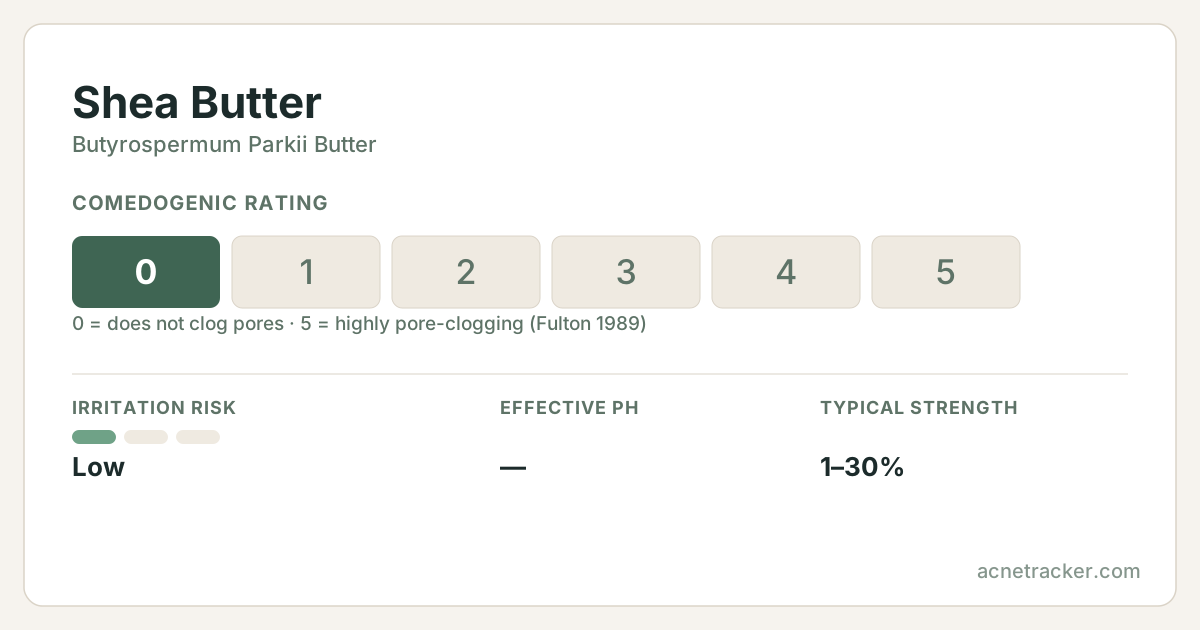
Shea butter is a thick, cream-coloured plant butter pressed from the nuts of the West African shea tree, and it is one of the most effective and comforting emollients for dry, rough or cracked skin. Its richness comes from a high content of fatty acids and a small but valuable fraction of non-saponifiable compounds that give it soothing, conditioning properties beyond simple greasiness. It softens, protects and helps repair a compromised barrier, which is why it turns up in body butters, hand creams and rich facial moisturisers. On the face it is best reserved for dry and mature skin rather than oily complexions.
Quick facts
- Comedogenic rating
- our estimate — not measured
- Irritation risk
- Low
- Effective pH
- —
- Typical strength
- 1–30%
- Pregnancy
- Considered safe
- Suits skin types
- drynormalmaturesensitive
Where this number comes from
No one has published a comedogenic rating for this ingredient. Fulton's 1989 table tested about 250 raw materials and this was not among them, and we found no later study measuring it. The figure shown is our own reasoning from the ingredient's chemistry and how it is used — treat it as an estimate, not a measurement.
No published comedogenic rating exists for shea butter — it is not in Fulton's Table I and we found no study that measured it. We publish 0 because shea is widely used on acne-prone skin without a clinical signal, but that is an inference from use rather than a measurement. One reason to stay cautious: cocoa butter, a comparable hard plant butter, produced follicular hyperkeratosis in both the 1976 and 1984 rabbit assays. If you break out from rich butters, shea is worth patch-testing rather than assuming.
Fulton read his own scale as 0-1 not significant, 2-3 borderline, 4-5 positive. The assay is the rabbit ear at 10% dilution, which the paper itself calls extremely sensitive and not fully predictive of human skin. Ratings describe the raw ingredient; concentration and formulation change real-world behaviour.
Caution profile
The four published fields on this page, on one 0–5 scale. Further from the centre means more care is needed — never that the ingredient is worse.
Derived, not measured: pore-clogging is the published comedogenic rating; irritation maps low/moderate/high to 1/3/5; pregnancy maps safe/caution/avoid to 0/3/5; skin-type limits is how many of the seven skin types this entry does NOT list. Every input is printed in words in the quick-facts card above.
Show the numbers
| Metric | 0–5 | Published field |
|---|---|---|
| Pore-clogging | 0 | 0/5 |
| Irritation | 1 | Low |
| Skin-type limits | 2.1 | 4/7 |
| Pregnancy | 0 | Considered safe |
Working pH and typical strength
Where this ingredient is formulated to sit, and at what concentration.
Both bars come from the fields above: the pH window and the typical strength range published for this ingredient. The tinted column is healthy skin's surface pH (about 4.7–5.75).
Show the numbers
| Metric | 0–5 |
|---|---|
| Typical strength | 1–30% |
What is it?
Shea is composed mainly of oleic and stearic fatty acids, along with a notable unsaponifiable fraction containing triterpenes, tocopherols and other plant compounds credited with mild anti-inflammatory and skin-soothing effects. This combination makes it both emollient, filling in the gaps between skin cells to smooth texture, and partly occlusive, forming a protective layer that slows water loss. Refined shea is odourless and pale; unrefined shea keeps a nutty scent and more of its natural minor compounds. Its comedogenic rating is low, but its sheer richness means it is still better suited to dry areas than to the T-zone of oily skin.
Benefits
Deeply softens dry skin
Its fatty acids smooth and condition rough, flaky or cracked areas, making shea a reliable rescue for very dry hands, elbows and weather-stressed skin.
Helps repair the barrier
By supplying lipids and forming a protective layer, shea supports a damaged moisture barrier and reduces the water loss behind tightness and sensitivity.
Soothing plant compounds
Its unsaponifiable fraction of triterpenes and tocopherols lends mild anti-inflammatory, calming properties, adding comfort for irritated or reactive dry skin.
Protective and cushioning
The partly occlusive texture shields skin from cold, wind and dryness, making it valuable in winter balms and rich creams for exposed areas.
How to use
Use shea butter where skin is dry: as a rich moisturiser or balm on the body, hands and lips, or in facial creams for dry and mature skin, applied as the final occlusive step at night. A little goes a long way; warm a small amount between the fingers and press it into slightly damp skin to help it spread and absorb. On oily or acne-prone areas, use it lightly or reserve it for dry patches only. Pairing it over a humectant like glycerin or hyaluronic acid seals in the water for a stronger effect.
Side effects
Shea is one of the gentlest butters and rarely causes irritation, even on sensitive skin; it is often recommended for eczema-prone and very dry skin. Despite being derived from a nut, it is very low in the proteins that trigger nut allergies, and reactions are uncommon, though people with severe allergies may still prefer caution. Its main practical issue is heaviness: on oily skin, too much can feel greasy and occlusive.
Who should avoid it
Oily and very congestion-prone skin should use shea sparingly on the face, favouring lighter moisturisers and keeping shea for dry patches or the body. Those with severe tree-nut allergies may wish to patch test, though shea allergy is rare. It is regarded as safe for topical use during pregnancy.
Frequently asked questions
Is shea butter comedogenic?
Shea has a low comedogenic rating, so it does not clog pores easily, but it is rich and heavy. On oily or acne-prone facial skin it is best used lightly or kept to dry areas and the body.
Is shea butter safe for nut allergies?
Shea is very low in the allergenic proteins found in tree nuts, so reactions are uncommon and it is widely tolerated, but anyone with severe nut allergies should patch test or seek advice first.
Can shea butter help eczema-prone skin?
Its emollient, barrier-supporting and mildly anti-inflammatory properties make it a comforting choice for very dry, eczema-prone skin, helping to soften and protect, though it complements rather than replaces medical treatment.
How do I use shea butter on my face?
Reserve it for dry or mature skin, applying a small amount as the last, occlusive step at night over lighter hydrating layers. Warm it between your fingers and press gently into damp skin so it spreads thinly.
Where this ingredient shows up here
Counted across this database, not the web — these are the pages on this site that reason about this ingredient.
Sources & further reading
Medical disclaimer
Find your personal acne triggers
Our free Acne Tracker lets you log breakouts, sleep, stress and diet, and shows you which factors correlate with your flare-ups.