How to Choose a Night Cream for Acne-Prone Skin
Overnight is when acne-prone skin does its housekeeping: barrier lipids rebuild, cell turnover peaks and water loss runs higher than in daytime. A night cream for this skin has an awkward job — it has to feel light and stay non-comedogenic, yet still repair the barrier that nightly acne actives keep stripping. The point is not to add richness for its own sake, but to give adapalene, retinal or acids somewhere soft to land. This guide describes the texture and ingredient profile that supports congested skin at night, so you can read any label critically instead of trusting an 'oil-free for acne' banner on the tube.
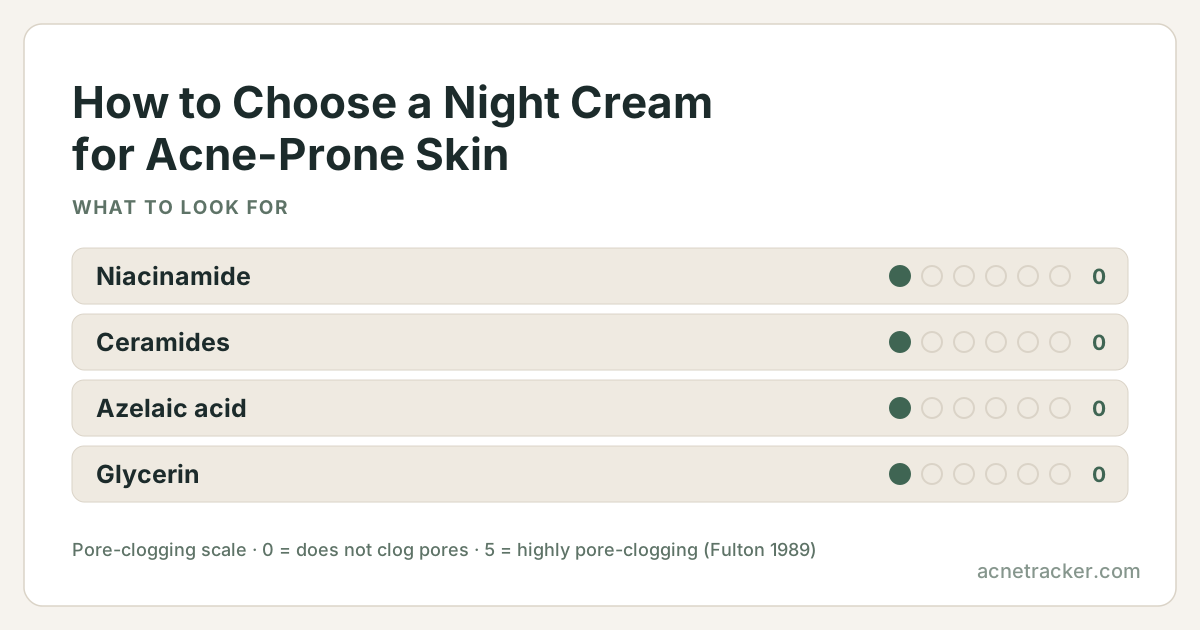
Ingredients to look for
| Ingredient | Why it matters |
|---|---|
| Niacinamide | Helps calm the redness that nightly actives leave behind and supports the barrier without adding oil — a natural fit under retinoids. |
| Ceramides | Replace the barrier lipids that adapalene and acids deplete, so the skin tolerates treatment instead of flaking and rebounding. |
| Azelaic acid | One of the few actives that fights both congestion and post-acne marks at night without heavily sensitising the skin. |
| Glycerin | A weightless humectant that keeps congested skin hydrated overnight, since dehydrated acne-prone skin tends to overproduce oil. |
| Squalane | A light, non-comedogenic emollient that softens the drag of retinoids without the pore risk of heavier plant oils. |
Ingredients to avoid
| Ingredient | Why it matters |
|---|---|
| Heavy occlusives sold as 'rich repair' (thick petrolatum balms, cocoa butter) | Acne-prone skin rarely needs a wax seal; on congested areas it can trap sebum and worsen closed comedones overnight. |
| Coconut oil and isopropyl myristate high on the list | Both rank high on pore-clogging scales, and hours of overnight contact is exactly when that matters most. |
| Added fragrance and essential oils | They irritate skin that is already inflamed by actives, and irritation drives more breakouts, not fewer. |
| A night cream that also packs its own retinoid or acid | Doubling actives you already use elsewhere in the routine is how people end up over-exfoliated; keep the cream as the calm layer. |
How to choose
Start with texture: for acne-prone skin a night cream should be a light lotion or gel-cream, not a balm, and should absorb without leaving a greasy film on the pillow. Scan the first five ingredients for pore-clogging oils and drop anything led by coconut oil or a heavy butter. Then look for the supporting cast above — niacinamide and ceramides are the two that matter most for tolerating treatment. Decode the claims honestly: 'non-comedogenic' is unregulated but a reasonable signal, while 'clears acne overnight' is not a claim a moisturiser can keep. Decide whether you even need a dedicated night cream: if your daytime moisturiser is already light and non-comedogenic, using a little more of it at night is completely valid. Buy a separate one only when your skin needs more repair at night than by day — which is common once nightly adapalene enters the routine.
How to apply
Cleanse, apply your acne active (adapalene, azelaic acid or a retinoid) to dry skin, then layer the night cream on top — or use the cream first as a buffer if the active stings. A pea-sized amount over the whole face is plenty; piling it on will not repair faster. Keep it thinner over the oily central panel and slightly more on drier cheeks. Do not skip it on nights the active makes you flaky, that is exactly when the barrier needs help. And whatever you use at night, sunscreen the next morning is non-negotiable while you are on acne actives.
Frequently asked questions
Can a night cream cause more breakouts on acne-prone skin?
It can if it is too rich or built on pore-clogging oils like coconut oil. A light, non-comedogenic lotion or gel-cream rarely does, and the barrier support it gives usually means fewer breakouts once actives are in play.
Should I put my night cream before or after adapalene?
Either works. Applying adapalene first, then cream on top, gives the strongest active effect; applying a thin layer of cream first buffers the sting for sensitive or beginner skin. Consistency matters more than the order.
Do I need a richer night cream if I use retinoids for acne?
Usually yes. Retinoids raise overnight water loss and flaking, so a night cream with ceramides and niacinamide helps the skin tolerate them. It does not need to be heavy, just more repairing than a bare gel.
Is a night cream enough to treat acne on its own?
No. A night cream supports the barrier and calms skin, but it does not clear acne by itself. Treatment comes from actives like adapalene, benzoyl peroxide or azelaic acid; the cream makes tolerating them easier.
Sources & further reading
There is no single study of this exact question. The guidance here is reasoned from the ingredient profiles below, each of which carries its own references:
- Niacinamide2 refs
- Ceramides3 refs
- Azelaic Acid3 refs
- Glycerin3 refs
- Squalane3 refs
Show every reference behind this page (9)
- Niacinamide: mechanisms of action and its topical use in dermatology (PubMed)cited by Niacinamide
- European Commission CosIng database — Niacinamidecited by Niacinamide, Ceramides, Azelaic Acid, Glycerin, Squalane
- DermNet — Skin barrier functioncited by Ceramides
- PubChem — Ceramide compound summarycited by Ceramides
- PubChem — Azelaic acid compound summarycited by Azelaic Acid
- DermNet — Azelaic acidcited by Azelaic Acid
- PubChem — Glycerol compound summarycited by Glycerin
- DermNet — Moisturiserscited by Glycerin, Squalane
- PubChem — Squalane compound summarycited by Squalane
Medical disclaimer
Ingredients mentioned on this page
Find your personal acne triggers
Our free Acne Tracker lets you log breakouts, sleep, stress and diet, and shows you which factors correlate with your flare-ups.