How to Choose a Moisturizer for Sensitive Skin
Sensitive skin reacts — with stinging, redness or tightness — to things other skin ignores, so the best moisturizer for it is defined as much by what it leaves out as by what it contains. The winning formula is short, fragrance-free and built around soothing, barrier-supporting ingredients, because a stronger barrier is less reactive over time. The goal is not a long list of exciting botanicals but a calm, predictable cream you can use twice a day without a flare. This page describes that profile so you can read any label and judge whether it is likely to settle your skin or set it off.
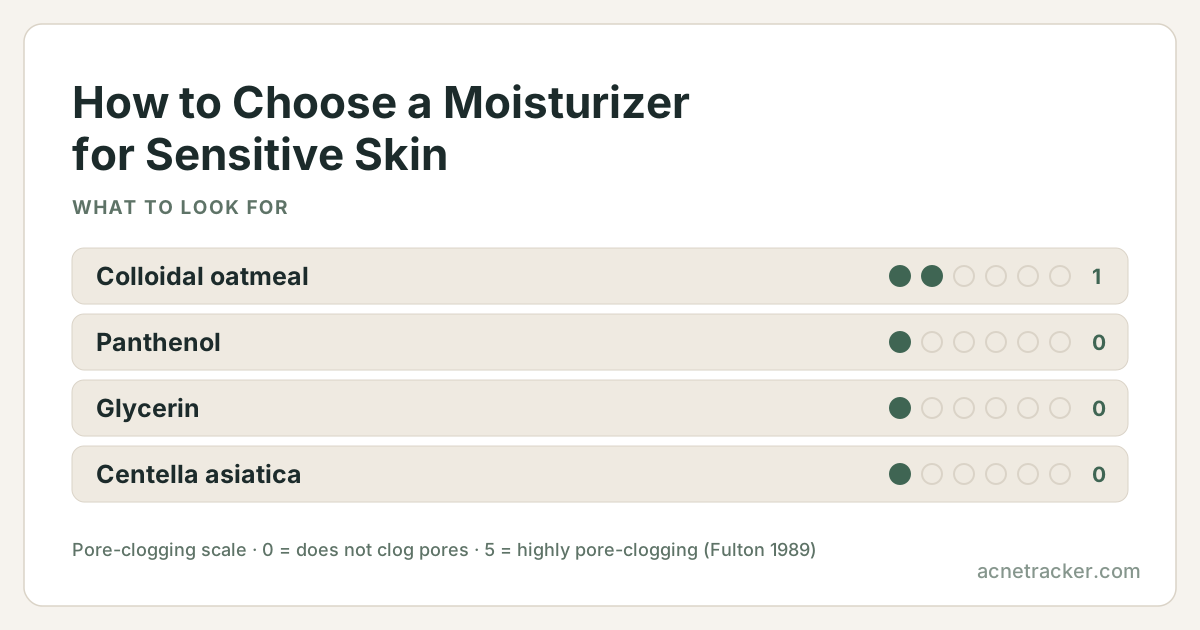
Ingredients to look for
| Ingredient | Why it matters |
|---|---|
| Colloidal oatmeal | A recognised skin-protectant that visibly calms itching and redness, making it a reliable anchor for reactive skin. |
| Panthenol | Soothes and supports repair while hydrating, easing the tightness that sensitive skin feels most. |
| Glycerin | About as gentle as a humectant gets, hydrating well with an extremely low irritation risk. |
| Centella asiatica | A calming botanical with real soothing and barrier-supporting evidence, unusual among plant extracts for being well tolerated. |
| Ceramides | Strengthen the barrier so the skin becomes less reactive to triggers over the following weeks. |
Ingredients to avoid
| Ingredient | Why it matters |
|---|---|
| Fragrance and essential oils | The most common cause of reactions on sensitive skin; even 'natural' essential oils are frequent triggers of stinging and redness. |
| Denatured alcohol high on the list | Its fast evaporation dries and destabilises an already reactive barrier, often causing an immediate sting. |
| Long botanical-heavy ingredient lists | More plant extracts means more potential allergens; on sensitive skin, simplicity is a feature, not a compromise. |
| Strong actives baked into the moisturizer (high acids, high vitamin C) | Sensitive skin does better when actives are a separate, controllable step rather than in every application. |
How to choose
Read the label backwards from what it excludes. 'Fragrance-free' (not merely 'unscented', which can still contain masking fragrance) is the single most useful claim for sensitive skin. Favour a shorter ingredient list, because every added extract is another possible trigger. Look for the soothing anchors above and a simple cream or lotion texture rather than a fluid packed with actives. If your skin is reactive but you are unsure what sets it off, patch-test a new cream on the inner forearm or beside the ear for a few days before using it on the face. Ignore marketing words like 'hypoallergenic' and 'for sensitive skin', which are unregulated; trust the actual list. If reactions are severe, spreading or accompanied by swelling, that can signal an allergy or a skin condition worth discussing with a doctor rather than solving by trial and error.
How to apply
Apply with clean hands to slightly damp skin, patting rather than rubbing to avoid mechanical irritation. Twice daily is plenty; over-layering products is a common trigger. Introduce only one new product at a time and give it a week or two before judging, so that if a reaction happens you know the cause. In the morning, allow the cream to absorb before sunscreen. If your skin is flaring, simplify to just a gentle cleanser and this moisturizer until it settles, then reintroduce other steps slowly.
Frequently asked questions
What is the most important thing in a moisturizer for sensitive skin?
Fragrance-free labelling and a short ingredient list. Removing the most common triggers matters more than any single soothing ingredient you add.
Is 'unscented' the same as 'fragrance-free'?
No. 'Unscented' products can contain masking fragrance to hide raw-ingredient smells, which may still irritate. 'Fragrance-free' means no fragrance was added and is the safer choice.
Are natural or essential oils better for sensitive skin?
Not usually. Essential oils are among the most common triggers of stinging and allergic reactions. 'Natural' says nothing about how well your skin will tolerate it.
Can I use actives if my skin is sensitive?
Often yes, but introduce them slowly, one at a time, at low strength, and keep them separate from your moisturizer so you can control exposure and stop easily if needed.
When should sensitivity be checked by a doctor?
If reactions are severe, spreading, or come with swelling or persistent rash, see a doctor. That pattern can point to an allergy or skin condition rather than simple product intolerance.
Sources & further reading
There is no single study of this exact question. The guidance here is reasoned from the ingredient profiles below, each of which carries its own references:
- Colloidal Oatmeal2 refs
- Panthenol3 refs
- Glycerin3 refs
- Centella Asiatica2 refs
- Ceramides3 refs
Show every reference behind this page (10)
- FDA OTC monograph — skin protectant drug products (colloidal oatmeal)cited by Colloidal Oatmeal
- PubMed — Colloidal oatmeal formulations as adjunct treatments in atopic dermatitis (J Drugs Dermatol, 2012)cited by Colloidal Oatmeal
- PubChem — Panthenol compound summarycited by Panthenol
- European Commission CosIng database — Panthenolcited by Panthenol, Glycerin, Centella Asiatica, Ceramides
- Safety Assessment of Panthenol, Pantothenic Acid, and Derivatives as Used in Cosmetics (PubMed)cited by Panthenol
- PubChem — Glycerol compound summarycited by Glycerin
- DermNet — Moisturiserscited by Glycerin
- Bylka W et al. Centella asiatica in dermatology: an overview. Phytother Res 2014 Aug (PubMed)cited by Centella Asiatica
- DermNet — Skin barrier functioncited by Ceramides
- PubChem — Ceramide compound summarycited by Ceramides
Medical disclaimer
Ingredients mentioned on this page
Find your personal acne triggers
Our free Acne Tracker lets you log breakouts, sleep, stress and diet, and shows you which factors correlate with your flare-ups.