How to Choose a Face Oil for Eczema-Prone Skin
Eczema is the one concern in this category where oil selection has been studied properly, and the findings are specific enough to be worth following. Atopic skin has a genetically impaired barrier — often reduced filaggrin, always a disordered lipid matrix — and it loses water constantly. Emollients are a mainstay of management for exactly that reason. But the research also found something people find counterintuitive: not all oils help, and one of the most popular ones measurably makes the barrier worse. This page follows the evidence, which means it recommends fewer oils than a typical natural-skincare list and explains why.
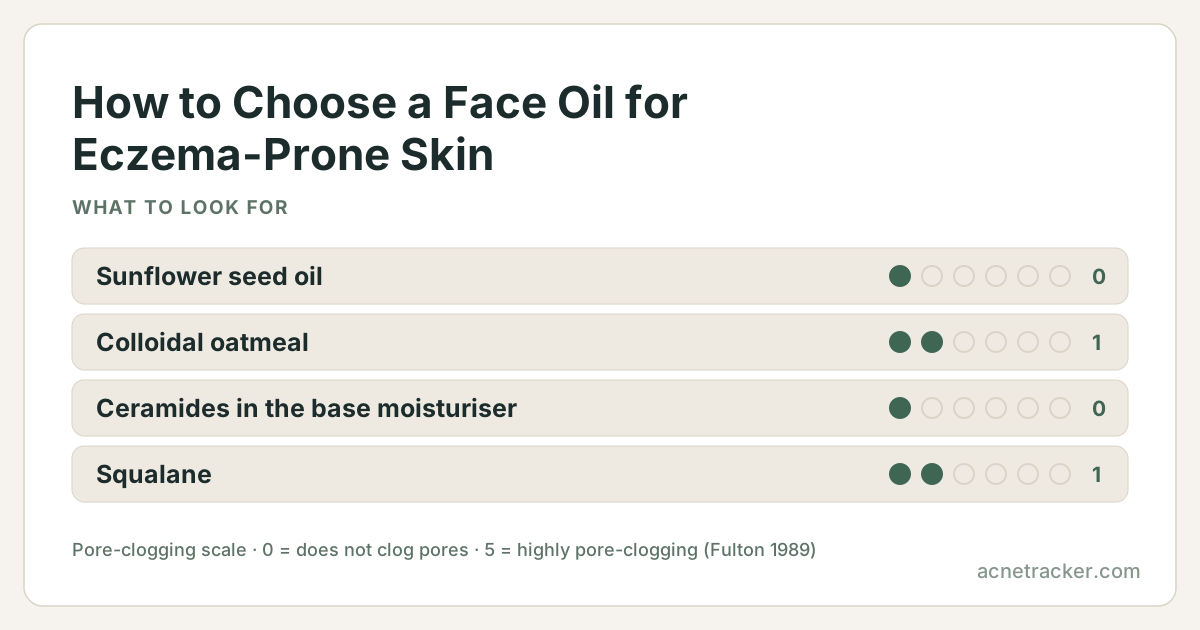
Ingredients to look for
| Ingredient | Why it matters |
|---|---|
| Sunflower seed oil | The best-supported choice. In controlled work on infant skin, sunflower oil preserved barrier integrity and improved hydration, and it is rated 0 by Fulton. |
| Colloidal oatmeal | Long-established in atopic dermatitis care, with anti-inflammatory and anti-itch data behind it. Widely used in eczema emollients for good reason. |
| Ceramides in the base moisturiser | Atopic skin is ceramide-deficient specifically. An oil supplies fatty acids; the ceramides have to come from the cream underneath it. |
| Squalane | Inert, fragrance-free and rated 1 by Fulton. When skin is actively flaring, an oil with nothing in it to react to is the safest thing on the shelf. |
| Glycerin in the layer beneath | The humectant with the strongest evidence in eczema emollients. The oil holds it in place, but the glycerin is what supplies hydration. |
Ingredients to avoid
| Ingredient | Why it matters |
|---|---|
| Olive oil | The clearest negative finding in this area: applied to atopic and infant skin, olive oil increased water loss and damaged the barrier, and its use as a home remedy for eczema is not supported. |
| Essential oils and fragrance | Atopic skin has a leaky barrier and a primed immune system — the ideal setup for developing a contact allergy on top of the eczema you already have. |
| Coconut oil on the face | It has some antibacterial data in atopic dermatitis, but it is rated 4 in the reproduced tables. On body skin it may be worth it; on a face that also breaks out, it is not. |
| Food-grade oils from the kitchen | Unrefined kitchen oils carry proteins and allergens that refined cosmetic grades remove. Nut and seed oils in particular are a poor idea on broken atopic skin. |
How to choose
Follow the trial evidence rather than the folklore. Sunflower oil is the oil with supportive data on atopic and infant skin, and olive oil is the one with data against it — a distinction that matters because olive oil is still recommended as a home remedy in places where it should not be. The mechanism is the oleic acid content, which disturbs the lipid lamellae rather than reinforcing them. Beyond that, keep the ingredient list short and unscented, and treat the oil as an addition to an emollient rather than a replacement for one: the ceramide deficiency in atopic skin is not something a plant oil fixes. Watch for food allergy overlap too, which is common in atopic children and adults — almond, sesame and peanut-derived oils are worth avoiding if the corresponding allergy exists. Finally, be clear about scope. Emollients reduce flares and extend the gaps between them, but active eczema on the face often needs a topical anti-inflammatory prescribed by a doctor, and delaying that to try more oils tends to cost you skin.
How to apply
Apply liberally and often — eczema management runs on frequency rather than product strength. Moisturise within a few minutes of washing while the skin is damp, then add three or four drops of oil on top to slow the evaporation. Twice daily minimum, more during a flare. Use lukewarm water and keep face washing brief. Do not apply oil onto broken, weeping or infected skin; that needs medical assessment, not emollients. If a flare is active, the oil goes on after any prescribed topical has absorbed, never mixed with it and never underneath it.
Frequently asked questions
Is olive oil a safe face oil for eczema-prone skin?
The evidence points the other way. Studies applying olive oil to atopic and infant skin found increased water loss and barrier disruption, attributed to its oleic acid content. It is a persistent home remedy that the research does not support.
Which oil is best for eczema-prone skin?
Sunflower seed oil has the most supportive data: controlled work found it maintained barrier integrity and improved hydration where olive oil did not. Squalane is the safest option when skin is actively flaring.
Can face oil replace my eczema cream?
No. Atopic skin is ceramide-deficient, and oils supply fatty acids rather than ceramides. Use the oil over your emollient, and never in place of a prescribed anti-inflammatory during a flare.
Why do so many natural oils irritate eczema?
Because a leaky barrier lets plant chemistry reach immune cells that are already primed to react. Essential oils and fragrance are common sensitisers, and atopic skin is the population most likely to develop a contact allergy to them.
Sources & further reading
There is no single study of this exact question. The guidance here is reasoned from the ingredient profiles below, each of which carries its own references:
- Sunflower Seed Oil3 refs
- Colloidal Oatmeal2 refs
- Ceramides3 refs
- Squalane3 refs
- Glycerin3 refs
Show every reference behind this page (10)
- European Commission CosIng database — Helianthus Annuus Seed Oilcited by Sunflower Seed Oil, Ceramides, Squalane, Glycerin
- PubChem — Linoleic acid (major sunflower fatty acid)cited by Sunflower Seed Oil
- Safety Assessment of Helianthus annuus (Sunflower)-Derived Ingredients as Used in Cosmetics (PubMed)cited by Sunflower Seed Oil
- FDA OTC monograph — skin protectant drug products (colloidal oatmeal)cited by Colloidal Oatmeal
- PubMed — Colloidal oatmeal formulations as adjunct treatments in atopic dermatitis (J Drugs Dermatol, 2012)cited by Colloidal Oatmeal
- DermNet — Skin barrier functioncited by Ceramides
- PubChem — Ceramide compound summarycited by Ceramides
- PubChem — Squalane compound summarycited by Squalane
- DermNet — Emollients and moisturiserscited by Squalane, Glycerin
- PubChem — Glycerol compound summarycited by Glycerin
Medical disclaimer
Ingredients mentioned on this page
Find your personal acne triggers
Our free Acne Tracker lets you log breakouts, sleep, stress and diet, and shows you which factors correlate with your flare-ups.