How to Choose a Micellar Water for Eczema-Prone Skin
Eczema-prone skin lives with a barrier that leaks moisture and overreacts to irritants, so any cleanser is a balancing act between removing the day and disturbing an already fragile surface. Micellar water is attractive here because it works without hot water or foaming detergents, but it is not automatically safe: surfactant left to dry on atopic skin can itch, and a cotton pad adds mechanical friction the label never flags. This page describes the profile that makes a micellar water genuinely barrier-friendly for eczema-prone skin, the additives most likely to provoke an itch, and how to use it without leaving a film. We review ingredient profiles rather than brands, because atopic skin reacts to what a formula contains, not to its name.
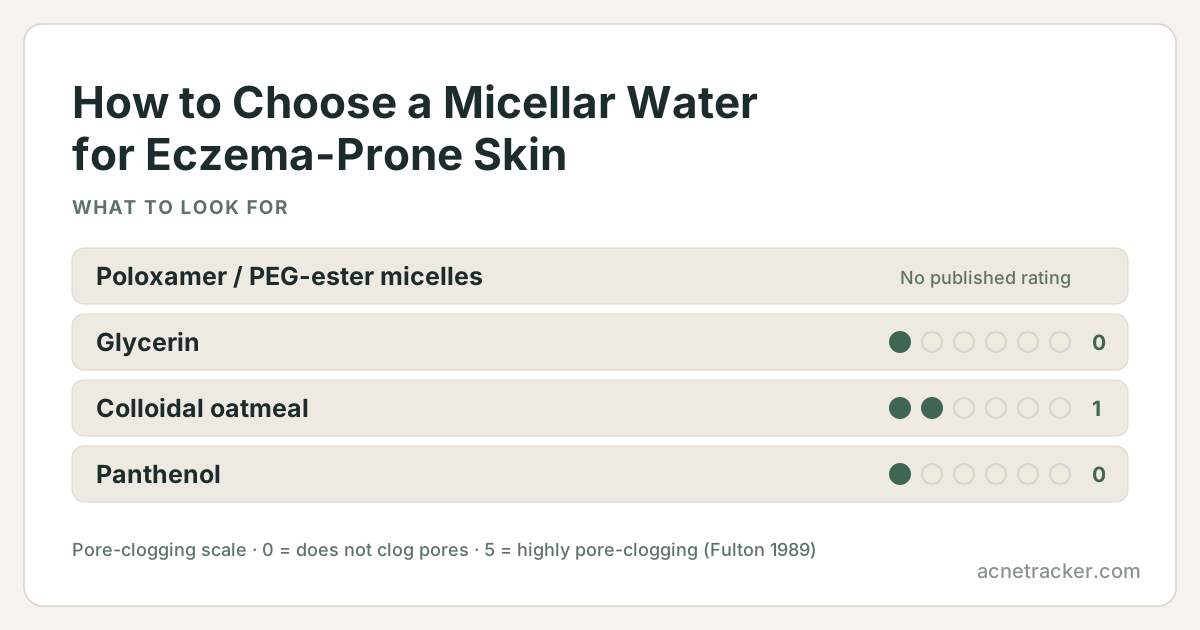
Ingredients to look for
| Ingredient | Why it matters |
|---|---|
| Poloxamer / PEG-ester micelles | The mild non-ionic surfactants that clean at low strength, lifting grime without the lipid-stripping that worsens an already leaky atopic barrier. |
| Glycerin | A humectant that draws water into the outer layers and eases the tightness eczema-prone skin feels after almost any cleanse. |
| Colloidal oatmeal | A classic atopic-skin soother that calms the itch sensation and pairs naturally with low-irritant, fragrance-free formulas. |
| Panthenol | Provitamin B5 that helps the barrier hold moisture, useful in a product that stays on fragile skin without a rinse. |
| Ceramides | Barrier lipids that eczema-prone skin is short on; even a small amount signals a formula designed to rebuild rather than strip. |
| Allantoin | A gentle soother that reduces the feeling of irritation on reactive, flare-prone skin. |
Ingredients to avoid
| Ingredient | Why it matters |
|---|---|
| Added fragrance and essential oils | Fragrance is one of the most common contact allergens and a frequent eczema trigger, with no cleansing role in a leave-on product. |
| Sulfate and other strong detergents | SLS-type surfactants strip the lipids atopic skin cannot spare and are a well-documented irritant for eczema. |
| Denatured alcohol high on the list | It dries the surface and speeds evaporation, both of which aggravate the moisture loss behind eczema. |
| Coarse or dry cotton pads | Rubbing is a mechanical trigger, and dragging a pad across itchy skin can start the itch-scratch cycle. |
How to choose
Read an eczema-prone micellar water for what it leaves behind as much as what it removes. The functional core should be short — water, one or two poloxamer/PEG-type surfactants, a humectant like glycerin, and a preservative — with soothing extras such as colloidal oatmeal, panthenol or ceramides as genuine bonuses. Treat fragrance, essential oils and colourants as liabilities, and trust a clear fragrance-free claim over a vague 'for sensitive skin' banner. Avoid formulas where alcohol denat or a sulfate sits near the top of the list. Because atopic skin dislikes lingering surfactant, a slightly richer, milky micellar water that leaves a humectant trace usually suits better than a watery quick-drying one. Favour a plain-formula ethos over a long botanical list — on eczema-prone skin, fewer ingredients means fewer things to react to. Patch-test on the inner forearm for a few days before using it on the face, since atopic reactions can be delayed.
How to apply
Wet the pad thoroughly; a dry pad dragged over atopic skin is a friction trigger that can set off itching. Hold it against the skin for a few seconds so the micelles loosen the day's grime, then wipe once in one direction without scrubbing. Because eczema-prone skin tolerates residue poorly, follow with a short lukewarm rinse to clear any surfactant, then apply a barrier moisturiser within the first minutes while the skin is still damp. During an active flare, skip the pad on broken skin altogether and clean only intact areas.
Frequently asked questions
Is micellar water safe for eczema-prone skin?
It can be a gentle option, since it cleans without hot water or foaming detergents that strip an atopic barrier. Choose a fragrance-free, sulfate-free formula, wipe without scrubbing, and rinse afterwards — leaving surfactant to dry on eczema-prone skin is what tends to cause trouble.
Can micellar water treat eczema?
No. Micellar water is a cleanser, not a medication; it will not heal a flare or replace a prescribed emollient or steroid cream. The most a good one does for eczema-prone skin is clean gently without adding to the irritation.
Should eczema-prone skin rinse micellar water off?
Yes, a short lukewarm rinse is the safer default, because atopic skin reacts badly to leftover surfactant sitting on the surface. Rinse, then seal with a barrier moisturiser while the skin is still slightly damp.
What should I avoid in a micellar water if I have eczema?
Fragrance, essential oils, denatured alcohol and sulfate detergents are the main things to skip, since each is a known irritant or allergen for eczema-prone skin. The shorter and more fragrance-free the list, the lower the risk.
Can I use micellar water during an eczema flare?
Only on intact skin, and gently. Wiping broken, weeping or cracked areas with a pad adds friction and stinging, so clean around a flare and rely on your prescribed treatment for the affected patches.
Sources & further reading
There is no single study of this exact question. The guidance here is reasoned from the ingredient profiles below, each of which carries its own references:
- Glycerin3 refs
- Colloidal Oatmeal2 refs
- Panthenol3 refs
- Ceramides3 refs
- Allantoin3 refs
Show every reference behind this page (11)
- PubChem — Glycerol compound summarycited by Glycerin
- DermNet — Moisturiserscited by Glycerin
- European Commission CosIng database — Glycerincited by Glycerin, Panthenol, Ceramides, Allantoin
- FDA OTC monograph — skin protectant drug products (colloidal oatmeal)cited by Colloidal Oatmeal
- PubMed — Colloidal oatmeal formulations as adjunct treatments in atopic dermatitis (J Drugs Dermatol, 2012)cited by Colloidal Oatmeal
- PubChem — Panthenol compound summarycited by Panthenol
- Safety Assessment of Panthenol, Pantothenic Acid, and Derivatives as Used in Cosmetics (PubMed)cited by Panthenol
- DermNet — Skin barrier functioncited by Ceramides
- PubChem — Ceramide compound summarycited by Ceramides
- PubChem — Allantoin compound summarycited by Allantoin
- Final report of the safety assessment of allantoin and its related complexes (PubMed)cited by Allantoin
Medical disclaimer
Ingredients mentioned on this page
Find your personal acne triggers
Our free Acne Tracker lets you log breakouts, sleep, stress and diet, and shows you which factors correlate with your flare-ups.