How to Choose a Micellar Water for Waterproof Makeup
Waterproof makeup is engineered to resist water and sweat, which is exactly why plain, watery micellar water underperforms against it: the mild surfactant that lifts everyday foundation cannot dissolve the water-repelling film in mascara, long-wear lipstick or waterproof eyeliner. The honest answer is that a single-phase micellar water is the wrong tool for the job — what you want is a bi-phase (two-layer) micellar water with an oil top layer, or a dedicated oil-based remover. This page explains why, how to tell the formats apart, what to look for, and how to remove stubborn makeup without scrubbing at the delicate eye area. We describe ingredient and format profiles rather than ranking brands, because the chemistry decides the result.
Ingredients to look for
| Ingredient | Why it matters |
|---|---|
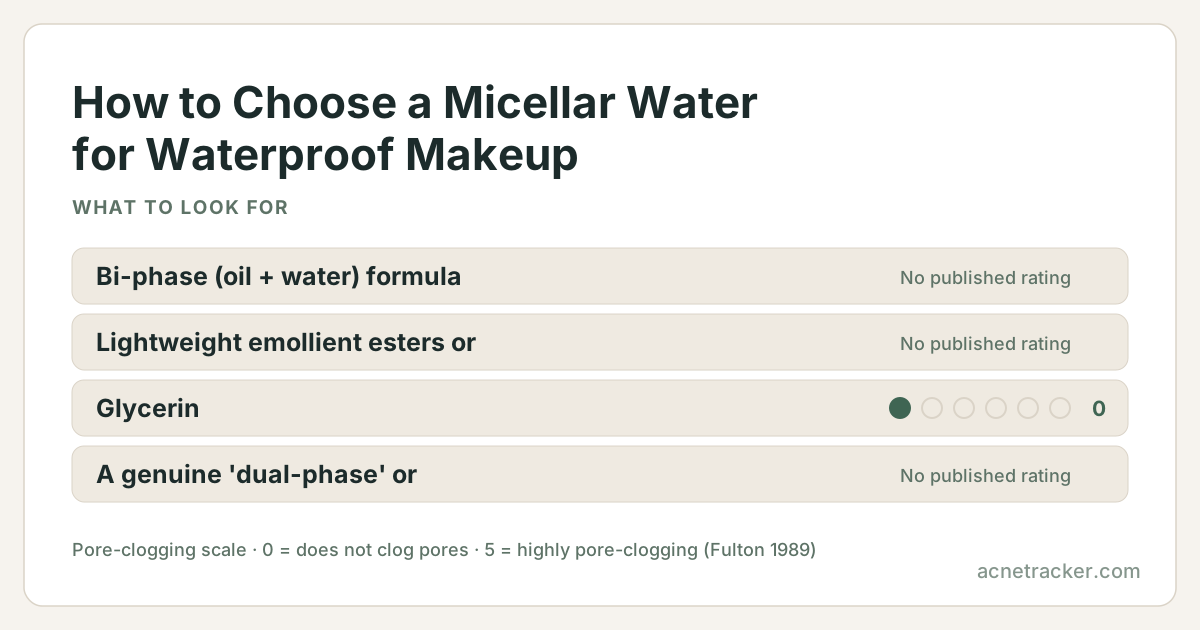
| Bi-phase (oil + water) formula | A two-layer 'bi-phase' micellar water you shake before use; the oil phase dissolves the water-resistant film that plain micellar water slides over. |
| Lightweight emollient esters or oils | These are what actually break down waterproof mascara and long-wear colour — the working ingredient here, unlike in a basic micellar water. |
| Glycerin | A humectant in the water phase that offsets the drying feel and keeps the eye area comfortable after removal. |
| A genuine 'dual-phase' or 'waterproof' claim | One of the few product claims here that reflects a real formulation difference rather than marketing gloss. |
| Panthenol | A soothing addition that helps the delicate skin around the eyes tolerate makeup removal. |
Ingredients to avoid
| Ingredient | Why it matters |
|---|---|
| Expecting a single-phase watery micellar water to cope | It will not fully remove waterproof makeup, so you end up rubbing repeatedly — the friction, not the makeup, is what damages the eye area. |
| Scrubbing and repeated passes at the eyes | The skin here is the thinnest on the face; dragging at waterproof mascara stresses lashes and the eyelid margin. |
| Added fragrance near the eyes | The eye area is sensitive and prone to stinging, so fragrance is a poor idea in a remover used right beside it. |
| Leaving oily residue unrinsed | The oil phase that removes waterproof makeup also leaves a film; unrinsed, it can blur vision and, for fungal-acne-prone skin, the esters may be a concern. |
How to choose
For waterproof makeup, choose by format first and ingredients second. A bi-phase micellar water — visibly split into an oil layer over a water layer, shaken to combine — is the micellar format that actually works, because the oil phase dissolves the water-repellent film while the micellar phase clears the rest. A single-phase watery micellar water is fine for everyday makeup but the wrong choice here, and no ingredient tweak changes that. If you would rather not use oil, a dedicated waterproof eye-makeup remover or a cleansing balm does the same job. Read for a genuine 'bi-phase', 'dual-phase' or 'waterproof' claim, which reflects real formulation rather than marketing gloss. If your skin is fungal-acne-prone, note that the esters and oils doing the dissolving are the same ones some users flag, so rinse well afterwards. Match the format to the makeup and you avoid the real damage, which comes from over-rubbing a weak remover.
How to apply
Shake a bi-phase remover so the layers mix, then soak the pad. The key move is patience: hold the pad against closed eyes or long-wear lip for five to ten seconds so the oil phase can dissolve the film, then wipe once, gently, without dragging. Repeat with a fresh pad rather than scrubbing the same spot. For mascara, draw downward along the lashes rather than rubbing side to side. Because the oil phase leaves residue, follow with a gentle rinse or a second cleanse, especially before applying eye cream, and always more so if your skin is prone to milia or fungal acne.
Frequently asked questions
Does micellar water remove waterproof makeup?
Plain single-phase micellar water does not remove it well — the mild surfactant slides over the water-resistant film. You need a bi-phase micellar water with an oil layer, or an oil-based remover, to dissolve waterproof mascara and long-wear makeup.
What is a bi-phase micellar water?
It is a micellar water split into an oil layer and a water layer that you shake to combine before use. The oil phase dissolves waterproof makeup that ordinary micellar water cannot, which is why it is the format to choose for long-wear products.
Why won't my micellar water take off waterproof mascara?
Because waterproof mascara is built to repel water, and a watery micellar water is mostly water. Without an oil phase it cannot break the film, so you rub repeatedly — switch to a bi-phase or oil remover and let it sit briefly instead.
How do I remove waterproof makeup without irritating my eyes?
Use a bi-phase remover, soak the pad, and press it on closed lashes for several seconds before a single gentle wipe. The friction of repeated scrubbing, not the remover itself, is what irritates the thin skin around the eyes.
Should I rinse after removing waterproof makeup with micellar water?
Yes, because the oil phase that lifts waterproof makeup leaves a film that can blur vision and sit on the skin. A gentle rinse or a light second cleanse clears it, which matters more if you are prone to milia or fungal acne.
Sources & further reading
There is no single study of this exact question. The guidance here is reasoned from the ingredient profiles below, each of which carries its own references:
Show every reference behind this page (5)
- PubChem — Glycerol compound summarycited by Glycerin
- DermNet — Moisturiserscited by Glycerin
- European Commission CosIng database — Glycerincited by Glycerin, Panthenol
- PubChem — Panthenol compound summarycited by Panthenol
- Safety Assessment of Panthenol, Pantothenic Acid, and Derivatives as Used in Cosmetics (PubMed)cited by Panthenol
Medical disclaimer
Ingredients mentioned on this page
Find your personal acne triggers
Our free Acne Tracker lets you log breakouts, sleep, stress and diet, and shows you which factors correlate with your flare-ups.