How to Choose a Micellar Water for Dry Skin
Dry skin lacks oil and often water too, so any cleanser it meets should clean with the lightest possible touch and give something back. Micellar water can suit dry skin well when the formula leans hydrating, because it avoids foaming detergents and hot water — two things that leave dry skin tight and flaking. The risk is a stripped-down, alcohol-tinged formula that lifts makeup but pulls moisture with it. This page describes the humectant-rich, milky profile that keeps dry skin comfortable, the additives that dry it further, and how to use micellar water without the cotton-pad friction that dry, flaky skin dislikes.
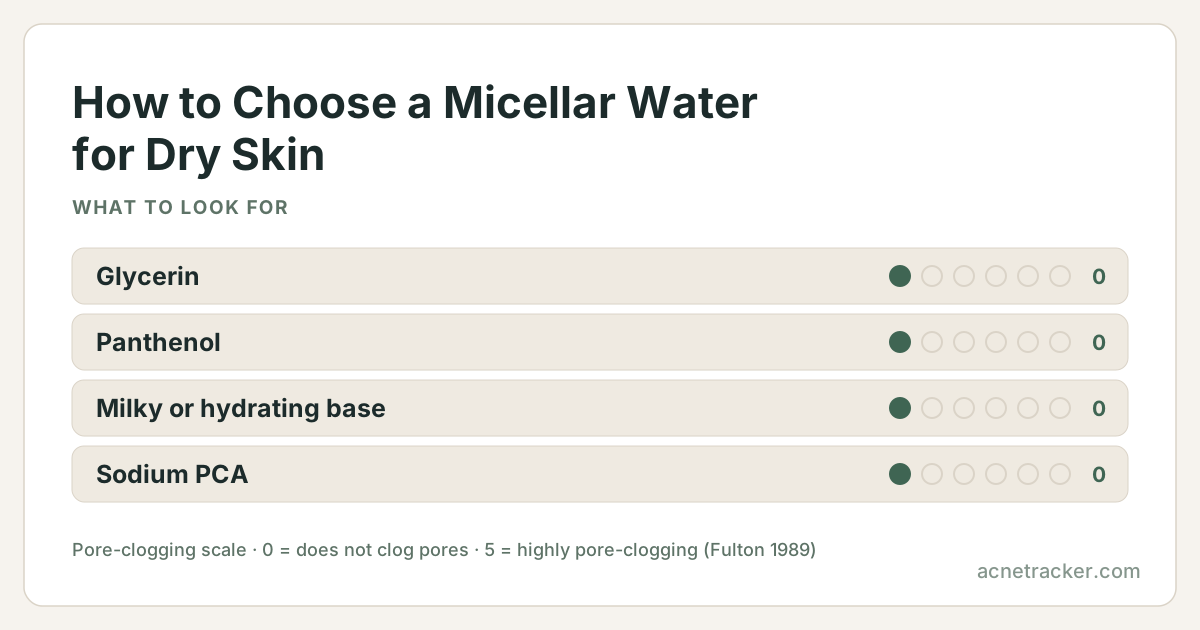
Ingredients to look for
| Ingredient | Why it matters |
|---|---|
| Glycerin | The workhorse humectant that pulls water into the surface, offsetting any tug from the surfactant and leaving dry skin supple rather than tight. |
| Panthenol | Provitamin B5 that softens and helps the barrier hold water, welcome in a leave-on product for parched skin. |
| Milky or hydrating base | A slightly creamy micellar water carries more emollient and humectant, so it lifts makeup while leaving a comforting rather than stripped finish. |
| Sodium PCA | A skin-identical humectant that boosts surface moisture and suits formulas aimed at dry, dehydrated complexions. |
| Allantoin | A gentle soother that calms the roughness and tightness that comes with a compromised, dry surface. |
Ingredients to avoid
| Ingredient | Why it matters |
|---|---|
| Denatured alcohol | It speeds evaporation and leaves dry skin tighter and flakier — the opposite of what a cleanser for dry skin should do. |
| Fragrance and essential oils | Dry skin is often reactive, and fragrance adds irritation risk while giving nothing back in moisture. |
| Strong sulfate surfactants | They over-degrease already oil-poor skin, worsening tightness and the flaking that follows. |
| Rough repeated wiping | Not an ingredient but a habit — dragging a pad over dry, flaky skin lifts loose scale and inflames the surface. |
How to choose
Dry skin should favour the richer end of the micellar spectrum: a milky, hydrating or 'moisturising' micellar water rather than a thin watery one, because the creamier base leaves emollient and humectant behind instead of just lifting oil. Read for glycerin high on the list and other humectants like panthenol or sodium PCA, and rule out denatured alcohol entirely — it is the single additive most likely to leave dry skin tight. Fragrance-free is worth choosing, since dry skin frequently doubles as sensitive. Claims like 'nourishing' and 'hydrating' hint at the right category but are not regulated, so confirm them against the list. The comfort test is simple: after wiping, dry skin should feel soft and cushioned, never squeaky. Because dry skin does not need a heavy cleansing routine, micellar water can often be the whole evening cleanse on low-makeup days, followed immediately by moisturiser to lock in the water you have added.
How to apply
Soak the pad generously — a well-saturated pad glides and spares dry skin the friction that lifts flakes. Press and hold over makeup to dissolve it, then wipe in one soft direction. With a hydrating formula you can usually skip the rinse, which keeps the humectants working on the surface. Apply moisturiser straight away, while skin is still damp, to seal in the water. On days with sunscreen or heavier makeup, follow with a creamy rinse-off cleanser rather than wiping repeatedly.
Frequently asked questions
Is micellar water good for dry skin?
Yes, especially a milky or hydrating formula. It cleans without foaming detergents or hot water, both of which leave dry skin tight, and the humectants in a richer base give some moisture back. Avoid thin alcohol-containing versions.
Does micellar water dry out the skin?
A stripped-back or alcohol-based formula can, but a glycerin-rich milky one does not. For dry skin, choose the hydrating end of the range and skip anything listing denatured alcohol near the top.
Do I need to rinse micellar water off dry skin?
Usually not — leaving a hydrating formula on lets the humectants keep working. Just follow with moisturiser while the skin is damp. Rinse only if you wore heavy makeup or sunscreen and cleansed further.
Can micellar water replace a moisturiser for dry skin?
No. Even a hydrating micellar water is a cleanser, not a moisturiser — it adds a little surface water but no occlusive to hold it in. Always follow with a proper cream on dry skin.
Why does my dry skin feel tight after micellar water?
Tightness points to an alcohol-heavy or overly stripped formula, or to too much cotton-pad friction. Switch to a milky humectant-rich version and wipe gently, holding the pad in place before moving it.
Sources & further reading
There is no single study of this exact question. The guidance here is reasoned from the ingredient profiles below, each of which carries its own references:
- Glycerin3 refs
- Panthenol3 refs
- Sodium PCA2 refs
- Allantoin3 refs
Show every reference behind this page (8)
- PubChem — Glycerol compound summarycited by Glycerin
- DermNet — Moisturiserscited by Glycerin
- European Commission CosIng database — Glycerincited by Glycerin, Panthenol, Sodium PCA, Allantoin
- PubChem — Panthenol compound summarycited by Panthenol
- Safety Assessment of Panthenol, Pantothenic Acid, and Derivatives as Used in Cosmetics (PubMed)cited by Panthenol
- PubChem — Sodium PCA (Sodium Pyrrolidone Carboxylate, CID 23666346)cited by Sodium PCA
- PubChem — Allantoin compound summarycited by Allantoin
- Final report of the safety assessment of allantoin and its related complexes (PubMed)cited by Allantoin
Medical disclaimer
Ingredients mentioned on this page
Find your personal acne triggers
Our free Acne Tracker lets you log breakouts, sleep, stress and diet, and shows you which factors correlate with your flare-ups.