How to Choose a Micellar Water for Acne-Prone Skin
Acne-prone skin wants two things from a first-step cleanser: it should lift oil and makeup without leaving a pore-clogging film, and it should not overdry, because a stripped barrier flares breakouts as surely as a greasy one does. Micellar water can meet both if the formula is chosen well, but it is not an acne treatment — it removes surface debris, not the plugs inside pores. This page describes the low-comedogenic profile worth looking for, the additives that undo it, and how to slot micellar water into an acne routine as a gentle opener rather than the whole cleanse.
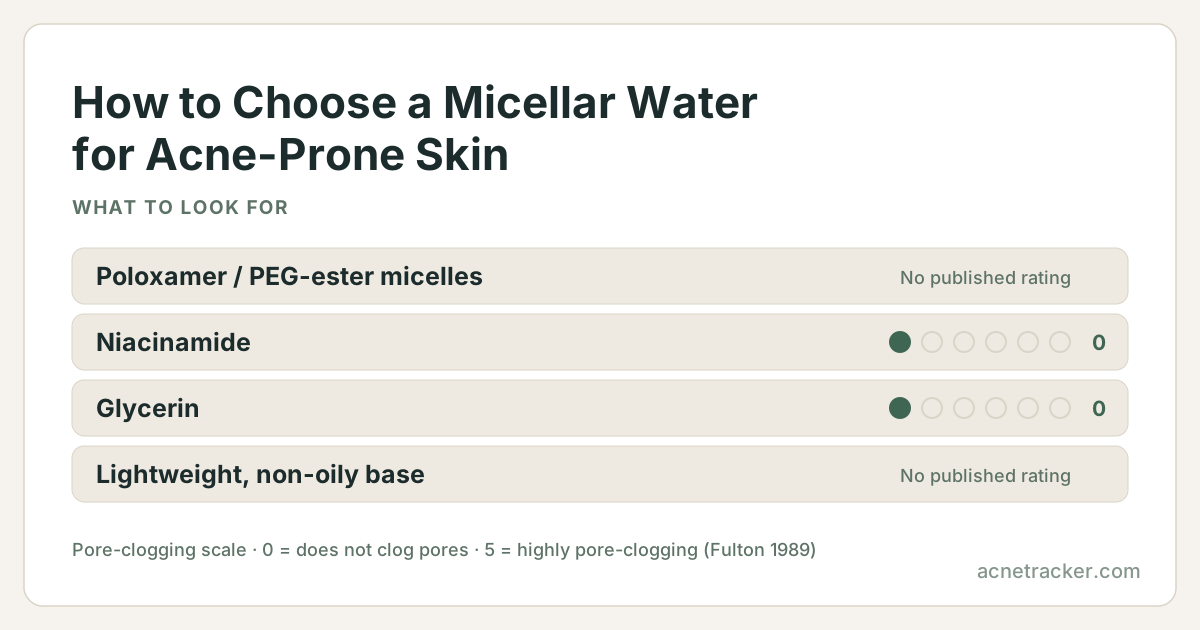
Ingredients to look for
| Ingredient | Why it matters |
|---|---|
| Poloxamer / PEG-ester micelles | They lift sebum and makeup at low surfactant strength, so you clean without the rebound oiliness that harsh foaming washes can trigger. |
| Niacinamide | A welcome extra rather than a treatment here — contact time is short, but it signals a formula built to calm rather than irritate breakout-prone skin. |
| Glycerin | Keeps the clean from tipping into dryness, which matters because dehydrated acne-prone skin overproduces oil and clogs more. |
| Lightweight, non-oily base | A watery formula rinses clean and leaves no occlusive residue, unlike a cleansing balm that suits dry skin better. |
| Zinc PCA | A mild sebum-modulating soother sometimes added to formulas aimed at oily, congestion-prone skin. |
Ingredients to avoid
| Ingredient | Why it matters |
|---|---|
| Heavy plant oils and rich emollients | Comedogenic oils left on the skin without a rinse can add to the congestion you are trying to reduce. |
| Added fragrance | It brings irritation risk with no cleaning benefit, and irritated acne-prone skin breaks out more, not less. |
| High denatured alcohol | The tight, matte feel is deceptive — the rebound is more oil and a weakened barrier that tolerates acne actives poorly. |
| Thick silicone-heavy 'makeup melting' bases | They can leave a film on acne-prone skin unless you follow with a proper rinse-off cleanse. |
How to choose
For acne-prone skin the priority is a formula that cleans without loading the pores. Choose a light, watery micellar water over a milky or oil-infused one, and scan the list for heavy plant oils or waxes near the top — they belong in a balm you rinse off, not a leave-on wipe. A short surfactant-and-humectant base with no fragrance is the safe core. Do not chase 'anti-acne' claims on the bottle: a trace of salicylic acid or niacinamide in a wipe-off product has almost no treatment effect because contact time is seconds, so treat any active as a bonus, not the reason to buy. The real deciding test is how your skin looks after two weeks of use — no new tightness, no extra shine, no film. If you wear sunscreen daily, plan to follow the micellar step with a gentle water-based cleanser, because leaving surfactant and SPF residue on acne-prone skin overnight is a common, avoidable trigger.
How to apply
Use micellar water as the opening move, not the finish. In the evening, saturate a pad and press it over makeup and sunscreen to dissolve them, wiping gently without scrubbing inflamed spots. Then follow with a low-pH rinse-off cleanser to clear any residue — this pre-cleanse-plus-wash sequence suits acne-prone skin better than relying on the wipe alone. Avoid dragging the pad hard over active pimples, which spreads bacteria and inflames lesions. Apply your leave-on actives and moisturiser afterwards.
Frequently asked questions
Is micellar water good for acne-prone skin?
It can be, as a gentle first step that lifts oil and makeup without stripping. Choose a light fragrance-free formula and treat it as a pre-cleanse, not a treatment, because it removes surface debris rather than clearing the plugs inside pores.
Can micellar water cause breakouts?
It can if the formula is rich in comedogenic oils or if you leave heavy residue on the skin overnight. A watery, oil-free formula followed by a rinse avoids most of that risk.
Does micellar water treat acne?
No. Any salicylic acid or niacinamide in a wipe-off product has too little contact time to treat acne. Use micellar water to clean, and a leave-on active a few evenings a week to actually address congestion.
Should I rinse after micellar water if I have acne-prone skin?
Rinsing, or following with a gentle cleanser, is the safer habit — especially after sunscreen or makeup. Leaving surfactant residue on acne-prone skin overnight is a common trigger that a quick second step prevents.
Is micellar water enough to remove sunscreen from acne-prone skin?
For light SPF on a low-makeup day it can be, but water-resistant or heavy sunscreen needs an oil or balm first step and then a rinse. A single micellar wipe often leaves filter residue that acne-prone skin does not appreciate.
Sources & further reading
There is no single study of this exact question. The guidance here is reasoned from the ingredient profiles below, each of which carries its own references:
- Niacinamide2 refs
- Glycerin3 refs
- Zinc PCA3 refs
Show every reference behind this page (6)
- Niacinamide: mechanisms of action and its topical use in dermatology (PubMed)cited by Niacinamide
- European Commission CosIng database — Niacinamidecited by Niacinamide, Glycerin, Zinc PCA
- PubChem — Glycerol compound summarycited by Glycerin
- DermNet — Moisturiserscited by Glycerin
- PubChem — Zinc PCA (zinc pyrrolidone carboxylate)cited by Zinc PCA
- Zinc l-pyrrolidone carboxylate inhibits the UVA-induced production of matrix metalloproteinase-1 by in vitro cultured skin fibroblasts, whereas it enhances their collagen synthesis (PubMed)cited by Zinc PCA
Medical disclaimer
Ingredients mentioned on this page
Find your personal acne triggers
Our free Acne Tracker lets you log breakouts, sleep, stress and diet, and shows you which factors correlate with your flare-ups.