How to Choose a Micellar Water for Combination Skin
Combination skin is the classic dilemma: an oily T-zone that wants degreasing next to cheeks that dry out if you overclean. A single micellar water can serve both if it sits in the middle of the range — enough surfactant to lift oil off the forehead and nose, enough humectant to keep the cheeks comfortable. That balance is exactly what micellar water is good at, because it cleans without the all-over stripping of a strong foaming wash. This page describes the balanced profile to look for, the extremes to avoid at either end, and how to adjust one product across zones that behave differently.
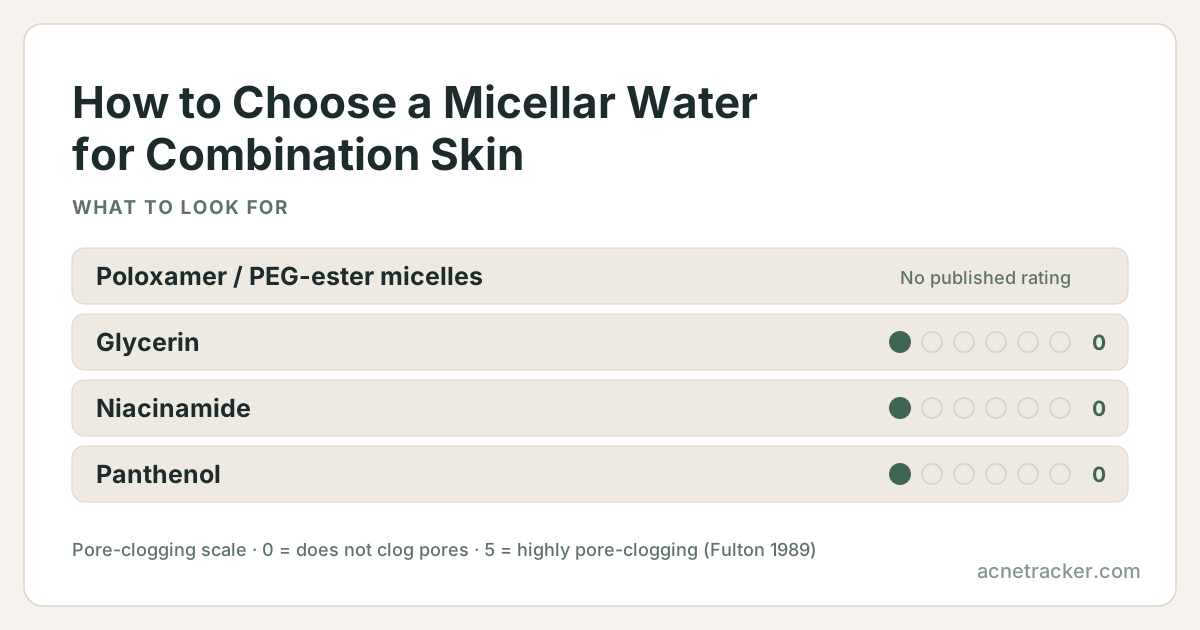
Ingredients to look for
| Ingredient | Why it matters |
|---|---|
| Poloxamer / PEG-ester micelles | A moderate surfactant load lifts oil from the T-zone without over-degreasing the drier cheeks, which is the whole combination-skin balancing act. |
| Glycerin | Keeps the drier areas hydrated while the micelles handle the oily zone, so one product does not leave the cheeks tight. |
| Niacinamide | A bonus in a wipe-off product, but it hints at a balanced formula suited to skin that is both shiny and reactive in places. |
| Panthenol | Soothes and softens, useful where combination skin flips between congested and flaky across the face. |
| Sodium PCA | A light humectant that supports the drier zones without adding the greasiness the T-zone does not need. |
Ingredients to avoid
| Ingredient | Why it matters |
|---|---|
| Denatured alcohol | It over-dries the cheeks to chase T-zone shine, worsening the imbalance rather than evening it out. |
| Heavy oils and rich balms | A greasy leave-on base overwhelms the oily zone even as it comforts the dry one, the wrong trade for combination skin. |
| Fragrance | It raises irritation risk across the whole face without helping either the oily or the dry areas. |
| Strong sulfate surfactants | They strip the dry cheeks while the T-zone rebounds oilier, deepening the split instead of balancing it. |
How to choose
For combination skin, avoid both extremes of the micellar range. A very thin, aggressively degreasing formula will leave your cheeks tight; a rich, milky one will feel heavy on the T-zone. Aim for the middle: a standard watery-to-lightly-hydrating micellar water with glycerin present but not a greasy emollient base. Read the list to confirm there is no denatured alcohol near the top and no heavy plant oil either — the two additives that push a formula toward one extreme. Fragrance-free is the safer choice for the reactive patches combination skin often has. Skip 'balancing' and 'purifying' claims, which mean nothing on their own. The practical trick is that one product does not have to treat every zone identically: you can wipe the oily T-zone more thoroughly and pass more lightly over the cheeks, or rinse only the T-zone afterwards. Judge the formula by whether cheeks stay comfortable and the T-zone reads clean rather than either being tight or slick an hour later.
How to apply
Start with the oily zones. Press a saturated pad over forehead, nose and chin, let the micelles bind the oil, then wipe. Use a lighter touch and a fresher, less-loaded pad on the cheeks so you do not over-clean them. If the T-zone feels tacky, a quick water rinse there alone clears residue without drying the cheeks. Follow with a light moisturiser everywhere, adding a touch more on the drier areas. On sunscreen or makeup days, finish with a gentle rinse-off cleanser.
Frequently asked questions
Is micellar water good for combination skin?
Yes, because it cleans the oily T-zone without the all-over stripping that leaves combination cheeks tight. Choose a balanced formula — watery to lightly hydrating, with glycerin but no alcohol or heavy oil — so one product suits both zones.
How do I use one micellar water on both oily and dry areas?
Wipe the T-zone more thoroughly and pass lightly over the cheeks, or rinse only the oily zone afterwards. One product can serve combination skin if you vary pressure and pad load by area rather than treating the whole face the same.
Should combination skin use a hydrating or a purifying micellar water?
Something in the middle. A strongly purifying formula dries the cheeks; a rich hydrating one burdens the T-zone. A standard glycerin-containing micellar water without alcohol or heavy oil balances the two.
Do I need to rinse micellar water off combination skin?
Often only over the T-zone, where surfactant residue can feel tacky. The drier cheeks usually do better left un-rinsed so the humectants keep working. On makeup or sunscreen days, follow with a full rinse-off cleanse.
Why does my T-zone stay oily after micellar water?
Micellar water removes surface oil but does not reduce sebum production, so the T-zone refills. That is normal; for lasting oil control add a leave-on ingredient like niacinamide rather than cleansing more aggressively.
Sources & further reading
There is no single study of this exact question. The guidance here is reasoned from the ingredient profiles below, each of which carries its own references:
- Glycerin3 refs
- Niacinamide2 refs
- Panthenol3 refs
- Sodium PCA2 refs
Show every reference behind this page (7)
- PubChem — Glycerol compound summarycited by Glycerin
- DermNet — Moisturiserscited by Glycerin
- European Commission CosIng database — Glycerincited by Glycerin, Niacinamide, Panthenol, Sodium PCA
- Niacinamide: mechanisms of action and its topical use in dermatology (PubMed)cited by Niacinamide
- PubChem — Panthenol compound summarycited by Panthenol
- Safety Assessment of Panthenol, Pantothenic Acid, and Derivatives as Used in Cosmetics (PubMed)cited by Panthenol
- PubChem — Sodium PCA (Sodium Pyrrolidone Carboxylate, CID 23666346)cited by Sodium PCA
Medical disclaimer
Ingredients mentioned on this page
Find your personal acne triggers
Our free Acne Tracker lets you log breakouts, sleep, stress and diet, and shows you which factors correlate with your flare-ups.