How to Choose a Night Cream for Rosacea
Rosacea skin is reactive, flush-prone and barrier-compromised, so a night cream for it is chosen the way a sensitive-skin one is, only more strictly. Night removes some of rosacea's daytime triggers — sun, wind, temperature swings — which makes it a good time to focus on barrier repair and calming redness. But the wrong cream, worn for hours, can quietly aggravate a flare you wake up to. The right formula is minimal, fragrance-free and built around soothing, barrier-supporting ingredients. This guide describes that calming profile and flags the common irritants that turn a night cream into a rosacea trigger.
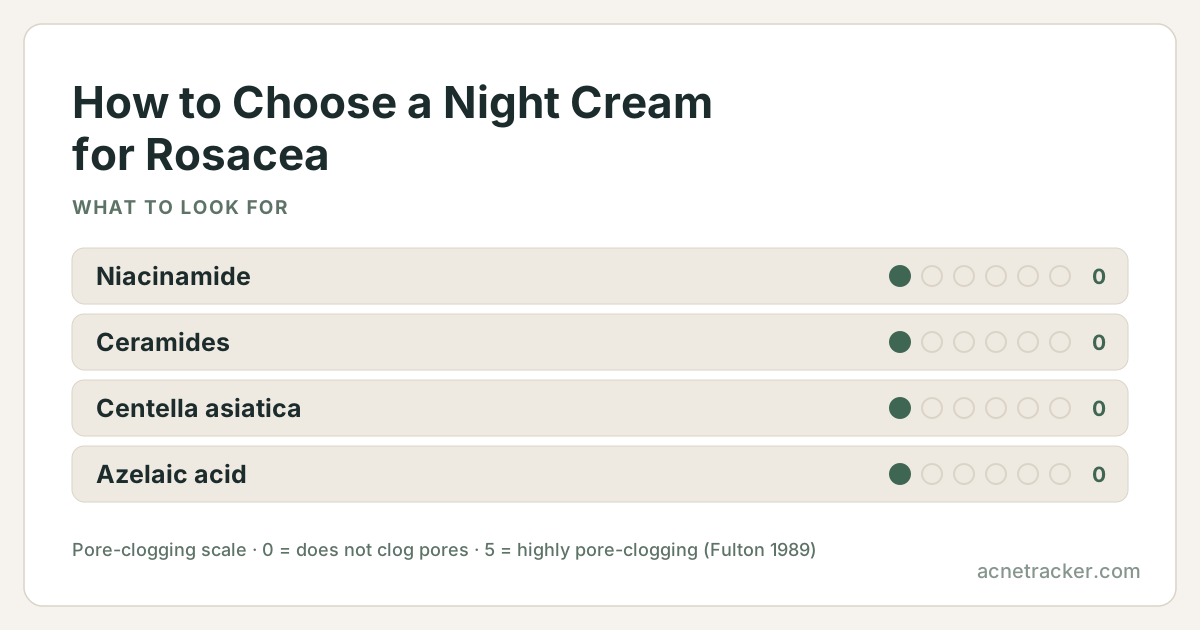
Ingredients to look for
| Ingredient | Why it matters |
|---|---|
| Niacinamide | Helps strengthen the barrier and can reduce the redness and reactivity central to rosacea, with good tolerance. |
| Ceramides | Rebuild the impaired barrier that lets rosacea skin react so readily, reducing sensitivity over time. |
| Centella asiatica | A soothing botanical with supportive evidence for calming redness and aiding barrier recovery in reactive skin. |
| Azelaic acid | One of the few actives recommended for rosacea itself; it can reduce papules and redness and is often well tolerated at night. |
| Allantoin | A gentle, low-risk soother that conditions the skin without provoking flushing. |
Ingredients to avoid
| Ingredient | Why it matters |
|---|---|
| Fragrance, essential oils and botanical extracts | Classic rosacea triggers; even 'natural' scents can provoke flushing and stinging over a night's contact. |
| Menthol, camphor, alcohol and 'cooling' agents | They irritate and dilate vessels, feeding exactly the redness and flushing rosacea skin is prone to. |
| Physical scrubs and high-strength acids in the cream | Abrasion and strong exfoliation inflame rosacea; keep the night cream soothing and leave any acid as a controlled, separate step. |
| Very hot, heavy 'nourishing' textures | Overly rich, warming formulas can feel occlusive and contribute to the heat sensation that triggers flushing. |
How to choose
Choose by restraint. A short, fragrance-free formula with barrier lipids like ceramides and soothers like niacinamide, centella or allantoin is the core of a good rosacea night cream. Texture should be a light-to-medium, comfortable cream that neither stings nor feels hot on the skin. Azelaic acid is worth seeking out, as it is one of the few actives recommended for rosacea, but introduce it slowly. Treat 'for redness' and 'anti-redness' as unregulated claims and read the ingredient list, avoiding known triggers rather than chasing hero actives. Patch test every new product for several nights before full-face use. A dedicated, bland night cream can be worthwhile, but reusing a trusted daytime moisturiser you already know is calm is often the safest choice. Because rosacea is a medical condition, a dermatologist's input beats trial and error.
How to apply
Keep the evening routine short and gentle: a mild, non-foaming cleanse with lukewarm — never hot — water, patted not rubbed dry, then the night cream applied with light pressure. Introduce one product at a time so you can identify any trigger. If you use prescribed azelaic acid or metronidazole, apply as directed and let it settle before the cream, or use the cream as a buffer. Avoid hot showers and heat before bed, which themselves provoke flushing. Track flares against products and foods. Morning sunscreen is essential, since sun is a leading rosacea trigger and undoes calming done overnight.
Frequently asked questions
What should a night cream for rosacea avoid above all?
Fragrance, essential oils, menthol, camphor, alcohol and abrasive exfoliants — all classic rosacea triggers that can provoke flushing and stinging over a night's contact. A short, fragrance-free, barrier-supporting formula is far safer.
Can a night cream reduce rosacea redness?
It can help. Barrier repair with ceramides and niacinamide, plus soothers like centella, reduces reactivity and background redness over time. For the rosacea itself, azelaic acid is one of the few actives with real evidence, ideally under medical guidance.
Is azelaic acid safe to use in a rosacea night routine?
For many people yes, and it is one of the actives specifically recommended for rosacea. Introduce it slowly, a few nights a week at first, and pair it with a soothing cream. If it stings persistently, check with a dermatologist.
Why does my rosacea flare up after applying night cream?
The cream likely contains a trigger — fragrance, alcohol, a cooling agent or a strong active — or it is too rich and warming. Switch to a short, fragrance-free, barrier-first formula, and patch test new products before using them all over.
Sources & further reading
There is no single study of this exact question. The guidance here is reasoned from the ingredient profiles below, each of which carries its own references:
- Niacinamide2 refs
- Ceramides3 refs
- Centella Asiatica2 refs
- Azelaic Acid3 refs
- Allantoin3 refs
Show every reference behind this page (9)
- Niacinamide: mechanisms of action and its topical use in dermatology (PubMed)cited by Niacinamide
- European Commission CosIng database — Niacinamidecited by Niacinamide, Ceramides, Centella Asiatica, Azelaic Acid, Allantoin
- DermNet — Skin barrier functioncited by Ceramides
- PubChem — Ceramide compound summarycited by Ceramides
- Bylka W et al. Centella asiatica in dermatology: an overview. Phytother Res 2014 Aug (PubMed)cited by Centella Asiatica
- PubChem — Azelaic acid compound summarycited by Azelaic Acid
- DermNet — Azelaic acidcited by Azelaic Acid
- PubChem — Allantoin compound summarycited by Allantoin
- Final report of the safety assessment of allantoin and its related complexes (PubMed)cited by Allantoin
Medical disclaimer
Ingredients mentioned on this page
Find your personal acne triggers
Our free Acne Tracker lets you log breakouts, sleep, stress and diet, and shows you which factors correlate with your flare-ups.