Sodium PCA: Comedogenic Rating & Ingredient Analysis
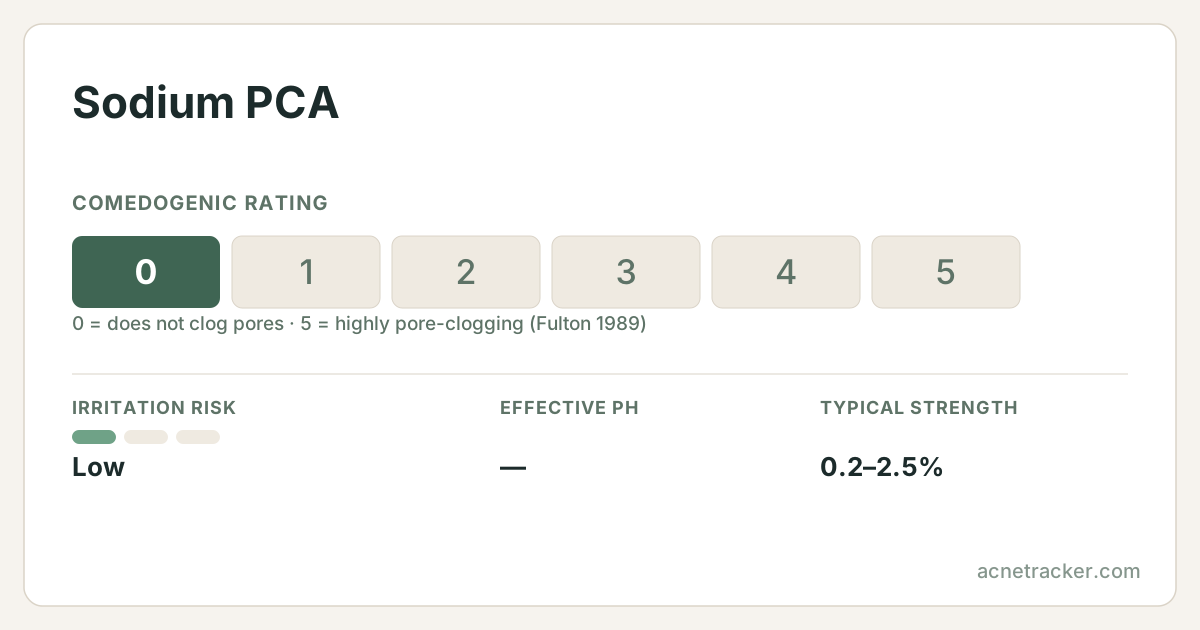
Sodium PCA is one of the more powerful humectants in cosmetic use and, unlike many, it is something your skin already makes. It is a component of the skin's natural moisturising factor (NMF) — the built-in mixture of water-binding substances that keeps the surface supple and hydrated. Adding it back topically tops up that reservoir, which is why sodium PCA appears in serums, lotions and mists aimed at dry and dehydrated skin. It holds many times its weight in water, feels light and non-greasy, and is gentle enough for the most sensitive skin, making it a favourite hydrating ingredient across product categories.
Quick facts
- Comedogenic rating
- measured (Fulton 1989)
- Irritation risk
- Low
- Effective pH
- —
- Typical strength
- 0.2–2.5%
- Pregnancy
- Considered safe
- Suits skin types
- drysensitivenormalcombinationoilyacne-prone
Where this number comes from
Read directly from Table I of Fulton's 1989 paper — the primary source, not one of the copied tables that circulate online.
Fulton read his own scale as 0-1 not significant, 2-3 borderline, 4-5 positive. The assay is the rabbit ear at 10% dilution, which the paper itself calls extremely sensitive and not fully predictive of human skin. Ratings describe the raw ingredient; concentration and formulation change real-world behaviour.
Caution profile
The four published fields on this page, on one 0–5 scale. Further from the centre means more care is needed — never that the ingredient is worse.
Derived, not measured: pore-clogging is the published comedogenic rating; irritation maps low/moderate/high to 1/3/5; pregnancy maps safe/caution/avoid to 0/3/5; skin-type limits is how many of the seven skin types this entry does NOT list. Every input is printed in words in the quick-facts card above.
Show the numbers
| Metric | 0–5 | Published field |
|---|---|---|
| Pore-clogging | 0 | 0/5 |
| Irritation | 1 | Low |
| Skin-type limits | 0.7 | 6/7 |
| Pregnancy | 0 | Considered safe |
Working pH and typical strength
Where this ingredient is formulated to sit, and at what concentration.
Both bars come from the fields above: the pH window and the typical strength range published for this ingredient. The tinted column is healthy skin's surface pH (about 4.7–5.75).
Show the numbers
| Metric | 0–5 |
|---|---|
| Typical strength | 0.2–2.5% |
What is it?
Sodium PCA is the sodium salt of pyrrolidone carboxylic acid (PCA), a substance produced naturally in the skin as part of NMF. NMF is the collection of amino acids, salts, sugars and PCA that living skin cells accumulate to draw and hold water in the stratum corneum; it is what keeps a healthy surface flexible rather than dry and cracked. Because sodium PCA is such an efficient water-binder — more hygroscopic than glycerin by weight — a small amount hydrates effectively. Restoring it makes particular sense for dry and mature skin, where natural NMF levels tend to be lower. It is non-acidic, has a comedogenic rating of 0 and is very well tolerated.
Benefits
Powerful water binding
Sodium PCA holds a large amount of water for its weight, so even at low levels it delivers noticeable, lasting surface hydration.
Replenishes natural moisturising factor
As a component of the skin's own NMF, it tops up the water-binding reservoir that keeps the surface supple.
Light, non-greasy feel
It hydrates without any oily residue, making it ideal for fluid serums and mists, including for oily and acne-prone skin.
Gentle on sensitive skin
Non-comedogenic and low-irritation, it suits reactive and barrier-compromised skin and layers well with ceramides.
How to use
Use products with sodium PCA as directed, morning or night. Because it is a strong humectant, apply it to damp skin and follow with a moisturiser or facial oil so the water it attracts stays sealed in, especially in dry or air-conditioned environments. It layers well with other humectants like hyaluronic acid and glycerin for multi-weight hydration, and with barrier lipids such as ceramides. There is no adjustment period, no photosensitivity concern and no conflict with common actives, so it fits into almost any routine.
Side effects
Sodium PCA is very well tolerated, and irritation or allergy is uncommon. As a strong humectant, it should be paired with an occlusive layer in very dry air so it does not pull moisture from deeper skin to the surface where it evaporates. Sodium PCA appears in Fulton's (1989) table at 0, and being a salt rather than a lipid or an acid, it neither blocks a pore nor changes how your skin answers UV. For nearly everyone it is a comfortable, effective hydrator.
Who should avoid it
No skin type needs to avoid sodium PCA. In very dry climates, do not use it as your only hydrator — seal it in with a richer cream. People with a known reaction can patch test first, though this is rarely necessary.
Pairs well with
Frequently asked questions
What is sodium PCA good for?
It is a strong humectant and part of the skin's natural moisturising factor, so it binds water in the surface layers and delivers light but effective hydration for all skin types.
Is sodium PCA better than hyaluronic acid?
They work differently and complement each other. Sodium PCA is a small, efficient water-binder that is part of NMF, while hyaluronic acid is a larger molecule; using both gives layered hydration.
Does sodium PCA clog pores?
No. Sodium PCA has a comedogenic rating of 0 and is water-loving rather than oily, so it does not clog pores and suits acne-prone skin.
Is sodium PCA natural?
PCA is produced naturally in the skin as part of its moisturising factor. The cosmetic ingredient may be synthesised, but it matches a substance skin already makes.
Where this ingredient shows up here
Counted across this database, not the web — these are the pages on this site that reason about this ingredient.
Sources & further reading
Medical disclaimer
Find your personal acne triggers
Our free Acne Tracker lets you log breakouts, sleep, stress and diet, and shows you which factors correlate with your flare-ups.