How to Choose a Face Mask for Dull Skin
Dullness is not a diagnosis, and that is the most useful thing to know before shopping for it. Skin looks dull when its surface scatters light unevenly instead of reflecting it — because dead cells are sitting untidily on top, because the surface is dry and rough, or because it is flat and unhydrated. All three are surface conditions, all three are within reach of a twenty-minute product, and this is one of the few concerns where a mask is close to the right tool rather than a compromise. The catch is duration. Because the causes are on the surface, so are the fixes, and a surface renews itself continuously.
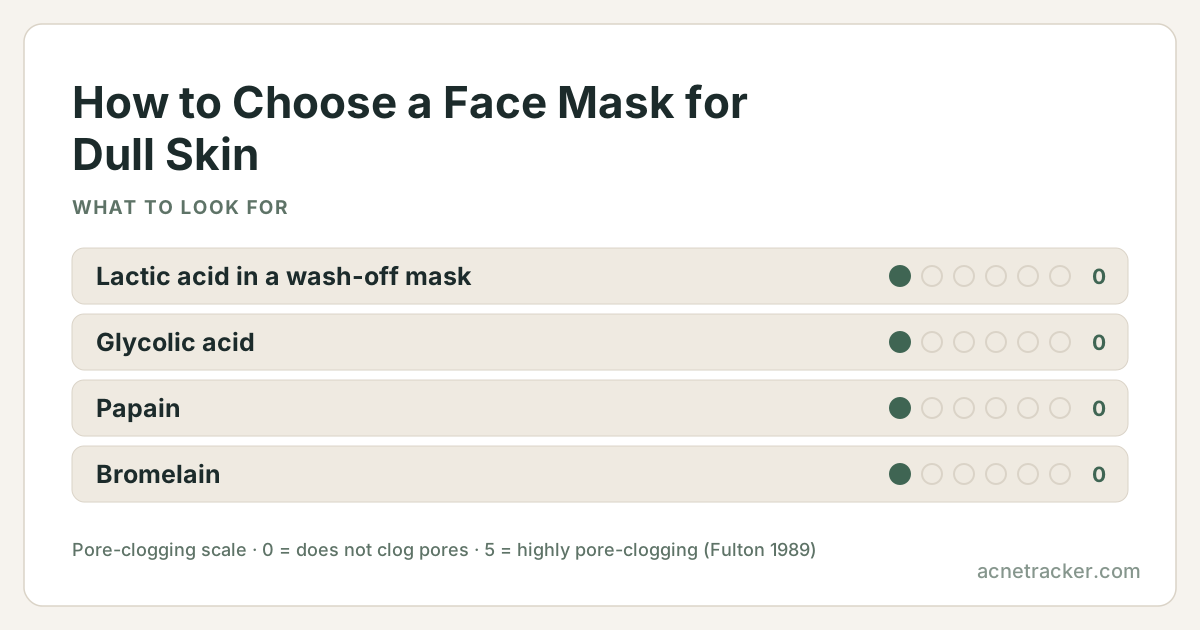
Ingredients to look for
| Ingredient | Why it matters |
|---|---|
| Lactic acid in a wash-off mask | An AHA that loosens the bonds between surface corneocytes so they shed evenly. Evenly shed skin reflects light in one direction, which is what a glow physically is. |
| Glycolic acid | The smallest AHA and the fastest-acting. Effective in a short-contact mask, and the one where the label's time limit is doing genuine safety work. |
| Papain | A papaya-derived protease that digests keratin bonds. Fulton rates it 0. Gentler and less predictable than an acid, since enzyme activity depends on pH and freshness. |
| Bromelain | The pineapple equivalent, and the other half of most 'enzyme peel' masks. Same profile: milder than an AHA, and more variable batch to batch. |
| Glycerin | Underrated for this concern. A well-hydrated stratum corneum is smoother and reflects better, which is why hydration alone reads as brightness in a mirror. |
Ingredients to avoid
| Ingredient | Why it matters |
|---|---|
| Scrub masks with shells, seeds or crushed stones | Angular fragments create micro-tears and leave the surface rougher, which scatters more light. The immediate smoothness is real; the trajectory is the wrong way. |
| Stacking an acid mask on top of an acid routine | Over-exfoliated skin is shiny, tight and reactive, and people commonly read that shine as the glow working. It is a compromised barrier reflecting light off the wrong thing. |
| Lemon juice, vinegar and other DIY 'brightening' masks | Citrus juice contains furocoumarins that can cause phototoxic burns in sunlight, and neither it nor vinegar has a controlled pH. Both damage the barrier without brightening anything. |
| Reading 'whitening' and 'brightening' as the same claim | Brightening means light reflection. Whitening implies pigment change, which is a different mechanism needing months of daily leave-on use — no mask does it. |
How to choose
Decide whether your problem is texture or tone, because they look similar in a mirror and need different products. Dull-from-texture responds to exfoliation, and a wash-off AHA or enzyme mask is a legitimate way to deliver a pulse of it once a week. Dull-from-dehydration responds to water and disappears the moment the surface is hydrated, which is why a plain hydrating mask can outperform an acid one and why so many people cannot tell which product worked. Dull-from-pigment does not respond to masks at all — uneven melanin needs daily leave-on actives over months, and no fifteen-minute product will touch it. On the acid masks themselves, read the contact time as the dose. Concentration and pH set how strong the mask is, but time is the variable you control, and 'leaving it on longer for better results' is how a bright morning becomes a week of peeling. One more honest note on a big query: there is nothing to brighten from underneath. The glow is entirely a story about the top twenty micrometres of your skin, and every product in this aisle is competing to smooth those.
How to apply
Use on clean, dry skin — water on the surface dilutes an acid unpredictably. Follow the stated time exactly and rinse thoroughly with lukewarm water. Once a week is the realistic ceiling for an exfoliating mask if you already use any leave-on acid or retinoid, and skip your active entirely on mask night. Sunscreen the next morning is not optional: freshly exfoliated skin has lost part of its accumulated surface protection, and a sunburn is a fast way to end up duller than you started.
Frequently asked questions
Which kinds of dullness can a mask actually address?
The surface kinds. Accumulated dead cells and a dehydrated, rough stratum corneum both scatter light, and both are within reach of a twenty-minute product. Uneven pigment and the sallowness that follows poor sleep or smoking are not — those sit outside what any rinse-off formula can touch.
How long does the glow from an exfoliating mask last?
Two to three days at best. You smoothed a surface that renews itself continuously, so the cells you removed are replaced on the skin's own schedule. It is a real effect with a short half-life.
Are enzyme masks better than acid masks for dullness?
Gentler, not better. Papain and bromelain digest the protein bonds between surface cells rather than loosening them chemically, which suits sensitive skin — but enzyme activity is pH-dependent and degrades in the jar, so results are less consistent.
Can a mask brighten dark spots?
No. Pigment sits deeper and takes months of daily leave-on actives to shift. Brightening on a mask label describes light reflection from a smoother surface, which is a genuinely different thing from lightening melanin.
Why does my skin look dull again the day after masking?
Because the mask addressed the surface, and the surface has moved on. Corneocytes are shed and replaced continuously, so a single exfoliation buys you days. Consistency over months does more than intensity in one session.
Sources & further reading
There is no single study of this exact question. The guidance here is reasoned from the ingredient profiles below, each of which carries its own references:
- Lactic Acid3 refs
- Glycolic Acid3 refs
- Papain3 refs
- Bromelain3 refs
- Glycerin3 refs
Show every reference behind this page (10)
- PubChem — Lactic acid compound summarycited by Lactic Acid
- DermNet — Alpha hydroxy acidscited by Lactic Acid, Glycolic Acid
- European Commission CosIng database — Lactic Acidcited by Lactic Acid, Glycolic Acid, Papain, Bromelain, Glycerin
- PubChem — Glycolic acid compound summarycited by Glycolic Acid
- PubChem — Papaincited by Papain
- Papain-induced occupational asthma with kiwi and fig allergy (PubMed)cited by Papain
- PubChem — Bromelaincited by Bromelain
- Bromelain: biochemistry, pharmacology and medical use (PubMed)cited by Bromelain
- PubChem — Glycerol compound summarycited by Glycerin
- DermNet — Moisturiserscited by Glycerin
Medical disclaimer
Ingredients mentioned on this page
Find your personal acne triggers
Our free Acne Tracker lets you log breakouts, sleep, stress and diet, and shows you which factors correlate with your flare-ups.