Papain: Comedogenic Rating & Ingredient Analysis
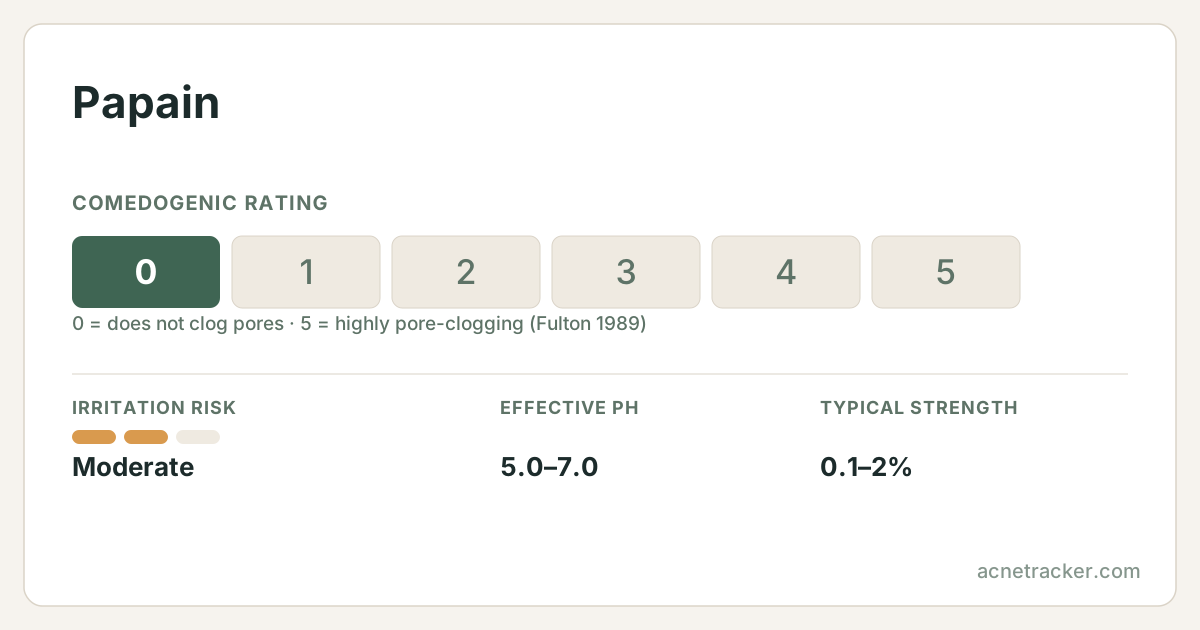
Papain is a proteolytic enzyme extracted from the papaya fruit, used in skincare as an alternative to acid exfoliation. Instead of loosening the glue between dead cells by lowering pH, papain works by digesting the proteins that make up dead surface skin, effectively dissolving them away. This enzymatic action is often marketed as gentler than acids, and it can suit people who want a change from AHAs. It is most common in wash-off masks and powder cleansers, where a short contact time keeps the exfoliation controlled. It does, however, carry a real risk of allergic sensitisation that is worth taking seriously.
Quick facts
- Comedogenic rating
- measured (Fulton 1989)
- Irritation risk
- Moderate
- Effective pH
- 5.0–7.0
- Typical strength
- 0.1–2%
- Pregnancy
- Ask your doctor
- Suits skin types
- normalcombinationoilydry
Where this number comes from
Read directly from Table I of Fulton's 1989 paper — the primary source, not one of the copied tables that circulate online.
Fulton read his own scale as 0-1 not significant, 2-3 borderline, 4-5 positive. The assay is the rabbit ear at 10% dilution, which the paper itself calls extremely sensitive and not fully predictive of human skin. Ratings describe the raw ingredient; concentration and formulation change real-world behaviour.
Caution profile
The four published fields on this page, on one 0–5 scale. Further from the centre means more care is needed — never that the ingredient is worse.
Derived, not measured: pore-clogging is the published comedogenic rating; irritation maps low/moderate/high to 1/3/5; pregnancy maps safe/caution/avoid to 0/3/5; skin-type limits is how many of the seven skin types this entry does NOT list. Every input is printed in words in the quick-facts card above.
Show the numbers
| Metric | 0–5 | Published field |
|---|---|---|
| Pore-clogging | 0 | 0/5 |
| Irritation | 3 | Moderate |
| Skin-type limits | 2.1 | 4/7 |
| Pregnancy | 3 | Ask your doctor |
Working pH and typical strength
Where this ingredient is formulated to sit, and at what concentration.
Both bars come from the fields above: the pH window and the typical strength range published for this ingredient. The tinted column is healthy skin's surface pH (about 4.7–5.75).
Show the numbers
| Metric | 0–5 |
|---|---|
| Working pH | 5.0–7.0 |
| Typical strength | 0.1–2% |
What is it?
Papain is a cysteine protease — an enzyme that breaks the bonds holding proteins together. On the skin, it targets keratin proteins in the outermost dead cells, cleaving them so the debris rinses away and leaves a smoother, brighter surface. Because enzymes are sensitive to conditions like pH, temperature and water, papain is usually delivered in powder or anhydrous formats that activate when mixed with water at the point of use. Its exfoliation is often described as more even and less dependent on acidity than AHA exfoliation. The important caveat is that papain is a recognised allergen and respiratory sensitiser, so both formulators and users need to treat it with respect.
Benefits
Digests dead skin cells
As a protease, papain breaks down the proteins in dead surface cells, sloughing them away to reveal smoother, fresher skin without relying on a low pH.
An alternative to acids
For people who find AHAs and BHAs irritating or simply want variety, enzymatic exfoliation offers a different route to refined texture and brightness.
Smooths and brightens
By clearing away built-up dead cells, papain improves how light reflects off the skin, helping a dull complexion look more even and radiant.
Controlled, short-contact use
Delivered in wash-off masks and cleansers, papain exfoliates during a brief application and is then rinsed off, which helps keep the effect gentle and measured.
How to use
Papain is usually found in wash-off enzyme masks or powder cleansers activated with water. Follow the product's timing exactly — leaving an enzyme mask on far longer than directed does not improve results and raises irritation risk. Use it once or twice a week to start, and moisturise afterwards. Do not combine it with acids or retinol in the same session, and always patch test, given the allergy potential. Because it exfoliates, keep up with daily sunscreen.
Side effects
The main concern with papain is allergy: it is a known contact allergen and respiratory sensitiser, and reactions can include redness, itching, swelling or, with inhaled powder, respiratory symptoms. Ordinary use can also cause tingling or mild irritation, especially on sensitive skin or if left on too long. Stop immediately and seek advice if you develop hives, significant swelling or breathing difficulty.
Who should avoid it
Anyone with a known papaya or latex-related allergy should avoid papain, as should people who have reacted to it before. Very sensitive or compromised skin should be cautious. During pregnancy, err toward caution and confirm with your doctor. Be especially careful with loose powder forms, which can be inhaled.
Pairs well with
Avoid combining with
Frequently asked questions
How does papain exfoliate?
It is an enzyme that digests the proteins in dead surface skin cells, breaking them down so they rinse away. This is different from acids, which loosen dead cells by lowering pH.
Is papain gentler than acids?
It is often marketed that way and can suit people who find acids irritating, but it is not risk-free — papain is a recognised allergen, so patch testing is important.
Can papain cause an allergic reaction?
Yes. Papain is a known contact allergen and respiratory sensitiser. Reactions range from redness and itching to swelling, and inhaled powder can cause respiratory symptoms. Patch test first.
How often should I use a papain mask?
Once or twice a week is plenty for most people. Follow the product's timing exactly and do not leave an enzyme mask on longer than directed, as that increases irritation without better results.
Is papain safe during pregnancy?
Given its allergy potential and limited data, it is best to be cautious during pregnancy and confirm with your doctor before using papain-based products.
Where this ingredient shows up here
Counted across this database, not the web — these are the pages on this site that reason about this ingredient.
Buying guides 1
Sources & further reading
Medical disclaimer
Find your personal acne triggers
Our free Acne Tracker lets you log breakouts, sleep, stress and diet, and shows you which factors correlate with your flare-ups.