Can You Mix Glycolic Acid and Niacinamide?
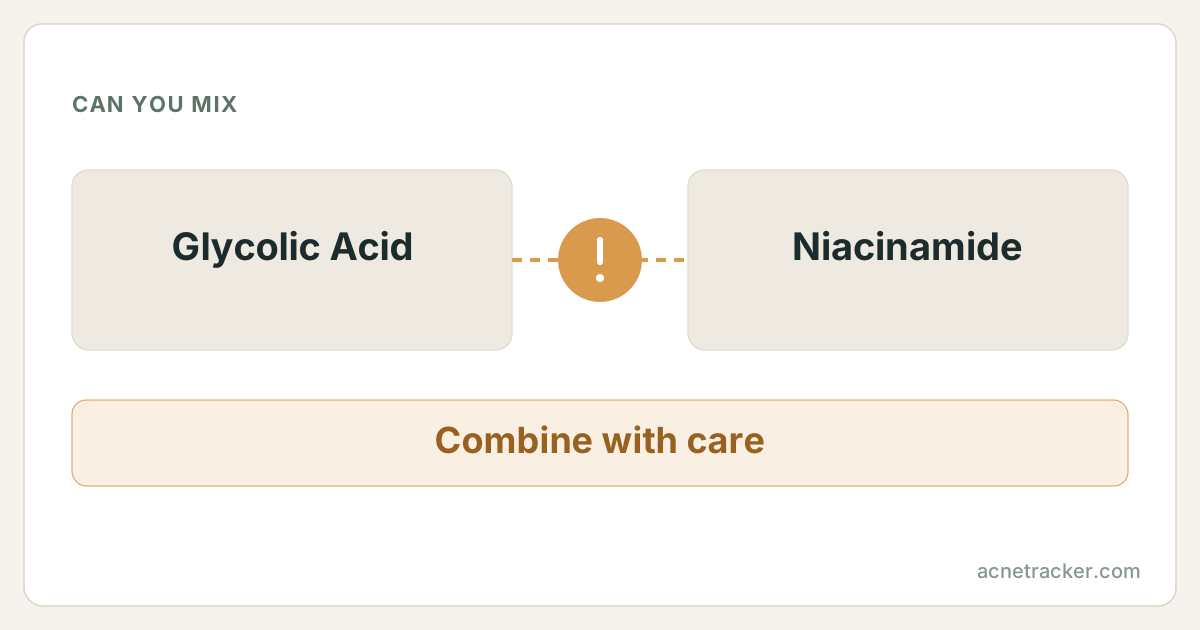
With a little care, yes. Niacinamide and glycolic acid are not truly incompatible, but glycolic acid needs a low pH to exfoliate while niacinamide sits happiest at a higher pH, so layering them wet and back to back is not ideal. The simplest fix is to separate them by time — acid at night, niacinamide in the morning, or a short wait between.
How this pairing resolves
The two ingredients, their published numbers, and where they land together.
The numbers beside each ingredient are its published comedogenic rating and effective pH window, taken from its own profile page.
Show the numbers
| Ingredients | Metric | 0–5 |
|---|---|---|
| Glycolic Acid | Comedogenic rating | 0/5 |
| Glycolic Acid | Effective pH | 3.0–4.0 |
| Niacinamide | Comedogenic rating | 0/5 |
| Niacinamide | Effective pH | 5.0–7.0 |
Why
Glycolic acid is the smallest alpha hydroxy acid, and it only works as an exfoliant while its environment stays acidic, roughly pH 3 to 4. Niacinamide is most stable and effective nearer pH 5 to 7. Apply niacinamide immediately over freshly applied glycolic acid and you nudge the acid's pH upward, which can blunt its exfoliating action before it has finished working. This is a mild, temporary effect rather than the total cancellation some people fear, but it is a real reason not to slap them on top of each other instantly. The old warning that they combine into flush-causing niacin only applies to prolonged heat in solution, not to sequential use on skin. The more practical caution is irritation: glycolic acid already stresses the barrier, and although niacinamide actually helps repair that stress, piling a strong acid and an active serum together every night is a common route to over-exfoliation, tightness and redness.
How to combine them
Time separation keeps both at their best. A clean routine is glycolic acid at night on clean, dry skin, then moisturizer, and niacinamide in the morning under sunscreen — this way niacinamide even soothes the post-acid barrier. If you prefer both in one evening, apply glycolic acid first, wait 10 to 20 minutes for it to do its work and for skin pH to settle, then layer niacinamide and moisturizer. Use glycolic acid only two or three nights a week to start, keep niacinamide daily since it needs no adjustment period, and let its barrier support offset the exfoliation. Always finish the morning with broad-spectrum SPF 30 or higher, because glycolic acid raises sun sensitivity for days.
Example routine
| When | Steps |
|---|---|
| Evening (2–3× per week) | Cleanser → Glycolic acid → Moisturizer |
| Every morning | Cleanser → Niacinamide → Moisturizer → SPF 30+ |
| Same-night option | Glycolic acid → wait 10–20 min → Niacinamide → Moisturizer |
Warning signs
Frequently asked questions
Do niacinamide and glycolic acid deactivate each other?
Not really. Layering niacinamide straight over glycolic acid can raise the acid's pH and briefly reduce its exfoliation, but nothing is destroyed. Applying the acid and the niacinamide at different times of day sidesteps it completely.
Can I use glycolic acid and niacinamide on the same night?
Yes, if you wait. Apply glycolic acid first, give it 10 to 20 minutes, then add niacinamide and moisturizer. Splitting them across morning and night is even simpler.
Which order should they go in?
Acid before niacinamide. Glycolic acid needs to reach skin first at its low working pH; niacinamide is best applied after the acid has had time to act or in a separate routine.
Is niacinamide good for glycolic acid irritation?
Yes. Niacinamide strengthens the barrier and calms inflammation, so using it daily — ideally in the morning after an acid night — helps offset the dryness glycolic acid can cause.
How often can I exfoliate with this pairing?
Start glycolic acid two to three nights a week and keep niacinamide daily. Increase acid frequency slowly, and back off at the first sign of tightness or persistent redness.
Sources & further reading
There is no single study of this exact question. The guidance here is reasoned from the ingredient profiles below, each of which carries its own references:
- Glycolic Acid3 refs
- Niacinamide2 refs
Show every reference behind this page (4)
- PubChem — Glycolic acid compound summarycited by Glycolic Acid
- DermNet — Alpha hydroxy acidscited by Glycolic Acid
- European Commission CosIng database — Glycolic Acidcited by Glycolic Acid, Niacinamide
- Niacinamide: mechanisms of action and its topical use in dermatology (PubMed)cited by Niacinamide
Medical disclaimer
Ingredients mentioned on this page
Find your personal acne triggers
Our free Acne Tracker lets you log breakouts, sleep, stress and diet, and shows you which factors correlate with your flare-ups.