How to Choose a Toner for Dull Skin
Dullness usually comes down to two things: a build-up of dead surface cells that scatters light instead of reflecting it, and dehydration that leaves skin looking flat and tired. A toner can address both — with gentle exfoliation to smooth the surface and humectants to restore the plumpness that gives skin its glow. What it cannot do is 'brighten' in the way marketing implies overnight. This guide describes the ingredient profile that genuinely revives dull skin, the harsh shortcuts that trade a brief glow for longer-term irritation, and how to build a routine where radiance is the result of healthy, well-hydrated, evenly-turning-over skin.
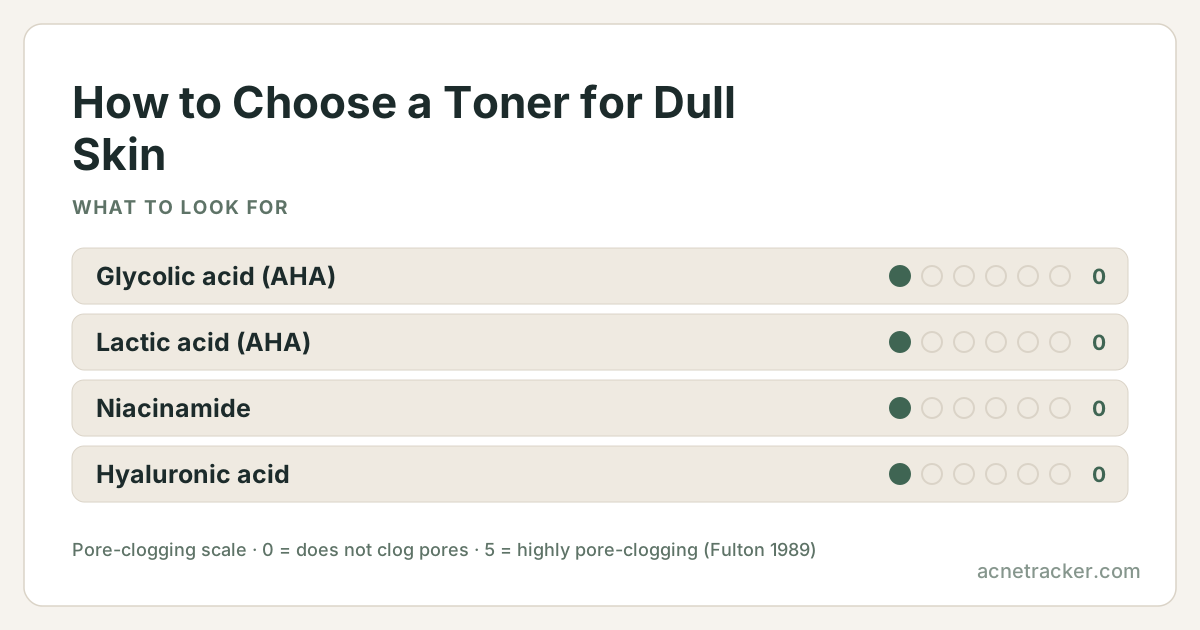
Ingredients to look for
| Ingredient | Why it matters |
|---|---|
| Glycolic acid (AHA) | A small-molecule AHA that dissolves the dead-cell build-up dulling the surface, revealing smoother, more reflective skin. |
| Lactic acid (AHA) | A gentler AHA that resurfaces while also hydrating, a good radiance option for skin that dullness pairs with dryness. |
| Niacinamide | Improves overall skin quality and tone evenness, contributing to a healthier, less tired-looking complexion. |
| Hyaluronic acid | Restores the plumpness dehydrated, flat-looking skin has lost, so light reflects better and skin looks fresher. |
| Licorice root extract | A gentle brightening botanical that helps even tone and lift a tired, uneven complexion. |
Ingredients to avoid
| Ingredient | Why it matters |
|---|---|
| High-alcohol 'refreshing' astringents | The instant tight, matte feel is not radiance; the drying dehydrates skin and makes dullness worse over time. |
| Daily strong acids in pursuit of faster glow | Over-exfoliation damages the barrier, leaving skin red, sensitised and ultimately duller, not brighter. |
| Physical scrubs for 'polish' | Abrasion can inflame and micro-damage skin; gentle chemical exfoliation smooths more evenly without the irritation. |
| Skipping SPF while using acids | Freshly exfoliated skin burns and dulls faster in sun, undoing the radiance you are working for. |
How to choose
Decide whether your dullness is mostly texture or mostly dehydration, because the fix differs. If skin feels rough and looks grey, a gentle exfoliating toner with glycolic or lactic acid, used a couple of evenings a week, smooths the surface so it reflects light. If skin looks flat and tight, a hydrating toner with hyaluronic acid and glycerin restores the plumpness that reads as glow. Many people benefit from both, alternating rather than combining. Look for supporting ingredients like niacinamide or licorice root for tone. Treat 'radiance', 'glow' and 'brightening' as outcomes to verify against actives, not guarantees. Above all, resist the temptation to exfoliate daily for faster results: barrier damage dulls skin, so gentle and consistent beats strong and frequent, and a brightening routine only works with daily sun protection.
How to apply
Use an exfoliating toner in the evening on clean skin, a couple of nights a week, sweeping it evenly rather than only over rough patches. On other nights, and every morning, a hydrating toner pressed into damp skin keeps the surface plump. Do not layer an acid toner with other strong actives the same night. Follow with a moisturizer to seal in hydration and keep the barrier healthy, since barrier health is what sustains glow. The non-negotiable step is daily broad-spectrum SPF: exfoliated skin is more sun-sensitive, and sun damage is a leading cause of dullness in the first place.
Frequently asked questions
What causes dull skin?
Most often a build-up of dead surface cells that scatters light, plus dehydration that makes skin look flat. Sun damage, lack of sleep and age contribute too. A toner can help with the first two through gentle exfoliation and hydration.
Do exfoliating toners really brighten skin?
They can improve radiance by smoothing the dead-cell layer so skin reflects light more evenly. That is genuine, but gradual — the 'instant glow' marketing overpromises, and over-exfoliating to chase it damages the barrier and dulls skin instead.
Exfoliating or hydrating toner for dullness?
It depends on the cause. Rough, grey-looking skin benefits from gentle chemical exfoliation; flat, tight skin needs hydration. Many people alternate both on different nights rather than combining them, which avoids over-exfoliating.
Why do I need sunscreen with a brightening routine?
Because exfoliated skin is more sun-sensitive, and UV exposure is itself a major cause of dullness and uneven tone. Without daily SPF, sun damage undoes the radiance an exfoliating or brightening toner is building.
Sources & further reading
There is no single study of this exact question. The guidance here is reasoned from the ingredient profiles below, each of which carries its own references:
- Glycolic Acid3 refs
- Lactic Acid3 refs
- Niacinamide2 refs
- Hyaluronic Acid3 refs
- Licorice Root Extract2 refs
Show every reference behind this page (8)
- PubChem — Glycolic acid compound summarycited by Glycolic Acid
- DermNet — Alpha hydroxy acidscited by Glycolic Acid, Lactic Acid
- European Commission CosIng database — Glycolic Acidcited by Glycolic Acid, Lactic Acid, Niacinamide, Hyaluronic Acid, Licorice Root Extract
- PubChem — Lactic acid compound summarycited by Lactic Acid
- Niacinamide: mechanisms of action and its topical use in dermatology (PubMed)cited by Niacinamide
- PubChem — Hyaluronic acid compound summarycited by Hyaluronic Acid
- DermNet — Moisturisers and humectantscited by Hyaluronic Acid
- PubMed — Glabridin promotes melanosome degradation and alleviates melanosome-induced mitochondrial dysfunction in keratinocytes via autophagy (Biochem Biophys Res Commun, 2026)cited by Licorice Root Extract
Medical disclaimer
Ingredients mentioned on this page
Find your personal acne triggers
Our free Acne Tracker lets you log breakouts, sleep, stress and diet, and shows you which factors correlate with your flare-ups.