Can You Mix Lactic Acid and Retinol?
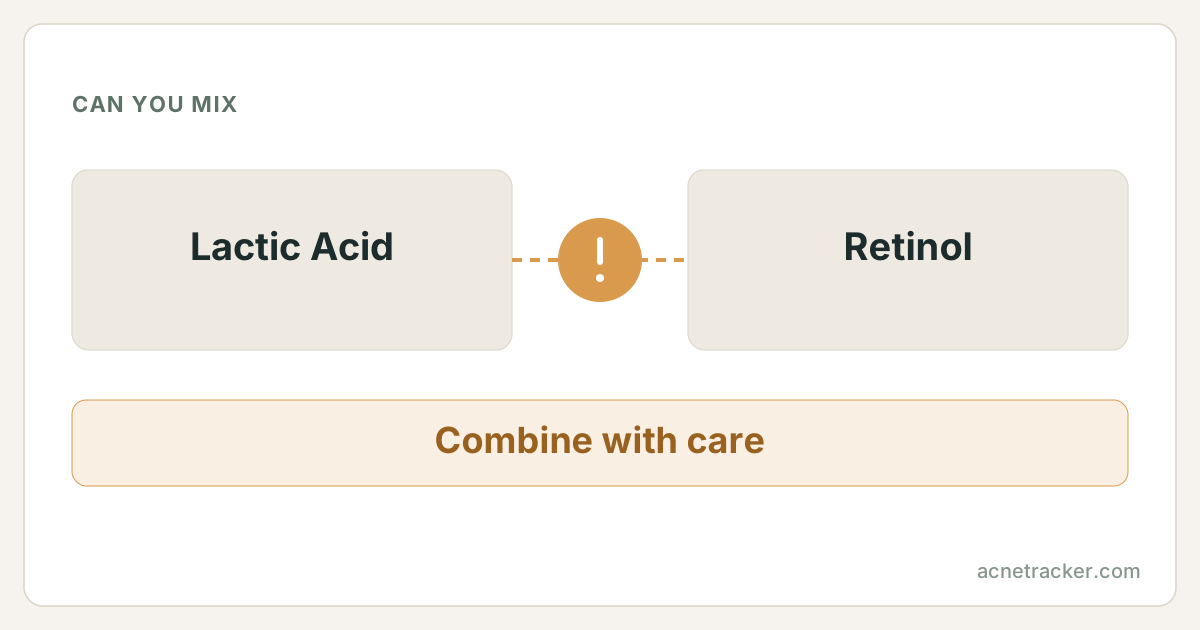
With care, yes. Lactic acid is the gentlest of the common alpha hydroxy acids and it doubles as a humectant, so it pairs with retinol more comfortably than glycolic acid does. Even so, both speed up cell turnover, so most people should use them on alternate nights rather than layered together, and let lactic acid's hydrating side help offset retinol's dryness.
How this pairing resolves
The two ingredients, their published numbers, and where they land together.
The numbers beside each ingredient are its published comedogenic rating and effective pH window, taken from its own profile page.
Show the numbers
| Ingredients | Metric | 0–5 |
|---|---|---|
| Lactic Acid | Comedogenic rating | 0/5 |
| Lactic Acid | Effective pH | 3.0–4.0 |
| Retinol | Comedogenic rating | 1/5 |
| Retinol | Effective pH | 5.0–6.0 |
Why
Lactic acid is a larger molecule than glycolic acid, so it penetrates more slowly and exfoliates more superficially, which is why it tends to sting less. It also has a genuinely useful second property: lactic acid is a natural moisturising factor, drawing water into the skin, so unlike other acids it does not leave the surface as parched. Retinol, meanwhile, remodels the skin from within by accelerating turnover and stimulating collagen, and its main tolerability problem is dryness and flaking. On paper the hydrating quality of lactic acid partly cushions that, which makes this the friendliest AHA to combine with a retinoid. The caution remains because you are still stacking two exfoliating processes: lactic acid loosens surface cells while retinol thins the barrier from below, and doing both hard and often will still over-process the skin. Its low working pH also is not retinol's ideal environment, another reason to separate them in time rather than force them into one layer.
How to combine them
Alternate nights is the reliable default: lactic acid two nights a week, retinol two or three, with moisturizer-only recovery nights between. Apply to clean, dry skin and seal with moisturizer. Because lactic acid is gentle and hydrating, tolerant skin can sometimes layer a low-strength lactic serum then retinol with a moisturizer buffer, but treat that as advanced and stop if it stings. A good beginner pattern is to use lactic acid as your exfoliating and hydrating step early in the week, then focus on retinol later, keeping them a night apart. Every morning apply broad-spectrum SPF 30 or higher, since both actives increase sun sensitivity even though lactic acid is mild.
Example routine
| When | Steps |
|---|---|
| Evening (2× per week) | Cleanser → Lactic acid → Moisturizer |
| Evening (2–3× per week) | Cleanser → Retinol → Moisturizer |
| Remaining evenings | Cleanser → Hydrating serum → Moisturizer |
| Every morning | Gentle cleanser → Moisturizer → SPF 30+ |
Warning signs
Frequently asked questions
Is lactic acid safer with retinol than glycolic acid?
Generally yes. Lactic acid is a larger, slower-penetrating molecule and it hydrates the skin, so it is better tolerated alongside retinol. Alternate them night to night rather than stacking both in a single evening.
Can lactic acid help with retinol dryness?
Somewhat. Lactic acid is a natural moisturising factor that draws water into skin, so on its own night it can leave skin more comfortable than other acids. It does not cancel retinol's flaking, though.
Can I use lactic acid and retinol on the same night?
Only if your skin is well adjusted and resilient, and even then buffer with moisturizer. Most people get smoother results with fewer side effects by alternating them on separate evenings.
Should I avoid this combination in pregnancy?
Lactic acid at cosmetic strengths is generally regarded as acceptable, but retinol and retinoids are usually avoided in pregnancy. If pregnant, keep the lactic acid and drop the retinol after checking with your doctor.
Sources & further reading
There is no single study of this exact question. The guidance here is reasoned from the ingredient profiles below, each of which carries its own references:
- Lactic Acid3 refs
- Retinol2 refs
Show every reference behind this page (5)
- PubChem — Lactic acid compound summarycited by Lactic Acid
- DermNet — Alpha hydroxy acidscited by Lactic Acid
- European Commission CosIng database — Lactic Acidcited by Lactic Acid
- Improvement of naturally aged skin with vitamin A (retinol) (PubMed)cited by Retinol
- European Commission SCCS opinion on vitamin A in cosmeticscited by Retinol
Medical disclaimer
Ingredients mentioned on this page
Find your personal acne triggers
Our free Acne Tracker lets you log breakouts, sleep, stress and diet, and shows you which factors correlate with your flare-ups.