How to Choose a Chemical Exfoliant for Dull Skin
Dullness is mostly a light problem: a build-up of dead surface cells scatters light unevenly, so skin looks flat and tired instead of reflecting it cleanly. Exfoliation is the most direct fix, because smoothing that surface lets light bounce evenly and 'glow' return. This guide explains which acids deliver radiance without over-doing it, why the surface AHAs shine here, and how to avoid the trap of chasing glow with ever-stronger products. We review ingredient profiles rather than brands, so the criteria hold whatever you pick up. The honest message is that steady, moderate exfoliation gives lasting radiance, while aggressive resurfacing gives a brief glow followed by irritation.
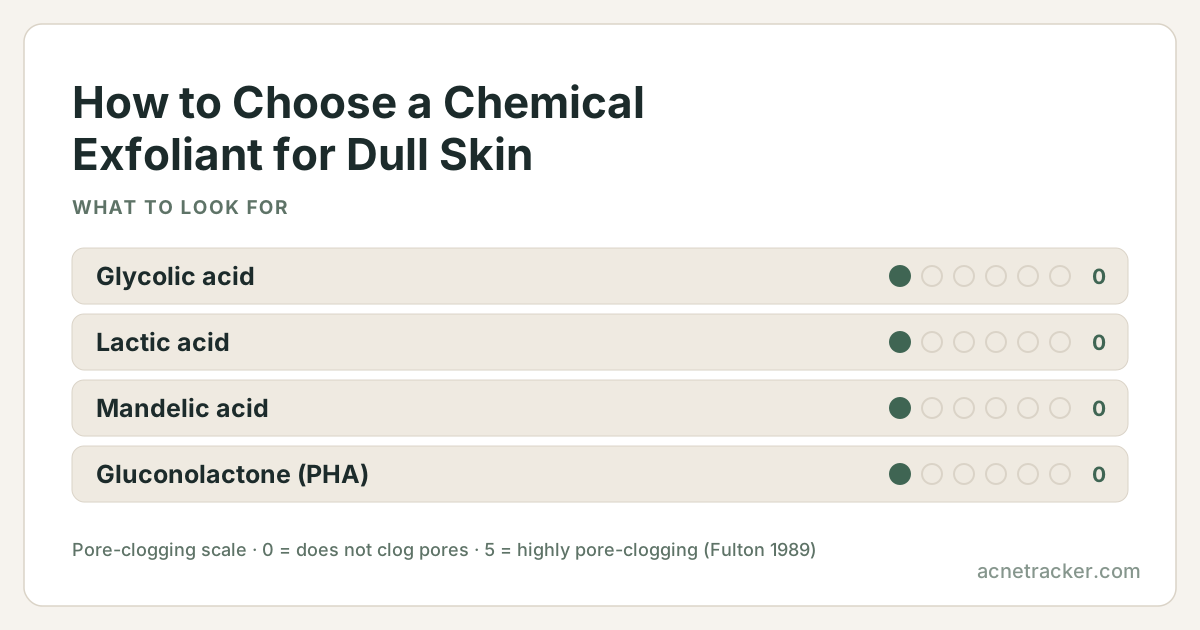
Ingredients to look for
| Ingredient | Why it matters |
|---|---|
| Glycolic acid | The classic radiance acid: its small molecule resurfaces efficiently, smoothing the dead-cell layer that makes skin look dull and flat. |
| Lactic acid | Brightens while hydrating, so it restores glow to dull skin that is also a little dry, without the tightness stronger acids can cause. |
| Mandelic acid | A gentle AHA that refines the surface and evens tone, a good radiance option for skin that reacts to stronger acids. |
| Gluconolactone (PHA) | A mild polyhydroxy acid that smooths and hydrates, giving a soft glow with minimal irritation for sensitive, dull skin. |
Ingredients to avoid
| Ingredient | Why it matters |
|---|---|
| Chasing glow with daily strong acids | The brief radiance of over-exfoliation is followed by a compromised barrier, redness and a duller, more irritated surface. |
| Gritty scrubs for 'instant' smoothness | They buff the surface briefly but irritate the skin, and the micro-inflammation leaves it looking flatter, not brighter, over time. |
| Neglecting hydration | Dehydrated skin looks dull no matter how much you exfoliate; acids alone without moisture cannot deliver lasting radiance. |
| Skipping sunscreen | Sun damage dulls and unevens the complexion, so exfoliating without daily SPF works against the glow you are building. |
How to choose
Pick a surface AHA suited to your skin's tolerance. Glycolic acid is the most efficient radiance-booster because its small molecule resurfaces quickly, but if your skin is drier or more reactive, lactic acid brightens while hydrating and mandelic acid or a PHA offer the same glow more gently. Look for moderate percentages and a leave-on format for real effect, and favour formulas that also include humectants, since hydrated skin reflects light better. Read past 'glow', 'radiance' and 'luminous' marketing to the actual acid and its concentration. The key discipline is restraint: radiance comes from a smooth, healthy surface, and that is built by moderate, consistent exfoliation plus hydration and sun protection, not by escalating strength in search of a faster result.
How to apply
Work on clean skin in the evening, one to three times a week — the weaker the acid and the more it is a surface AHA, the closer to three; a strong or high-percentage formula stays nearer one. Apply, let it absorb, then follow with a hydrating moisturizer to plump the surface and enhance light reflection. Resist the urge to exfoliate daily for a faster glow; the barrier needs recovery time to stay smooth. Because acids increase sun sensitivity, and because sun damage causes dullness, apply broad-spectrum SPF every morning. Expect brighter, more even skin within a couple of weeks of steady use, improving further with consistency.
Frequently asked questions
Which acid gives the best glow for dull skin?
Glycolic acid is the classic radiance-booster because it resurfaces efficiently. If your skin is drier or sensitive, lactic acid brightens while hydrating, and mandelic acid or a PHA give a gentler glow. The best choice is the one your skin tolerates consistently.
How quickly will exfoliating make my skin glow?
Many people see brighter skin within a couple of weeks of steady use, with further improvement over time. Beware products promising instant glow through strong exfoliation, since the quick effect often comes at the cost of a irritated barrier.
Can over-exfoliating make skin look duller?
Yes. Over-exfoliation damages the barrier and triggers inflammation, which leaves skin red, rough and flat-looking rather than radiant. Lasting glow comes from moderate exfoliation combined with hydration, not from resurfacing as often or as strongly as possible.
Do I need to moisturize to keep skin glowing?
Yes. Dehydrated skin looks dull however much you exfoliate, because it reflects light poorly. Pairing your exfoliant with a hydrating moisturizer plumps the surface and is essential for a glow that lasts beyond the first few minutes.
Sources & further reading
There is no single study of this exact question. The guidance here is reasoned from the ingredient profiles below, each of which carries its own references:
- Glycolic Acid3 refs
- Lactic Acid3 refs
- Mandelic Acid2 refs
- Gluconolactone3 refs
Show every reference behind this page (7)
- PubChem — Glycolic acid compound summarycited by Glycolic Acid
- DermNet — Alpha hydroxy acidscited by Glycolic Acid, Lactic Acid, Mandelic Acid
- European Commission CosIng database — Glycolic Acidcited by Glycolic Acid, Lactic Acid, Gluconolactone
- PubChem — Lactic acid compound summarycited by Lactic Acid
- Mandelic acid — PubChem compound summarycited by Mandelic Acid
- Clinical and cosmeceutical uses of hydroxyacids (PubMed)cited by Gluconolactone
- PubChem — Glucono-delta-lactonecited by Gluconolactone
Medical disclaimer
Ingredients mentioned on this page
Find your personal acne triggers
Our free Acne Tracker lets you log breakouts, sleep, stress and diet, and shows you which factors correlate with your flare-ups.