Marula Oil: Comedogenic Rating & Ingredient Analysis
Marula oil is a fast-absorbing African facial oil pressed from the kernels of the marula tree fruit, popular in luxury skincare for its silky feel and antioxidant richness. It is high in oleic acid and stable monounsaturated fats, along with a generous supply of antioxidants including tocopherols and phenolic compounds. This makes it a lovely conditioning oil for dry, normal and mature skin, softening and cushioning while offering defence against environmental stress. Because it is oleic-dominant rather than linoleic, it is richer than oils like grapeseed, so those very prone to congestion should use it more thoughtfully.
Quick facts
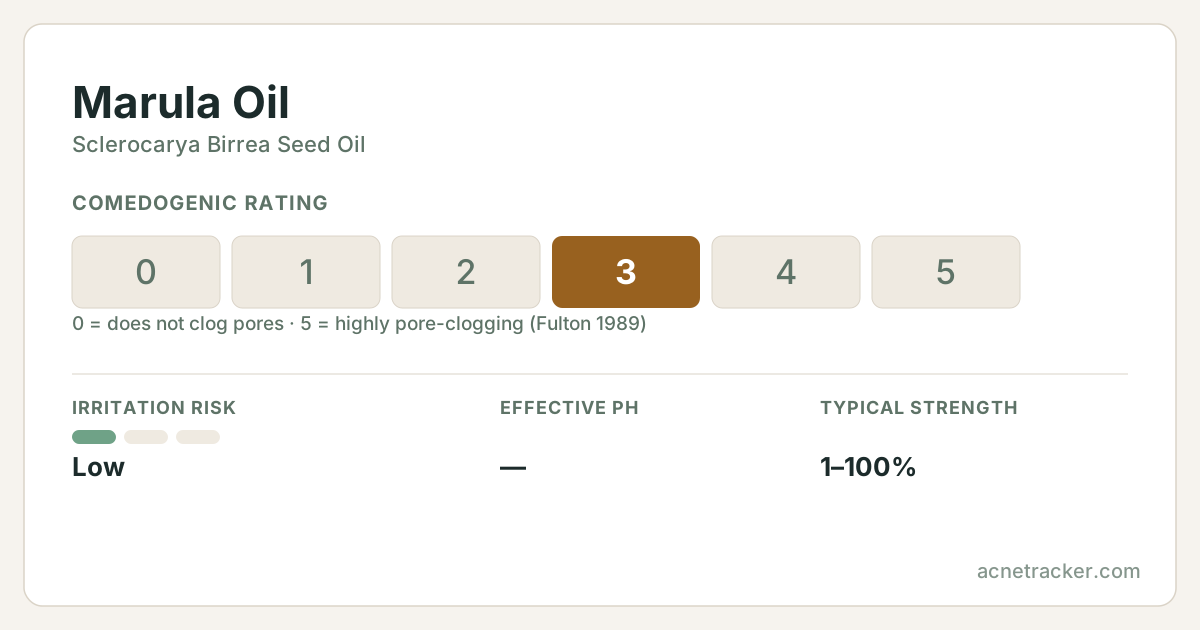
- Comedogenic rating
- our estimate — not measured
- Irritation risk
- Low
- Effective pH
- —
- Typical strength
- 1–100%
- Pregnancy
- Considered safe
- Suits skin types
- drynormalmaturesensitive
Where this number comes from
No one has published a comedogenic rating for this ingredient. Fulton's 1989 table tested about 250 raw materials and this was not among them, and we found no later study measuring it. The figure shown is our own reasoning from the ingredient's chemistry and how it is used — treat it as an estimate, not a measurement.
Fulton read his own scale as 0-1 not significant, 2-3 borderline, 4-5 positive. The assay is the rabbit ear at 10% dilution, which the paper itself calls extremely sensitive and not fully predictive of human skin. Ratings describe the raw ingredient; concentration and formulation change real-world behaviour.
Caution profile
The four published fields on this page, on one 0–5 scale. Further from the centre means more care is needed — never that the ingredient is worse.
Derived, not measured: pore-clogging is the published comedogenic rating; irritation maps low/moderate/high to 1/3/5; pregnancy maps safe/caution/avoid to 0/3/5; skin-type limits is how many of the seven skin types this entry does NOT list. Every input is printed in words in the quick-facts card above.
Show the numbers
| Metric | 0–5 | Published field |
|---|---|---|
| Pore-clogging | 3 | 3/5 |
| Irritation | 1 | Low |
| Skin-type limits | 2.1 | 4/7 |
| Pregnancy | 0 | Considered safe |
Working pH and typical strength
Where this ingredient is formulated to sit, and at what concentration.
Both bars come from the fields above: the pH window and the typical strength range published for this ingredient. The tinted column is healthy skin's surface pH (about 4.7–5.75).
Show the numbers
| Metric | 0–5 |
|---|---|
| Typical strength | 1–100% |
What is it?
Marula oil is composed largely of oleic acid, a monounsaturated fatty acid, which gives it good oxidative stability and a smooth, cushioning texture. It also carries meaningful levels of antioxidants, which contribute to its reputation for protecting and nourishing the skin surface. The high oleic content is a double message: it makes the oil stable, long-lasting and pleasant on dry skin, but oleic-rich oils tend to sit higher on the comedogenic scale than linoleic-rich ones, so marula is better matched to drier and mature skin than to very oily, breakout-prone complexions. Note that marula was not part of Fulton's original 1989 testing, so its comedogenic estimate is drawn from its fatty-acid profile.
Benefits
Rich antioxidant content
Marula's tocopherols and phenolic antioxidants help defend the skin surface against free-radical stress from sun and pollution while the oil conditions and softens.
Oxidatively stable
Its high monounsaturated oleic acid content makes marula more resistant to going rancid than highly polyunsaturated oils, so it keeps well and has a longer shelf life.
Softens dry and mature skin
The oil's cushioning emollience smooths and comforts dry, tight or mature skin, leaving a silky finish that feels nourishing without being sticky.
Supports the moisture barrier
By reinforcing the skin's lipid layer it helps limit water loss, making it a useful final step for skin that feels dehydrated or weather-stressed.
How to use
Apply marula oil at night as a final nourishing step, warming a few drops and pressing them into slightly damp skin, or add a drop to a night cream for extra richness. Its fast absorption makes it feel lighter than its oleic content suggests, but if you are very congestion-prone, use it sparingly or reserve it for dry areas and patch test on the cheek first. It suits dry, normal and mature skin best, and its good stability means it stores better than more polyunsaturated oils, though cool, dark storage is still ideal.
Side effects
Marula is gentle and rarely irritating, so allergy is uncommon. Its main consideration is comedogenicity: as an oleic-rich oil it can, in those very prone to clogged pores, contribute to congestion if used heavily on the face. Its good oxidative stability means it is less likely than polyunsaturated oils to go rancid quickly, so spoilage is a smaller concern.
Who should avoid it
Very oily and highly congestion-prone skin should use marula carefully on the face or choose a lighter, linoleic-rich oil instead. Those with a specific sensitivity should patch test. Topical marula is regarded as safe in pregnancy; it is the comedogenic question above, rather than safety, that decides whether this oil belongs on your face.
Pairs well with
Frequently asked questions
Is marula oil good for the face?
Yes, though it is aimed squarely at drier, normal and mature complexions. It is a rich, antioxidant, oleic-heavy oil that softens and protects, though very oily or congestion-prone skin should use it sparingly or choose a lighter oil.
Does marula oil clog pores?
It is oleic-rich, so it sits higher on the comedogenic scale than linoleic oils and can contribute to congestion in very breakout-prone skin. It was not in Fulton's original testing, so its rating is estimated from its fatty-acid profile.
Is marula oil an antioxidant oil?
Yes, it carries tocopherols and phenolic antioxidants that help defend the skin against free-radical stress, which is part of why it is valued in nourishing, anti-ageing-focused facial oils.
Does marula oil last a long time?
Its high monounsaturated oleic acid content gives it good oxidative stability, so it resists going rancid better than highly polyunsaturated oils and generally has a longer shelf life, though cool, dark storage still helps.
Where this ingredient shows up here
Counted across this database, not the web — these are the pages on this site that reason about this ingredient.
Sources & further reading
Marula oil's fatty-acid profile is well characterised, and its emollient behaviour follows directly from that composition. The antioxidant and barrier-support descriptions come from analyses of the oil's constituents and from research on marula as a food and traditional medicine — not from trials of the oil applied to human skin, of which we found none.
Medical disclaimer
Find your personal acne triggers
Our free Acne Tracker lets you log breakouts, sleep, stress and diet, and shows you which factors correlate with your flare-ups.