How to Choose a Chemical Exfoliant for Mature Skin
As skin matures, cell turnover slows, so dead cells linger and the surface looks rougher, duller and more lined than it did. Exfoliation counters this directly by clearing that build-up, which smooths texture and restores radiance — and some acids do more, supporting the skin over time. The balance for mature skin is real, though: it is often thinner and drier, so the exfoliant must resurface without stripping. This guide explains which acids suit mature skin, why hydration must travel with them, and how to avoid over-exfoliating a more delicate barrier. We review ingredient profiles rather than brands, so the criteria apply to any product.
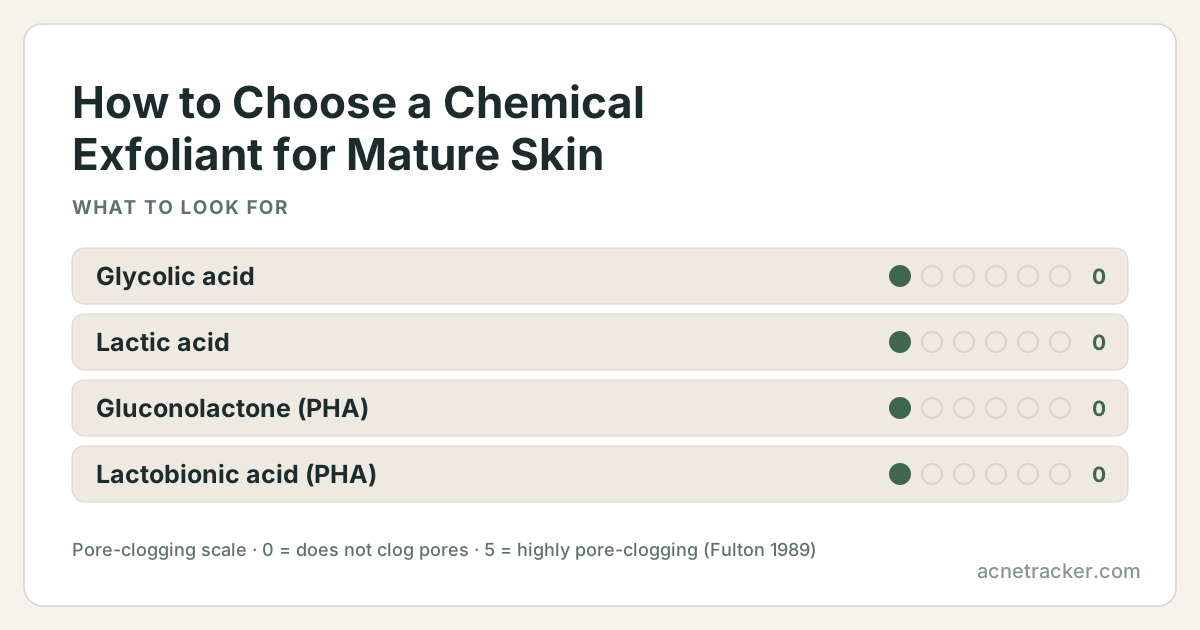
Ingredients to look for
| Ingredient | Why it matters |
|---|---|
| Glycolic acid | The best-studied AHA for mature skin: it resurfaces to smooth texture and boost radiance, and has research support for improving the look of fine lines with regular use. |
| Lactic acid | Exfoliates while hydrating, ideal for mature skin that is drier and needs moisture retained as it is smoothed. |
| Gluconolactone (PHA) | A gentle, hydrating polyhydroxy acid for more sensitive or thinning mature skin that cannot tolerate stronger acids. |
| Lactobionic acid (PHA) | A strongly humectant PHA that smooths and hydrates with minimal irritation, suiting delicate mature skin. |
Ingredients to avoid
| Ingredient | Why it matters |
|---|---|
| Over-exfoliating thinner, drier skin | Mature skin has less reserve; too-frequent or too-strong acids strip its barrier quickly, leaving it tight, irritated and looking older, not smoother. |
| Harsh physical scrubs | Abrasion is rougher on thinner mature skin, causing micro-damage and irritation that resurfacing acids achieve more safely. |
| Exfoliating without following with hydration | Mature skin is prone to dryness; exfoliating without rich moisture afterwards leaves it dehydrated and dull rather than radiant. |
| Skipping sun protection | Photoaging is a major driver of the texture and tone changes exfoliation targets, so daily SPF is essential to preserve results. |
How to choose
Match the acid to how robust your skin is. Glycolic acid is the most evidence-backed choice for mature skin, resurfacing texture and supporting a smoother, more radiant look with regular use. If your skin is drier, lactic acid brightens while hydrating, and if it is thin or sensitive, polyhydroxy acids like gluconolactone and lactobionic acid resurface gently while binding water. Whatever the acid, prioritise formulas that pair it with humectants and barrier-supporting ingredients, since mature skin needs moisture kept in. Choose a leave-on for real effect, use moderate strength, and keep frequency sensible. Read past 'anti-aging' and 'renewing' marketing to the actual acids and their concentrations, and treat daily sun protection as inseparable from the routine, because it preserves everything the exfoliation achieves.
How to apply
Exfoliate in the evening on clean skin, one to three times a week depending on the acid and your tolerance. Apply, let it absorb, then follow with a hydrating, barrier-supporting moisturizer, and consider a richer cream on the driest areas. Do not layer scrubs on the same nights. Because acids increase sun sensitivity and sun exposure drives the very changes you are treating, apply broad-spectrum SPF every morning without fail. Build up gradually and watch for tightness or irritation, scaling back frequency if the more delicate barrier of mature skin shows signs of stress.
Frequently asked questions
Which acid is best for mature skin?
Glycolic acid has the most research behind it for smoothing texture and improving the look of fine lines. If your skin is drier or more delicate, lactic acid hydrates as it exfoliates, and polyhydroxy acids like gluconolactone are gentler still.
Can exfoliating reduce fine lines?
It can improve their appearance by smoothing the surface and boosting radiance, and glycolic acid has research support for this. It does not remove deep wrinkles, and over-exfoliating can make skin look worse, so moderate, consistent use is key.
Is mature skin more prone to over-exfoliation?
Often, yes. Mature skin tends to be thinner and drier with less reserve, so it strips more easily. Use moderate strength, keep frequency sensible, follow with hydration, and reduce use at the first sign of tightness or irritation.
Do I still need sunscreen when exfoliating mature skin?
Absolutely. Sun exposure is a major cause of the texture, tone and line changes exfoliation targets, and acids increase sun sensitivity. Daily broad-spectrum SPF protects your results and is inseparable from an effective mature-skin routine.
Sources & further reading
There is no single study of this exact question. The guidance here is reasoned from the ingredient profiles below, each of which carries its own references:
- Glycolic Acid3 refs
- Lactic Acid3 refs
- Gluconolactone3 refs
- Lactobionic Acid3 refs
Show every reference behind this page (7)
- PubChem — Glycolic acid compound summarycited by Glycolic Acid
- DermNet — Alpha hydroxy acidscited by Glycolic Acid, Lactic Acid
- European Commission CosIng database — Glycolic Acidcited by Glycolic Acid, Lactic Acid, Gluconolactone, Lactobionic Acid
- PubChem — Lactic acid compound summarycited by Lactic Acid
- Clinical and cosmeceutical uses of hydroxyacids (PubMed)cited by Gluconolactone, Lactobionic Acid
- PubChem — Glucono-delta-lactonecited by Gluconolactone
- PubChem — Lactobionic acidcited by Lactobionic Acid
Medical disclaimer
Ingredients mentioned on this page
Find your personal acne triggers
Our free Acne Tracker lets you log breakouts, sleep, stress and diet, and shows you which factors correlate with your flare-ups.