Sunflower Seed Oil: Comedogenic Rating & Ingredient Analysis
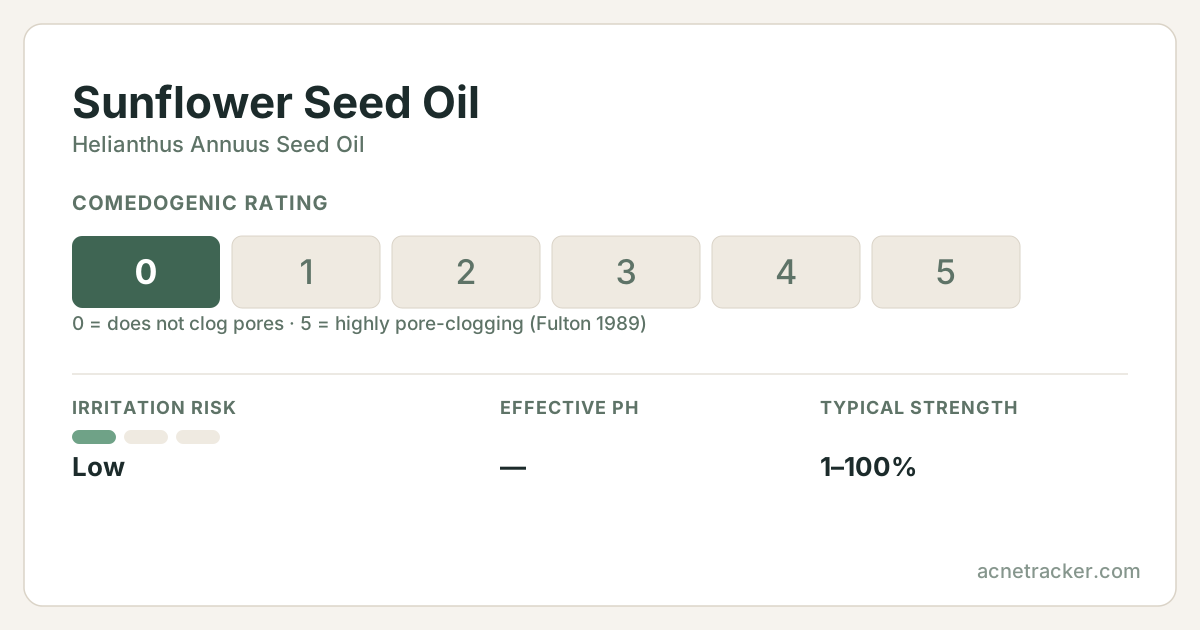
Sunflower seed oil is a light, widely available facial and body oil that has earned a strong reputation among people with sensitive and blemish-prone skin. Its appeal lies in its fatty-acid profile: it is high in linoleic acid, the very fatty acid that acne-prone skin often lacks, and low on the comedogenic scale, so it conditions and supports the skin barrier without the pore-clogging risk of richer oils. It also supplies natural vitamin E for antioxidant benefit. Gentle enough to have been studied on delicate skin, it is a sensible, affordable choice for barrier support across most skin types.
Quick facts
- Comedogenic rating
- measured (Fulton 1989)
- Irritation risk
- Low
- Effective pH
- —
- Typical strength
- 1–100%
- Pregnancy
- Considered safe
- Suits skin types
- drycombinationsensitivenormaloily
Where this number comes from
Read directly from Table I of Fulton's 1989 paper — the primary source, not one of the copied tables that circulate online.
Fulton read his own scale as 0-1 not significant, 2-3 borderline, 4-5 positive. The assay is the rabbit ear at 10% dilution, which the paper itself calls extremely sensitive and not fully predictive of human skin. Ratings describe the raw ingredient; concentration and formulation change real-world behaviour.
Caution profile
The four published fields on this page, on one 0–5 scale. Further from the centre means more care is needed — never that the ingredient is worse.
Derived, not measured: pore-clogging is the published comedogenic rating; irritation maps low/moderate/high to 1/3/5; pregnancy maps safe/caution/avoid to 0/3/5; skin-type limits is how many of the seven skin types this entry does NOT list. Every input is printed in words in the quick-facts card above.
Show the numbers
| Metric | 0–5 | Published field |
|---|---|---|
| Pore-clogging | 0 | 0/5 |
| Irritation | 1 | Low |
| Skin-type limits | 1.4 | 5/7 |
| Pregnancy | 0 | Considered safe |
Working pH and typical strength
Where this ingredient is formulated to sit, and at what concentration.
Both bars come from the fields above: the pH window and the typical strength range published for this ingredient. The tinted column is healthy skin's surface pH (about 4.7–5.75).
Show the numbers
| Metric | 0–5 |
|---|---|
| Typical strength | 1–100% |
What is it?
The oil is high in polyunsaturated linoleic acid, with smaller amounts of oleic acid and a useful natural content of vitamin E. Linoleic acid is a key component of healthy skin's own lipid barrier, and research suggests that topically supplying it helps reinforce the barrier and may support skin in people whose sebum is relatively low in linoleic acid, a pattern associated with acne. Studies have looked at sunflower oil's barrier-supporting effect on fragile skin. Being polyunsaturated it can oxidise, so, like other linoleic-rich oils, it is best kept fresh, cool and out of light for full benefit.
Benefits
High linoleic acid for the barrier
Its linoleic-acid-rich profile helps reinforce the skin's lipid barrier and suits acne-prone skin, whose sebum is often low in this particular fatty acid.
Low pore-clogging risk
Sitting near the bottom of the comedogenic scale, it conditions and softens without the congestion risk of heavier, oleic-dominant oils, making it friendly to blemish-prone skin.
Antioxidant vitamin E
Its natural tocopherol content adds mild antioxidant defence, helping protect the skin surface from free-radical stress while it conditions.
Gentle barrier support
Well tolerated even on delicate skin, it helps reduce water loss and soothe dryness, making it a dependable emollient for sensitive complexions.
How to use
Apply sunflower seed oil at night as a final step, pressing a few drops into damp skin to help seal in water, or add a drop to your moisturiser for extra emollience. Its light feel and low comedogenic rating mean even combination and mildly oily skin often tolerate it well. Choose a fresh bottle and store it cool and dark, since its polyunsaturated fats oxidise over time. It layers comfortably over water-based serums and pairs nicely with barrier ingredients like ceramides and niacinamide.
Side effects
Sunflower oil is gentle and among the lower-risk facial oils, so irritation and clogging are both uncommon. The main practical caveat is oxidation: an old or poorly stored bottle can go rancid and become less beneficial, so replace it if it smells sharp. True allergy is rare but possible, making a patch test worthwhile with any new oil.
Who should avoid it
Very few people need to avoid sunflower seed oil; its low comedogenic rating and gentle profile suit most skin, including sensitive and acne-prone types. Anyone with a specific sunflower or seed sensitivity should patch test. It is also regarded as safe to use on the skin in pregnancy, which adds to the case for it as a plain, undemanding barrier oil.
Pairs well with
Frequently asked questions
Is sunflower oil good for acne-prone skin?
Yes, it is one of the friendlier oils for blemish-prone skin because it is high in linoleic acid and low on the comedogenic scale, so it supports the barrier without the clogging risk of richer oils.
Does sunflower seed oil clog pores?
It has a very low comedogenic rating, so it is unlikely to clog pores for most people, which is part of why it is often recommended over heavier, oleic-heavy oils for acne-prone skin.
Can sunflower oil help the skin barrier?
Its high linoleic acid content helps reinforce the skin's lipid barrier and reduce water loss, and it has been studied for barrier support on fragile skin, making it a gentle option for dryness and sensitivity.
How should I store sunflower seed oil?
Keep it cool, sealed and away from light, and use it reasonably fresh. Its polyunsaturated fats oxidise over time, so a bottle that smells sharp or rancid should be replaced.
Where this ingredient shows up here
Counted across this database, not the web — these are the pages on this site that reason about this ingredient.
Sources & further reading
Medical disclaimer
Find your personal acne triggers
Our free Acne Tracker lets you log breakouts, sleep, stress and diet, and shows you which factors correlate with your flare-ups.