Jojoba Oil: Comedogenic Rating & Ingredient Analysis
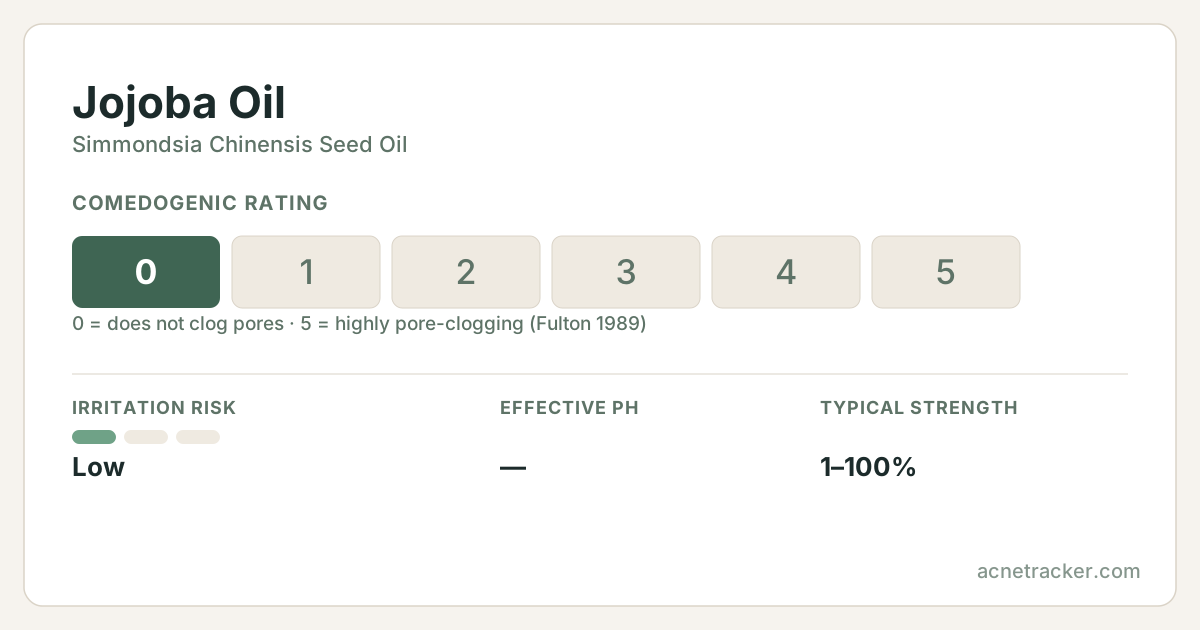
Jojoba oil is unusual among facial oils because, chemically, it is not really an oil at all but a liquid wax ester — and that quirk is precisely why it works so well on skin. Its structure closely resembles human sebum, the oil our own skin produces, which allows it to sit comfortably on the surface, soften and condition without feeling as greasy or heavy as many true oils. It is well tolerated across skin types, from dry skin that needs cushioning emollience to oilier skin that wants a lightweight, balancing oil. Stable and long-lasting, it is a mainstay of both single-oil products and richer blends.
Quick facts
- Comedogenic rating
- measured (Fulton 1989)
- Irritation risk
- Low
- Effective pH
- —
- Typical strength
- 1–100%
- Pregnancy
- Considered safe
- Suits skin types
- drycombinationsensitivenormaloily
Where this number comes from
Read directly from Table I of Fulton's 1989 paper — the primary source, not one of the copied tables that circulate online.
Fulton printed a RANGE for this ingredient (0-2), marked to show that the result depends on the source of the raw material. We publish the low end, because variability between batches is not evidence that a finished product clogs pores — flagging it at the high end would warn people off an ingredient the assay did not consistently condemn.
Fulton read his own scale as 0-1 not significant, 2-3 borderline, 4-5 positive. The assay is the rabbit ear at 10% dilution, which the paper itself calls extremely sensitive and not fully predictive of human skin. Ratings describe the raw ingredient; concentration and formulation change real-world behaviour.
Caution profile
The four published fields on this page, on one 0–5 scale. Further from the centre means more care is needed — never that the ingredient is worse.
Derived, not measured: pore-clogging is the published comedogenic rating; irritation maps low/moderate/high to 1/3/5; pregnancy maps safe/caution/avoid to 0/3/5; skin-type limits is how many of the seven skin types this entry does NOT list. Every input is printed in words in the quick-facts card above.
Show the numbers
| Metric | 0–5 | Published field |
|---|---|---|
| Pore-clogging | 0 | 0/5 |
| Irritation | 1 | Low |
| Skin-type limits | 1.4 | 5/7 |
| Pregnancy | 0 | Considered safe |
Working pH and typical strength
Where this ingredient is formulated to sit, and at what concentration.
Both bars come from the fields above: the pH window and the typical strength range published for this ingredient. The tinted column is healthy skin's surface pH (about 4.7–5.75).
Show the numbers
| Metric | 0–5 |
|---|---|
| Typical strength | 1–100% |
What is it?
Pressed from the seeds of the desert shrub Simmondsia chinensis, jojoba is composed of long-chain wax esters rather than the triglycerides that make up most plant oils. This makes it remarkably stable and resistant to going rancid, and it gives the oil a light, non-tacky feel. Because its ester profile mirrors that of sebum, skin recognises it readily; some suggest this similarity may help signal balanced oil production, though the strongest, best-established benefit is simply excellent emollience and barrier support. With a moderate comedogenic rating, it suits most people but is not the very lowest-risk choice for those extremely prone to congestion.
Benefits
Mimics natural sebum
Its wax-ester structure closely matches the skin's own oil, so it absorbs and conditions in a way that feels natural and less greasy than typical triglyceride oils.
Softens and conditions skin
As an emollient it smooths and softens the surface, easing dryness and rough texture while helping to support a comfortable, supple feel.
Supports the skin barrier
By reinforcing the skin's lipid layer it helps reduce water loss, which is useful for dry, dehydrated or actives-stressed skin needing extra cushioning.
Stable and long-lasting
Being a wax rather than a triglyceride, jojoba resists oxidation and rancidity better than many plant oils, so products keep their quality for longer.
How to use
Jojoba oil is easy to work into a routine. Apply a few drops at night as the last step to seal in moisture, or mix a drop into your moisturiser for extra emollience. It can also buffer stronger actives — a small amount layered with or after retinol helps offset dryness. Because it is comparatively light, oilier skin can often tolerate it, but if you are highly congestion-prone, patch test on the cheek first and watch for any small bumps. Warm a couple of drops between the palms and press into damp skin for best absorption.
Side effects
Jojoba is gentle and rarely irritating, so allergic reactions are uncommon. Its main caveat is comedogenicity: with a moderate rating it can, in a minority of very congestion-prone users, contribute to clogged pores if used heavily. Using a modest amount and observing how your skin responds over a couple of weeks is the simplest way to gauge whether it suits you.
Who should avoid it
Most people can use jojoba, but those who break out extremely easily may prefer a lower-comedogenic option such as squalane. Anyone with a specific seed or nut oil sensitivity should patch test. It is regarded as safe for topical use in pregnancy, as with most simple plant emollients.
Pairs well with
Frequently asked questions
Is jojoba oil good for oily skin?
It can suit oily skin because its wax-ester structure mimics sebum and feels lighter than many oils. Use it sparingly and monitor your skin, as it carries a moderate comedogenic rating.
Does jojoba oil clog pores?
It has a moderate comedogenic rating, so for most people it does not, but those very prone to congestion could react to heavy use. Patch test and use small amounts to check how your skin responds.
Can jojoba oil balance sebum?
Because it closely resembles the skin's own sebum, some believe it can help signal balanced oil production, though its clearest, best-supported benefit is strong emollience and barrier support.
How do I use jojoba oil on my face?
Warm a few drops in your palms and press onto damp skin at night as a final step, or add a drop to moisturiser. A little goes a long way, so start small and build up if needed.
Where this ingredient shows up here
Counted across this database, not the web — these are the pages on this site that reason about this ingredient.
Sources & further reading
Medical disclaimer
Find your personal acne triggers
Our free Acne Tracker lets you log breakouts, sleep, stress and diet, and shows you which factors correlate with your flare-ups.