Hemp Seed Oil: Comedogenic Rating & Ingredient Analysis
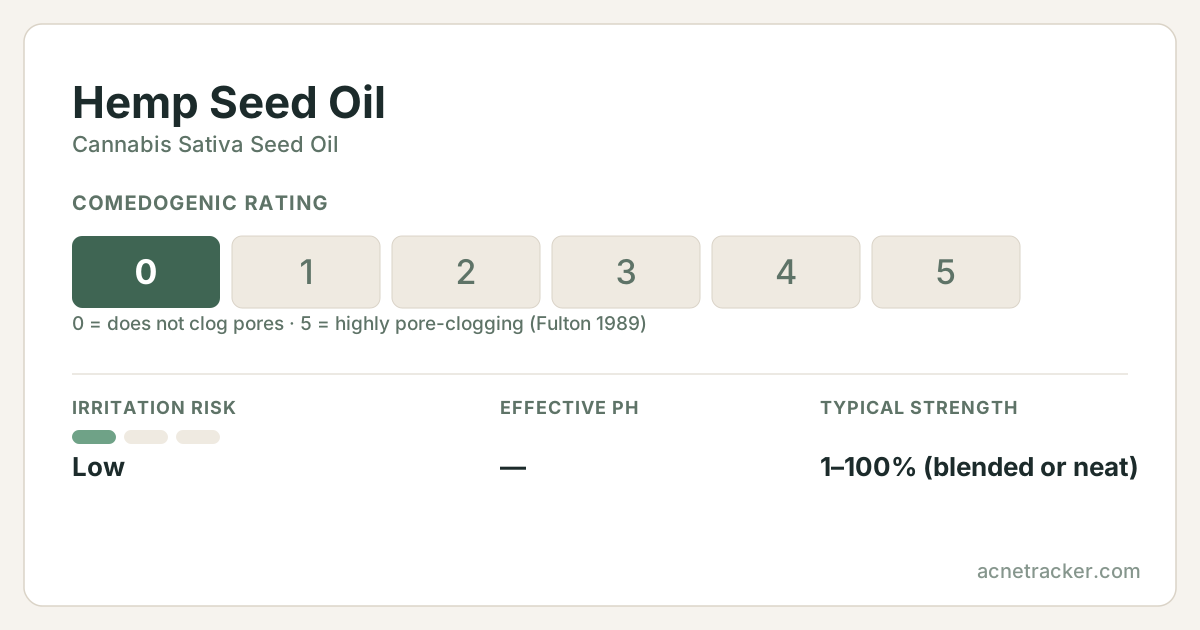
Hemp seed oil is a green, nutty oil cold-pressed from the seeds of the hemp plant. It is one of the most acne-friendly plant oils available, because it is exceptionally high in linoleic acid — the fatty acid that acne-prone skin tends to be short of — and very low in the heavier oleic acid. That composition gives it a light, dry-touch finish and one of the lowest pore-clogging risks of any facial oil. Importantly, hemp seed oil is pressed from the seeds and contains essentially no CBD or THC, so it is a food-grade, non-psychoactive cosmetic oil.
Quick facts
- Comedogenic rating
- our estimate — not measured
- Irritation risk
- Low
- Effective pH
- —
- Typical strength
- 1–100% (blended or neat)
- Pregnancy
- Considered safe
- Suits skin types
- oilycombinationacne-pronenormalsensitive
Where this number comes from
No one has published a comedogenic rating for this ingredient. Fulton's 1989 table tested about 250 raw materials and this was not among them, and we found no later study measuring it. The figure shown is our own reasoning from the ingredient's chemistry and how it is used — treat it as an estimate, not a measurement.
Fulton read his own scale as 0-1 not significant, 2-3 borderline, 4-5 positive. The assay is the rabbit ear at 10% dilution, which the paper itself calls extremely sensitive and not fully predictive of human skin. Ratings describe the raw ingredient; concentration and formulation change real-world behaviour.
Caution profile
The four published fields on this page, on one 0–5 scale. Further from the centre means more care is needed — never that the ingredient is worse.
Derived, not measured: pore-clogging is the published comedogenic rating; irritation maps low/moderate/high to 1/3/5; pregnancy maps safe/caution/avoid to 0/3/5; skin-type limits is how many of the seven skin types this entry does NOT list. Every input is printed in words in the quick-facts card above.
Show the numbers
| Metric | 0–5 | Published field |
|---|---|---|
| Pore-clogging | 0 | 0/5 |
| Irritation | 1 | Low |
| Skin-type limits | 1.4 | 5/7 |
| Pregnancy | 0 | Considered safe |
Working pH and typical strength
Where this ingredient is formulated to sit, and at what concentration.
Both bars come from the fields above: the pH window and the typical strength range published for this ingredient. The tinted column is healthy skin's surface pH (about 4.7–5.75).
Show the numbers
| Metric | 0–5 |
|---|---|
| Typical strength | 1–100% (blended or neat) |
What is it?
Hemp seed oil is dominated by linoleic acid, with a useful amount of alpha-linolenic acid (an omega-3) and only a small share of oleic acid. Research on the fatty-acid theory of comedogenicity suggests that oils rich in linoleic acid are less likely to contribute to clogged pores, and hemp sits near the top of that list, which is why it is one of the few oils commonly recommended for oily and breakout-prone skin. It absorbs quickly and leaves little residue. Like other polyunsaturated oils it can oxidise, so it is best bought fresh and stored well. On the fatty-acid profile alone we place it at a comedogenic rating of 0.
Benefits
Very low pore-clogging risk
Its high linoleic and low oleic content give it a comedogenic rating of 0, making it one of the safest facial oils for oily and acne-prone skin that reacts to richer oils.
Replenishes linoleic acid
Acne-prone skin is often low in linoleic acid, and topping it up can help sebum stay more fluid and less likely to harden into the plugs that start blackheads.
Light, fast-absorbing feel
Hemp sinks in quickly with a dry-touch finish, so it delivers the comfort of a facial oil without the heavy shine that puts oily-skin users off oils.
Soothes and supports the barrier
Its balanced omega-6 and omega-3 content helps a stressed barrier feel calmer, useful alongside drying acne actives that leave skin tight.
How to use
Apply a few drops to cleansed, damp skin, morning or night, either neat or mixed into a light moisturiser. Because it is so low on the comedogenic scale, it suits nightly use even on oily skin, and it makes a good buffering layer after niacinamide or an exfoliating acid. Buy it fresh in small, dark bottles and keep it in a cool place, as its polyunsaturated fats oxidise over time. If the oil smells sharp or fishy, it has gone off and should be replaced.
Side effects
Hemp seed oil is well tolerated and rarely irritating. The main issue is oxidation: an old bottle loses its benefits and can irritate, so freshness matters. It contains no meaningful cannabinoids and will not cause any psychoactive effect. As with any oil, a small number of people may be individually sensitive, so patch test if your skin is reactive.
Who should avoid it
Almost no one needs to avoid topical hemp seed oil. Those with a specific sensitivity to it should patch test first. It is widely regarded as safe for topical use in pregnancy. If you are looking for CBD specifically, note that hemp seed oil is not the same product and does not contain it.
Pairs well with
Frequently asked questions
Does hemp seed oil contain CBD?
No. Hemp seed oil is pressed from the seeds and contains essentially no CBD or THC. Cannabidiol is extracted from the flowers and leaves and sold as a separate ingredient, so do not expect CBD effects from a seed oil.
Is hemp seed oil good for acne-prone skin?
It is one of the best oils for acne-prone skin. Its very high linoleic acid content and comedogenic rating of 0 make it far less likely to clog pores than richer, oleic-heavy oils such as coconut or apricot-kernel-oil.
Can hemp seed oil be used on oily skin?
Yes. Its light, dry-touch finish and low comedogenic rating make it one of the few facial oils that oily skin tends to get on well with. Use a few drops after cleansing and adjust the amount to your comfort.
How should I store hemp seed oil?
Keep it in a cool, dark place with the cap closed, and prefer small dark-glass bottles. Its omega-3 and omega-6 fats oxidise with time, so replace it if it develops a sharp or fishy smell.
Where this ingredient shows up here
Counted across this database, not the web — these are the pages on this site that reason about this ingredient.
Sources & further reading
Medical disclaimer
Find your personal acne triggers
Our free Acne Tracker lets you log breakouts, sleep, stress and diet, and shows you which factors correlate with your flare-ups.