Petrolatum: Comedogenic Rating & Ingredient Analysis
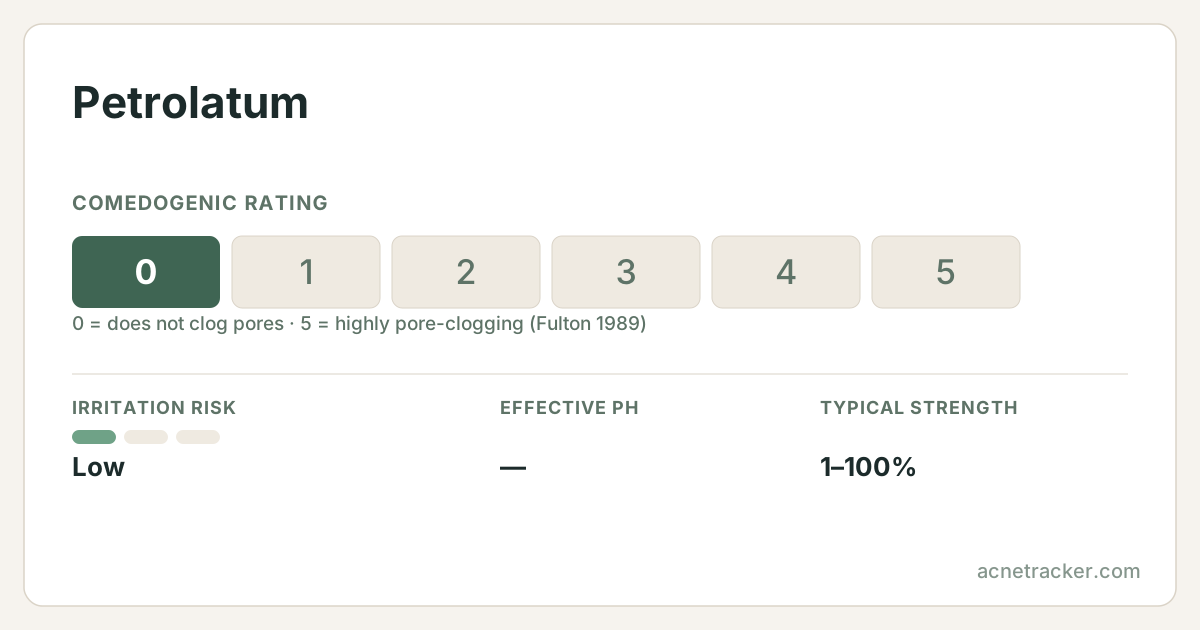
Petrolatum, better known as petroleum jelly, is the benchmark occlusive in dermatology and one of the single most effective ingredients for sealing in moisture and protecting damaged skin. It works by forming a physical barrier on the skin surface that dramatically reduces water loss, giving the skin the calm, humid environment it needs to repair itself. Despite being derived from petroleum, cosmetic-grade petrolatum is highly purified, inert and extremely well tolerated, even on the most sensitive and reactive skin. Counterintuitively, given how greasy it is, it is also non-comedogenic, making it far more skin-friendly than its heavy reputation suggests.
Quick facts
- Comedogenic rating
- our estimate — not measured
- Irritation risk
- Low
- Effective pH
- —
- Typical strength
- 1–100%
- Pregnancy
- Considered safe
- Suits skin types
- drysensitivenormalmature
Where this number comes from
No one has published a comedogenic rating for this ingredient. Fulton's 1989 table tested about 250 raw materials and this was not among them, and we found no later study measuring it. The figure shown is our own reasoning from the ingredient's chemistry and how it is used — treat it as an estimate, not a measurement.
Fulton read his own scale as 0-1 not significant, 2-3 borderline, 4-5 positive. The assay is the rabbit ear at 10% dilution, which the paper itself calls extremely sensitive and not fully predictive of human skin. Ratings describe the raw ingredient; concentration and formulation change real-world behaviour.
Caution profile
The four published fields on this page, on one 0–5 scale. Further from the centre means more care is needed — never that the ingredient is worse.
Derived, not measured: pore-clogging is the published comedogenic rating; irritation maps low/moderate/high to 1/3/5; pregnancy maps safe/caution/avoid to 0/3/5; skin-type limits is how many of the seven skin types this entry does NOT list. Every input is printed in words in the quick-facts card above.
Show the numbers
| Metric | 0–5 | Published field |
|---|---|---|
| Pore-clogging | 0 | 0/5 |
| Irritation | 1 | Low |
| Skin-type limits | 2.1 | 4/7 |
| Pregnancy | 0 | Considered safe |
Working pH and typical strength
Where this ingredient is formulated to sit, and at what concentration.
Both bars come from the fields above: the pH window and the typical strength range published for this ingredient. The tinted column is healthy skin's surface pH (about 4.7–5.75).
Show the numbers
| Metric | 0–5 |
|---|---|
| Typical strength | 1–100% |
What is it?
Petrolatum is a semi-solid mixture of purified hydrocarbons refined from petroleum. Cosmetic and pharmaceutical grades are highly refined to remove impurities, leaving an inert, hypoallergenic substance. Its power comes from occlusion: it can reduce trans-epidermal water loss by well over 90%, more than any plant oil or other common ingredient, which is why it is used on wounds, chapped skin and compromised barriers to speed recovery. Because its molecules are too large to penetrate and it does not react with skin, it neither clogs pores in practice nor sensitises, which is why patch-test panels use it as the standard neutral control.
Benefits
Unmatched moisture sealing
Petrolatum reduces water loss more effectively than any plant oil, giving dry, cracked or damaged skin the humid environment it needs to recover quickly.
Repairs compromised skin
By protecting and sealing, it supports healing of chapped, wind-burned or over-exfoliated skin, which is why it is a dermatology staple for barrier repair and minor wounds.
Extremely gentle and inert
Highly purified and non-reactive, it is so well tolerated that it is used as the neutral control in allergy patch testing, suiting even the most sensitive skin.
Non-comedogenic despite richness
Although it feels heavy and greasy, its molecules sit on the surface without penetrating, so it does not clog pores the way its texture might suggest.
How to use
Petrolatum is best used as the final, sealing step at night, applied over hydrating serums or moisturisers so it locks the water in, a technique often called slugging. A thin layer on dry patches, lips, cracked hands or around the nose during a cold gives fast relief. Because it seals so effectively, apply it to clean, hydrated skin rather than over dirt or actives you want to absorb, and avoid layering it over acne treatments you need to penetrate. A little goes a long way, so use a small amount and warm it slightly to spread thinly.
Side effects
Cosmetic-grade petrolatum is among the safest topical ingredients, with irritation and allergy being extremely rare. Its main practical drawback is aesthetic: it is greasy, can transfer to pillows and feels heavy, which some dislike. Applied over unclean skin or actively infected areas it can theoretically seal in bacteria, so use it on clean skin. Its non-comedogenic rating means clogging is not a genuine concern for most people.
Who should avoid it
Almost no one needs to avoid petrolatum on the grounds of skin safety; it suits dry, sensitive and reactive skin especially well and is considered safe in pregnancy. Those with very oily skin may simply find the greasy feel unpleasant and prefer a lighter occlusive like dimethicone. Always choose a purified cosmetic or pharmaceutical grade rather than industrial products.
Pairs well with
Frequently asked questions
Does petrolatum clog pores?
No. Despite its greasy feel, petrolatum is non-comedogenic; its molecules sit on the surface without penetrating, so it does not clog pores. It is even used as the neutral control in allergy patch testing.
Is petroleum jelly bad for your skin?
No. Cosmetic-grade petrolatum is highly purified, inert and extremely well tolerated. It is the most effective occlusive available and a dermatology staple for protecting and repairing dry, damaged skin.
What is slugging with petrolatum?
Slugging means applying a thin layer of petrolatum as the last step at night over your moisturiser to seal in water. It is a simple way to boost hydration and support the barrier on dry skin.
Can acne-prone skin use petrolatum?
Its non-comedogenic rating means it does not clog pores, so it can be used, but apply it on clean skin and avoid sealing it over acne treatments you need to absorb. Very oily skin may prefer a lighter occlusive.
Where this ingredient shows up here
Counted across this database, not the web — these are the pages on this site that reason about this ingredient.
Condition pages 1
Sources & further reading
Medical disclaimer
Find your personal acne triggers
Our free Acne Tracker lets you log breakouts, sleep, stress and diet, and shows you which factors correlate with your flare-ups.