Sodium Cocoyl Isethionate: Comedogenic Rating & Ingredient Analysis
Sodium cocoyl isethionate, usually abbreviated SCI, is a mild, coconut-derived surfactant best known for producing rich, creamy lather without the stripping harshness of soap or sulfates. It is the workhorse of syndet bars — synthetic-detergent cleansing bars that look like soap but are far gentler and more pH-balanced. SCI is prized for combining excellent foam and effective cleansing with genuine mildness, which is why it shows up in cleansing bars, powder cleansers and many gentle face and body washes.
Quick facts
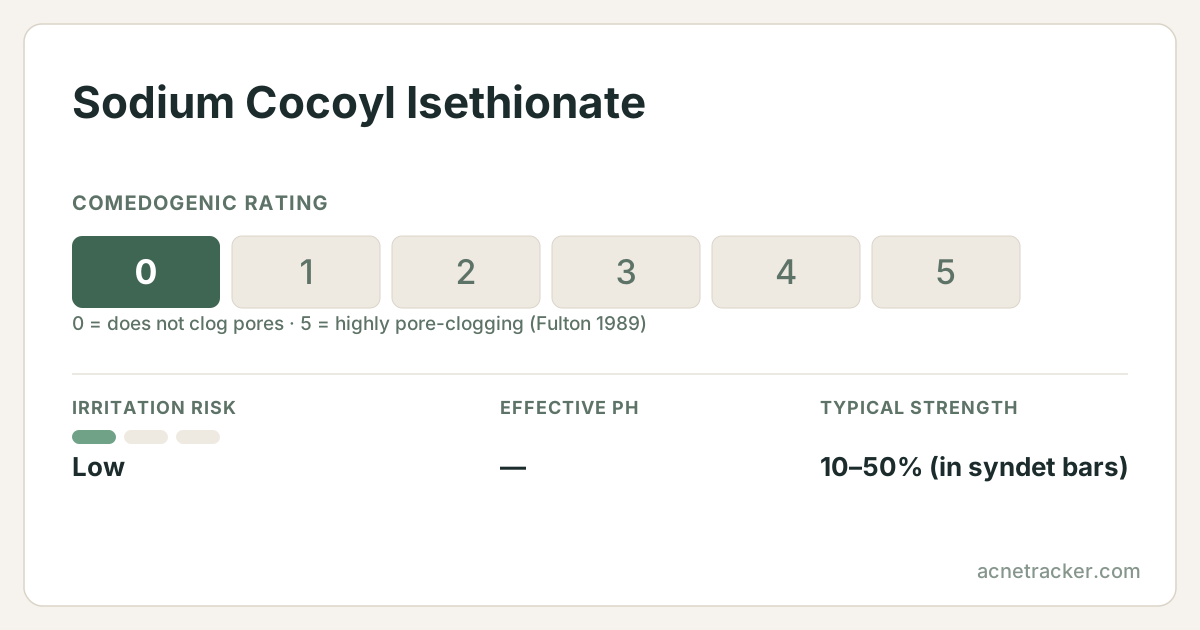
- Comedogenic rating
- our estimate — not measured
- Irritation risk
- Low
- Effective pH
- —
- Typical strength
- 10–50% (in syndet bars)
- Pregnancy
- Considered safe
- Suits skin types
- oilydrycombinationsensitivenormalacne-prone
Where this number comes from
No one has published a comedogenic rating for this ingredient. Fulton's 1989 table tested about 250 raw materials and this was not among them, and we found no later study measuring it. The figure shown is our own reasoning from the ingredient's chemistry and how it is used — treat it as an estimate, not a measurement.
Fulton read his own scale as 0-1 not significant, 2-3 borderline, 4-5 positive. The assay is the rabbit ear at 10% dilution, which the paper itself calls extremely sensitive and not fully predictive of human skin. Ratings describe the raw ingredient; concentration and formulation change real-world behaviour.
Caution profile
The four published fields on this page, on one 0–5 scale. Further from the centre means more care is needed — never that the ingredient is worse.
Derived, not measured: pore-clogging is the published comedogenic rating; irritation maps low/moderate/high to 1/3/5; pregnancy maps safe/caution/avoid to 0/3/5; skin-type limits is how many of the seven skin types this entry does NOT list. Every input is printed in words in the quick-facts card above.
Show the numbers
| Metric | 0–5 | Published field |
|---|---|---|
| Pore-clogging | 0 | 0/5 |
| Irritation | 1 | Low |
| Skin-type limits | 0.7 | 6/7 |
| Pregnancy | 0 | Considered safe |
Working pH and typical strength
Where this ingredient is formulated to sit, and at what concentration.
Both bars come from the fields above: the pH window and the typical strength range published for this ingredient. The tinted column is healthy skin's surface pH (about 4.7–5.75).
Show the numbers
| Metric | 0–5 |
|---|---|
| Typical strength | 10–50% (in syndet bars) |
What is it?
SCI is made by combining coconut-derived fatty acids with isethionic acid. The result is an anionic surfactant that is notably milder than traditional soap because it cleanses effectively while being less disruptive to the skin barrier and working well at skin-friendly pH. It produces a dense, luxurious foam that gives products a creamy feel, and it is often blended with co-surfactants like cocamidopropyl-betaine or sugar surfactants such as coco-glucoside to round out a formula. It has a comedogenic rating of zero, a low irritation profile, and is a favourite for formulators building gentle yet satisfying cleansers.
Benefits
Rich, creamy lather
SCI produces a dense, stable foam with a luxurious feel, delivering the satisfying lather people want from a cleanser without harsh detergents.
Gentle on the barrier
It cleanses effectively while being much milder than soap, helping to preserve the skin's protective barrier and reduce post-wash tightness.
pH-friendly cleansing
Unlike true soap, which is highly alkaline, SCI works at skin-friendly pH, making it kinder to the acid mantle and better suited to sensitive skin.
Coconut-derived
It is made from renewable coconut fatty acids, appealing to those who prefer plant-derived surfactants in gentle, well-formulated cleansers.
How to use
SCI is a rinse-off cleansing ingredient found in syndet bars, powder cleansers and washes — use as directed and rinse. It is a strong sign of a gentle, barrier-friendly cleanser, frequently paired with cocamidopropyl-betaine, coco-glucoside and humectants such as glycerin. It suits all skin types, including sensitive, dry and acne-prone skin, and needs no special handling. If soap leaves your skin tight, an SCI-based syndet bar is a much gentler alternative.
Side effects
SCI is very well tolerated, and irritation or allergy is uncommon. As a mild surfactant used mainly in rinse-off products, it rarely causes problems even for sensitive skin. One practical note is that in loose powder form it can be dusty, and manufacturers take handling precautions during production, but this is a workplace consideration rather than a concern for finished-product users.
Who should avoid it
Almost no one needs to avoid SCI; only those with a specific, confirmed sensitivity should. It is well suited to sensitive, dry and acne-prone skin and is often chosen precisely for gentle formulations. If you have reacted to it before, look for cleansers built on sugar-based or amino-acid surfactants instead.
Pairs well with
Frequently asked questions
Is sodium cocoyl isethionate good for skin?
Yes. SCI is a mild, coconut-derived surfactant that cleanses well and produces creamy foam while being gentler than soap and sulfates, making it a good choice for sensitive and dry skin.
What is a syndet bar?
A syndet bar is a synthetic-detergent cleansing bar built on mild surfactants like SCI. It looks like soap but is pH-balanced and far gentler on the skin barrier than traditional alkaline soap.
Is SCI a sulfate?
No. SCI is an isethionate surfactant, not a sulfate. It is generally milder than sulfates like SLS while still producing rich, satisfying lather, which is why it features in gentle cleansers.
Does sodium cocoyl isethionate cause acne?
No. SCI has a comedogenic rating of zero and rinses cleanly away despite its creamy lather — a rich foam is not the same thing as a residue. Acne-prone skin generally does well with it, and syndet bars built on SCI stay at a skin-friendly pH rather than the alkaline pH of traditional soap.
Where this ingredient shows up here
Counted across this database, not the web — these are the pages on this site that reason about this ingredient.
Sources & further reading
Medical disclaimer
Find your personal acne triggers
Our free Acne Tracker lets you log breakouts, sleep, stress and diet, and shows you which factors correlate with your flare-ups.