How to Choose a Face Oil for Post-Acne Marks
Two very different things get called acne scars, and an oil can help with one of them and not the other. Flat red or brown marks left after a spot heals are post-inflammatory erythema and hyperpigmentation — they are pigment and vessel changes in otherwise intact skin, and they fade, slowly, with or without help. Indented or raised scars are structural changes in the dermis, and no topical product resolves those; they need procedures. Face oils sit somewhere in the middle: rosehip has small studies on scarring, the barrier support is real, and the biggest thing an oil can do is not cause the next breakout that leaves the next mark.
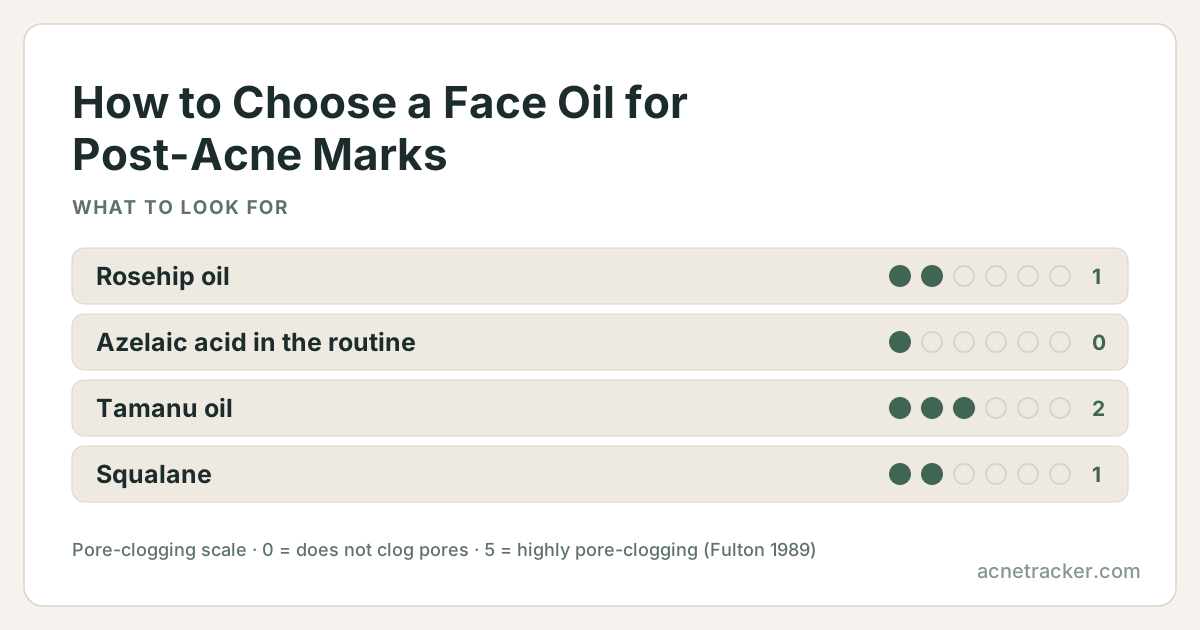
Ingredients to look for
| Ingredient | Why it matters |
|---|---|
| Rosehip oil | The one with actual scar research: small trials have reported improvements in the appearance of post-surgical scars with twice-daily application over several months. |
| Azelaic acid in the routine | Where the real evidence for post-inflammatory marks lives — it addresses both the pigment and the acne that keeps producing new marks. |
| Tamanu oil | Traditionally used on scars, with small studies on wound healing. Fulton has no rating for it, so its comedogenicity on marked, acne-prone skin is genuinely unknown. |
| Squalane | Fulton rates it 1 — the safest oil to use on skin that is still breaking out, which is most skin that has post-acne marks. |
| Niacinamide in the routine | Studies at 4–5% report reduced hyperpigmentation, and it is well tolerated alongside the actives that keep the underlying acne under control. |
Ingredients to avoid
| Ingredient | Why it matters |
|---|---|
| Comedogenic oils on still-active acne | Every new lesion is a new mark. Oils rated 3 and above — avocado, sesame, evening primrose — are a bad trade when the acne itself is the ongoing cause. |
| Vitamin E oil applied neat to scars | A trial on surgical scars found topical vitamin E did not improve appearance and caused contact dermatitis in a third of participants. This is a popular remedy with poor evidence. |
| Lemon juice and citrus oils | Phototoxic and irritating. They are marketed as fading marks and are more likely to cause a new pigmented patch than to remove one. |
| Aggressive scrubbing or massage of marks | Friction is inflammation, and inflammation is what deposited the pigment in the first place. Rubbing a mark does not disperse it. |
How to choose
Identify what you actually have first. Press the mark: if it is flat and the colour blanches or simply sits in intact skin, it is a mark and it will fade. If you can feel a dip or a raised ridge, it is a scar, and the honest answer is that a face oil will not change it — lasers, microneedling, subcision and fillers are the interventions with evidence, and they belong in a dermatologist's clinic. For flat marks, choose the oil for two things: not clogging, since active acne makes new marks faster than old ones fade, and tolerability alongside your actives. Rosehip is the reasonable pick given its small scar literature; squalane is the safe pick if you are congesting. Then be realistic about timelines: red marks typically take three to six months to settle, brown marks longer, and in deeper skin tones pigment can persist for a year or more. Sunscreen is what determines that timeline more than any oil, since UV darkens marks and slows their resolution.
How to apply
The oil is the last evening step, after your acne treatment has absorbed. Two or three drops, pressed on rather than rubbed into the marks — friction achieves nothing here except more inflammation. If you are trialling rosehip on marks, the studies used twice-daily application over months, so commit or do not bother. Keep the daytime routine focused on sunscreen instead: it is the highest-leverage thing you can do for marks, because UV re-darkens them faster than anything topical can fade them. Photograph your face monthly under the same light — mark fading is too slow to see in a mirror day to day.
Frequently asked questions
Can face oil fade acne scars?
It can help with flat marks and cannot help with indented ones. Post-inflammatory marks fade over months with sunscreen and pigment actives; textural scars are dermal damage that needs procedures rather than products.
Does rosehip oil work on acne marks?
It has the best evidence of any oil, which is still modest: small trials on post-surgical scars reported improved appearance with twice-daily use over several months. Treat it as a reasonable adjunct, not a treatment.
Should I put vitamin E oil on my scars?
The research argues against it. A controlled trial on surgical scars found no improvement in appearance, and around a third of participants developed contact dermatitis. As an antioxidant inside a formula it is fine; applied neat to scars it is not.
How long do post-acne marks take to fade?
Red marks usually settle over three to six months, brown marks take longer, and in deeper skin tones pigment can persist a year or more. Daily sunscreen shortens that timeline more than any oil will.
Sources & further reading
There is no single study of this exact question. The guidance here is reasoned from the ingredient profiles below, each of which carries its own references:
- Rosehip Oil3 refs
- Azelaic Acid3 refs
- Tamanu Oil2 refs
- Squalane3 refs
- Niacinamide2 refs
Show every reference behind this page (9)
- European Commission CosIng database — Rosa Canina Fruit Oilcited by Rosehip Oil, Azelaic Acid, Tamanu Oil, Squalane, Niacinamide
- PubChem — Linoleic acid (major rosehip fatty acid)cited by Rosehip Oil
- Safety Assessment of Rosa canina-derived Ingredients as Used in Cosmetics (PubMed)cited by Rosehip Oil
- PubChem — Azelaic acid compound summarycited by Azelaic Acid
- DermNet — Azelaic acidcited by Azelaic Acid
- Biological Activity of Polynesian Calophyllum inophyllum Oil Extract on Human Skin Cells (Planta Medica, 2016)cited by Tamanu Oil
- PubChem — Squalane compound summarycited by Squalane
- DermNet — Emollients and moisturiserscited by Squalane
- Niacinamide: mechanisms of action and its topical use in dermatology (PubMed)cited by Niacinamide
Medical disclaimer
Ingredients mentioned on this page
Find your personal acne triggers
Our free Acne Tracker lets you log breakouts, sleep, stress and diet, and shows you which factors correlate with your flare-ups.