How to Choose a Night Cream for Combination Skin
Combination skin is oily down the central T-zone and normal-to-dry on the cheeks, which makes one night cream feel like a compromise. Overnight, both zones lose water, but they need different things: the cheeks want more comfort and repair, the T-zone wants hydration without a greasy seal. The trick is a balanced, medium-weight formula that hydrates broadly while letting you multi-moisturise where zones diverge. This guide describes the texture and ingredient profile that keeps both areas happy after dark, so you can choose sensibly instead of buying two creams or picking one that suits only half your face.
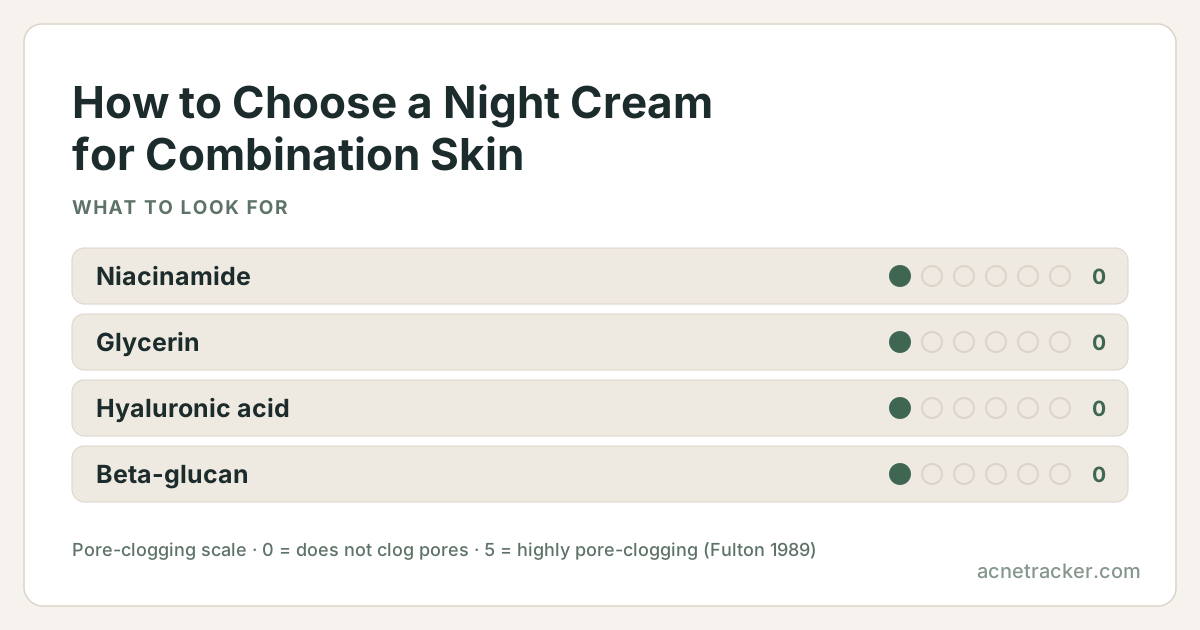
Ingredients to look for
| Ingredient | Why it matters |
|---|---|
| Niacinamide | The ideal combination-skin ingredient: it supports the barrier on dry cheeks while helping moderate oil and pores in the T-zone. |
| Glycerin | A universally comfortable humectant that hydrates both zones without weighing down the oily centre. |
| Hyaluronic acid | Lightweight water-binding that suits the T-zone while topping up the drier cheeks, in a texture that stays light. |
| Beta-glucan | Soothes and hydrates with a light feel, useful when one zone is a little reactive and the other is not. |
| Ceramides | Give the drier cheeks the barrier repair they want without adding a greasy load the T-zone would object to. |
Ingredients to avoid
| Ingredient | Why it matters |
|---|---|
| Very rich butter-based balms | They comfort dry cheeks but overwhelm the T-zone, leaving the central face greasy and congested by morning. |
| Alcohol-heavy 'oil-control' formulas | They may suit the T-zone briefly but dry out and irritate the cheeks, exaggerating the split instead of balancing it. |
| Heavy fragrance | Reactive combination skin, often more sensitive on the cheeks, does not need the added irritation risk overnight. |
| Thick, one-note occlusives with no humectants | They seal the oily zone without giving the dry zone the water it actually lacks, so neither area is well served. |
How to choose
Aim for balance, not extremes. A medium-weight lotion or light cream with strong humectants (glycerin, hyaluronic acid) and niacinamide suits combination skin better than either a rich balm or a bare gel. The best single indicator is niacinamide reasonably high on the list, since it addresses both halves of the concern. Treat 'balancing' and 'for combination skin' as unregulated marketing and read the actual formula instead. Crucially, you do not have to find one perfect cream: 'multi-moisturising' — a lighter layer on the T-zone and a richer one or a second layer on the cheeks — is a legitimate, dermatologist-endorsed approach and often works better than any compromise product. Decide on a dedicated night cream only if your daytime moisturiser leaves the cheeks tight by morning; otherwise reusing it at night is fine.
How to apply
After cleansing and any treatment, apply the night cream in a thin layer over the whole face, then go back and add a little more to the cheeks or anywhere that feels tight. Keep the T-zone layer light so it does not read greasy overnight. If your zones differ a lot, you can use a gel on the centre and a richer cream on the cheeks — same principle, two textures. Give humectants damp skin to work with by applying soon after cleansing. On active nights, the hydration offsets dryness from retinoids, and sunscreen the next morning remains essential.
Frequently asked questions
Should combination skin use two different night creams?
You can, but you do not have to. Many people do well with one balanced cream applied lighter on the T-zone and heavier on the cheeks. Two products — a gel centre, a richer cheek cream — only helps if the zones differ a lot.
Why is my T-zone greasy but my cheeks tight after night cream?
The cream is likely a compromise that is too rich for the centre and not repairing enough for the cheeks. Switch to a balanced, humectant-led formula and add an extra layer only where the cheeks feel tight.
What is the best night cream texture for combination skin?
A medium-weight lotion or light cream that hydrates without a greasy seal. It gives the cheeks comfort while staying light enough for the T-zone, which a heavy balm or a bare gel cannot both do at once.
Can I use niacinamide in my night cream if I have combination skin?
Yes, it is close to ideal. Niacinamide supports the barrier on drier cheeks while helping to moderate oil and pores in the T-zone, which is exactly the balance combination skin needs overnight.
Sources & further reading
There is no single study of this exact question. The guidance here is reasoned from the ingredient profiles below, each of which carries its own references:
- Niacinamide2 refs
- Glycerin3 refs
- Hyaluronic Acid3 refs
- Beta-Glucan2 refs
- Ceramides3 refs
Show every reference behind this page (8)
- Niacinamide: mechanisms of action and its topical use in dermatology (PubMed)cited by Niacinamide
- European Commission CosIng database — Niacinamidecited by Niacinamide, Glycerin, Hyaluronic Acid, Beta-Glucan, Ceramides
- PubChem — Glycerol compound summarycited by Glycerin
- DermNet — Moisturiserscited by Glycerin, Hyaluronic Acid
- PubChem — Hyaluronic acid compound summarycited by Hyaluronic Acid
- PubMed — Improving skin function with CM-glucan, a biological response modifier from yeast (Int J Cosmet Sci, 1998)cited by Beta-Glucan
- DermNet — Skin barrier functioncited by Ceramides
- PubChem — Ceramide compound summarycited by Ceramides
Medical disclaimer
Ingredients mentioned on this page
Find your personal acne triggers
Our free Acne Tracker lets you log breakouts, sleep, stress and diet, and shows you which factors correlate with your flare-ups.