How to Choose a Toner for Acne-Prone Skin
Acne-prone skin has been sold harsh toners for generations, on the logic that breakouts come from oil and oil should be scrubbed away. In practice, aggressive alcohol and astringent toners inflame the skin, damage the barrier and can make breakouts angrier and slower to heal. A useful toner for acne-prone skin does the opposite: it delivers a low dose of a pore-clearing acid or a calming, blemish-friendly active in a lightweight base, without stripping. This guide sets out the ingredient profile that supports clearer skin and the profile that quietly works against it, so you can evaluate any toner rather than trust its promises. Persistent or cystic acne deserves a doctor, not a stronger toner.
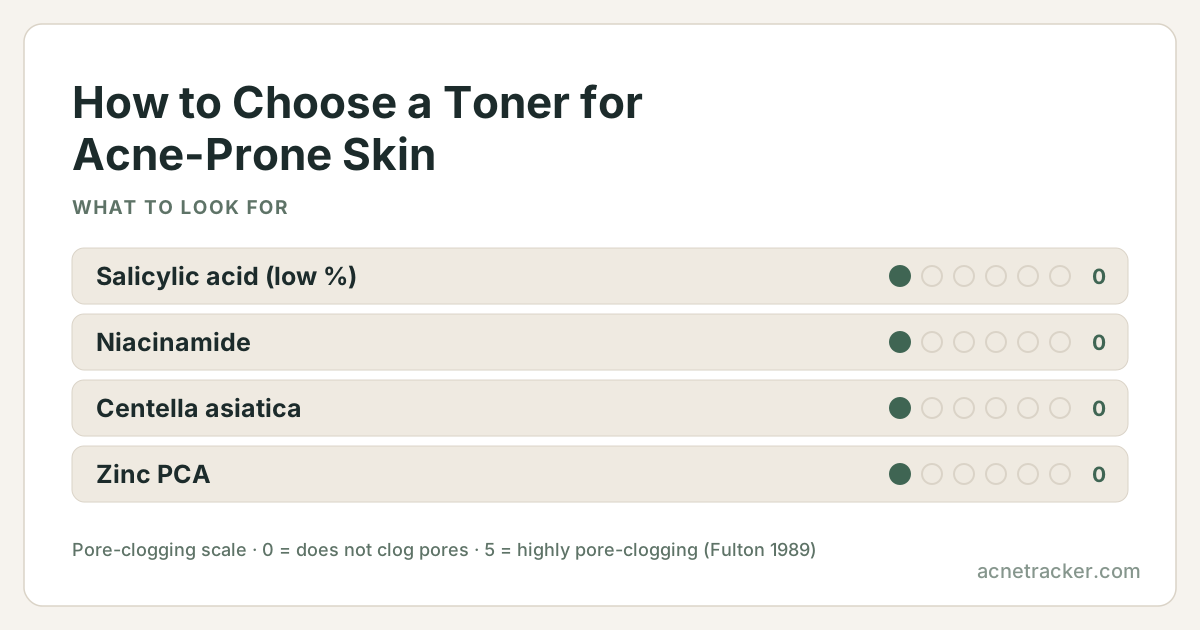
Ingredients to look for
| Ingredient | Why it matters |
|---|---|
| Salicylic acid (low %) | Oil-soluble BHA that gets into the pore lining to loosen the plugs behind blackheads and whiteheads; a leave-on toner dose suits maintenance. |
| Niacinamide | Calms redness, supports the barrier and helps moderate oil, all of which make blemish-prone skin more resilient and less reactive. |
| Centella asiatica | A soothing botanical that helps quiet the inflammation around active breakouts without any stripping or drying. |
| Zinc PCA | Mildly sebum-balancing and calming, a gentle fit for oily, blemish-prone skin that reacts badly to astringents. |
| Green tea extract | An antioxidant with anti-inflammatory properties that suits reactive, congestion-prone skin looking to stay calm. |
Ingredients to avoid
| Ingredient | Why it matters |
|---|---|
| High denatured alcohol (alcohol denat.) | Dries and inflames acne-prone skin, weakening the barrier so breakouts heal slower and mark more. |
| Stacking a toner acid on top of other strong actives | Layering BHA, AHA and retinoids the same night over-exfoliates, and irritated skin breaks out more, not less. |
| Alcohol-heavy witch hazel astringents | Sold as anti-blemish, but the drying and irritation tend to aggravate acne rather than calm it. |
| Fragrance and essential oils (e.g. peppermint, eucalyptus) | Common irritants that add nothing for acne and can trigger reactive, inflamed breakouts. |
How to choose
First, discard the idea that stinging equals working — for acne-prone skin, irritation usually means more breakouts. Choose one job for the toner. For congestion, a low-strength salicylic acid toner used a few evenings a week clears pores without the harshness of a peel. For calming reactive, inflamed skin, an alcohol-free toner built around niacinamide, centella or green tea is the better pick. Read the ingredient list for alcohol denat. near the top and skip it. Match the toner to the rest of your routine: if you already use a leave-on BHA or a retinoid, an exfoliating toner is redundant and risks over-exfoliation, so a soothing hydrating toner serves you better. Treat 'anti-blemish', 'clarifying' and 'purifying' as marketing until the actives confirm them. The goal is calmer, clearer skin over weeks — not a tight, squeaky face today.
How to apply
Apply to clean skin with hands or a soft pad, patting gently over blemish-prone areas rather than scrubbing them. Use a soothing hydrating toner morning and night; keep any acid-containing toner to two or three evenings a week and do not combine it with other strong actives on the same night. Never over-apply in the hope of faster results — that is how acne-prone skin tips into irritation and more breakouts. Follow with a light non-comedogenic moisturizer, and always wear SPF in the daytime, especially when the toner exfoliates, since acne marks darken with sun.
Frequently asked questions
Will a toner clear my acne?
On its own, unlikely. A well-chosen toner can support clearer skin by gently exfoliating or calming inflammation, but it is a supporting player. Established or cystic acne needs proven treatments and often a doctor, not a stronger toner.
Is an astringent toner good for breakouts?
Usually not. Astringents built on denatured alcohol dry and inflame the skin, and inflamed acne-prone skin tends to break out more and heal slower. A gentle, alcohol-free toner is a safer choice.
Salicylic acid toner or a leave-on treatment?
If you already use a leave-on salicylic acid or a retinoid, an acid toner is redundant and risks over-exfoliation. If you use neither, a low-strength salicylic acid toner a few nights a week is a reasonable maintenance step.
Can toner replace washing my face?
No. Swiping a toner-soaked pad is not cleansing; it removes little and cannot substitute for a proper wash. Cleanse first, then use a toner if it earns a place in your routine.
Sources & further reading
There is no single study of this exact question. The guidance here is reasoned from the ingredient profiles below, each of which carries its own references:
- Salicylic Acid2 refs
- Niacinamide2 refs
- Centella Asiatica2 refs
- Zinc PCA3 refs
- Green Tea Extract3 refs
Show every reference behind this page (9)
- Salicylic acid as a peeling agent: a comprehensive review (PubMed)cited by Salicylic Acid
- FDA OTC monograph — acne drug products (salicylic acid 0.5–2%)cited by Salicylic Acid
- Niacinamide: mechanisms of action and its topical use in dermatology (PubMed)cited by Niacinamide
- European Commission CosIng database — Niacinamidecited by Niacinamide, Centella Asiatica, Zinc PCA, Green Tea Extract
- Bylka W et al. Centella asiatica in dermatology: an overview. Phytother Res 2014 Aug (PubMed)cited by Centella Asiatica
- PubChem — Zinc PCA (zinc pyrrolidone carboxylate)cited by Zinc PCA
- Zinc l-pyrrolidone carboxylate inhibits the UVA-induced production of matrix metalloproteinase-1 by in vitro cultured skin fibroblasts, whereas it enhances their collagen synthesis (PubMed)cited by Zinc PCA
- PubChem — Epigallocatechin gallate (EGCG)cited by Green Tea Extract
- Green tea and the skin (PubMed)cited by Green Tea Extract
Medical disclaimer
Ingredients mentioned on this page
Find your personal acne triggers
Our free Acne Tracker lets you log breakouts, sleep, stress and diet, and shows you which factors correlate with your flare-ups.