Can You Mix Niacinamide and Salicylic Acid?
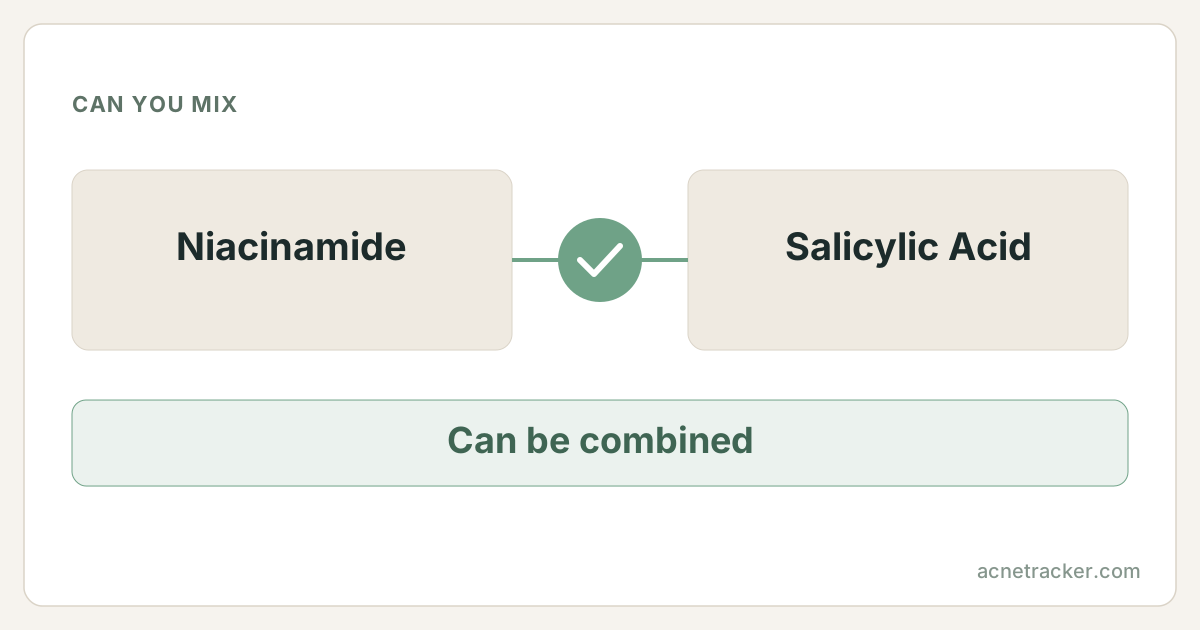
Yes — niacinamide and salicylic acid are not just compatible, they are one of the most effective over-the-counter pairings for oily and acne-prone skin. Salicylic acid clears the clog inside the pore while niacinamide reduces the oil production that creates new clogs and repairs the barrier stress the acid causes. Use salicylic acid first on clean, dry skin, wait a few minutes, then apply niacinamide.
How this pairing resolves
The two ingredients, their published numbers, and where they land together.
The numbers beside each ingredient are its published comedogenic rating and effective pH window, taken from its own profile page.
Show the numbers
| Ingredients | Metric | 0–5 |
|---|---|---|
| Niacinamide | Comedogenic rating | 0/5 |
| Niacinamide | Effective pH | 5.0–7.0 |
| Salicylic Acid | Comedogenic rating | 0/5 |
| Salicylic Acid | Effective pH | 3.0–4.0 |
Why
These two ingredients attack acne from opposite ends of the problem. Salicylic acid is an oil-soluble exfoliant that travels into the follicle and dissolves the existing plug of sebum and dead cells; niacinamide works upstream, reducing sebum output, calming inflammation and strengthening the barrier so the skin tolerates regular exfoliation in the first place. Their pH requirements do not clash the way two acids do: salicylic acid needs an acidic environment (pH 3–4) to exfoliate, and niacinamide is comfortable across a wide pH range of roughly 5–7. Applied in sequence with a short wait, each works in its own window. The often-repeated claim that the pair converts to irritating niacin and causes flushing only applies under prolonged high heat in a lab beaker, not in sequential application on skin. For most users the combination is measurably gentler than salicylic acid alone, because niacinamide offsets the dryness.
How to combine them
Evening routine, two to three times per week: cleanse and pat fully dry, apply your salicylic acid product (liquid exfoliant or serum), wait three to five minutes so the acid keeps its working pH, then layer niacinamide serum on top and finish with moisturizer. If you prefer simplicity, many well-formulated products combine both in one bottle at compatible concentrations — 2% salicylic acid with 4–5% niacinamide is a common, sensible pairing. In the morning after an acid night, keep it minimal: gentle cleanser, niacinamide or plain moisturizer, and SPF 30+, because chemical exfoliation raises sun sensitivity for days. Beginners should introduce salicylic acid first and add niacinamide from day one — it needs no adjustment period.
Example routine
| When | Steps |
|---|---|
| Evening (2–3× per week) | Cleanser → Salicylic acid → wait 3–5 min → Niacinamide → Moisturizer |
| Other evenings | Cleanser → Niacinamide → Moisturizer |
| Every morning | Gentle cleanser → Niacinamide (optional) → Moisturizer → SPF 30+ |
Warning signs
Frequently asked questions
Which goes first, niacinamide or salicylic acid?
Salicylic acid first, on clean dry skin, because it needs low pH and direct pore contact. Wait three to five minutes, then apply niacinamide and moisturizer on top.
Does niacinamide plus salicylic acid cause flushing?
No. The flushing myth comes from niacinamide converting to niacin under prolonged heat in solution. Sequential application of two stable products on skin does not recreate those conditions.
Can I use both every single day?
Niacinamide, yes. Salicylic acid daily suits very oily skin only; most people should exfoliate two to three times per week and let niacinamide do the daily maintenance work.
Is this combination good for blackheads?
It is arguably the best OTC combination for blackheads: salicylic acid dissolves existing clogs inside the pore while niacinamide reduces the sebum supply that forms new ones.
Can sensitive skin use this pairing?
Usually yes, with adjustments: choose a 0.5–1% salicylic acid product, use it once or twice a week, and apply niacinamide daily. The pairing is gentler than the acid alone.
Sources & further reading
There is no single study of this exact question. The guidance here is reasoned from the ingredient profiles below, each of which carries its own references:
- Niacinamide2 refs
- Salicylic Acid2 refs
Show every reference behind this page (4)
- Niacinamide: mechanisms of action and its topical use in dermatology (PubMed)cited by Niacinamide
- European Commission CosIng database — Niacinamidecited by Niacinamide
- Salicylic acid as a peeling agent: a comprehensive review (PubMed)cited by Salicylic Acid
- FDA OTC monograph — acne drug products (salicylic acid 0.5–2%)cited by Salicylic Acid
Medical disclaimer
Ingredients mentioned on this page
Find your personal acne triggers
Our free Acne Tracker lets you log breakouts, sleep, stress and diet, and shows you which factors correlate with your flare-ups.