How to Choose a Sunscreen for Oily, Acne-Prone Skin With No White Cast
This is the hardest brief in sunscreen: oily and breakout-prone skin that also refuses to wear a white cast. You need a formula light enough not to clog pores or add shine, and invisible enough to leave no grey film — which rules out heavy creams and thick, untinted mineral formulas alike. The good news is that modern chemical and hybrid filters make it very achievable. This guide describes the light, non-comedogenic, cast-free formulas that suit oily acne-prone skin, and the heavy oils and ghosting mineral bases to avoid, so you get invisible protection that respects your pores.
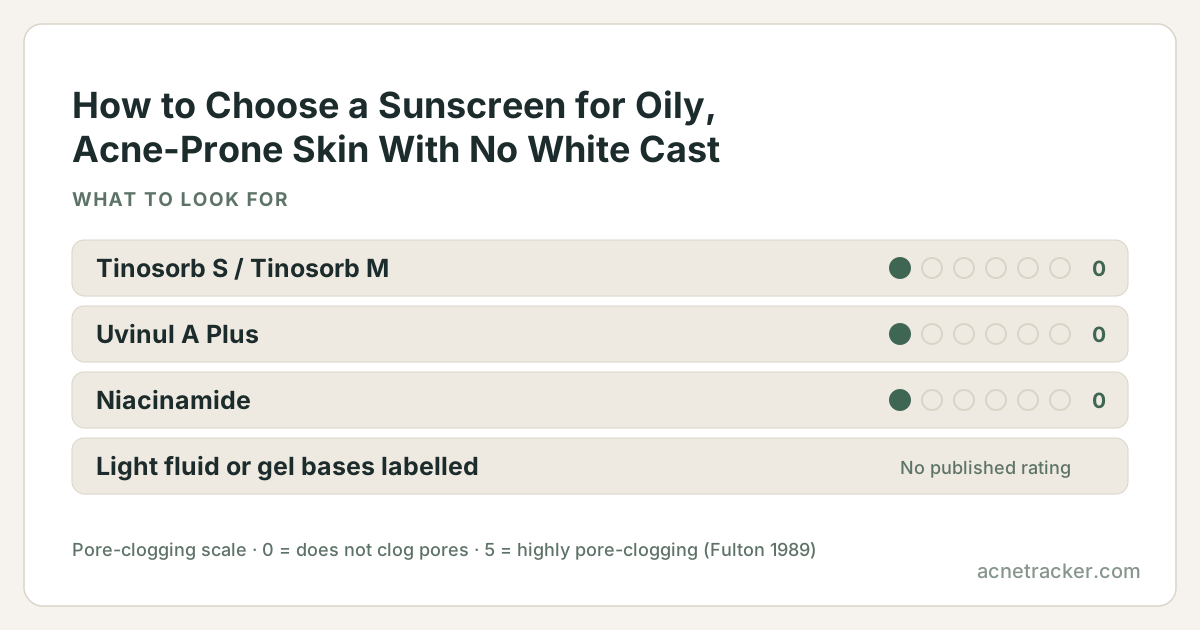
Ingredients to look for
| Ingredient | Why it matters |
|---|---|
| Tinosorb S / Tinosorb M | Modern broad-spectrum filters that absorb into a clear, weightless film — no white cast and no greasy heaviness. |
| Uvinul A Plus | A photostable UVA filter that formulates into light, invisible fluids suited to oily, breakout-prone skin. |
| Niacinamide | Helps control oil and calm breakouts, an ideal supporting active for shiny, acne-prone skin under SPF. |
| Light fluid or gel bases labelled non-comedogenic and matte | A thin, mattifying, invisible vehicle avoids both the shine and the clogging that plague oily acne-prone skin. |
| A stated matte or dry-touch finish with silica | Absorbent mattifiers keep the finish shine-free without the heavy oils that trigger breakouts. |
Ingredients to avoid
| Ingredient | Why it matters |
|---|---|
| Untinted, high-percentage mineral formulas | Zinc oxide and titanium dioxide scatter light and leave the exact white cast this skin type wants to avoid. |
| Coconut oil, isopropyl myristate and other pore-clogging oils | They add shine and trigger breakouts, undoing the point of a light, acne-friendly sunscreen. |
| Heavy, greasy cream bases | They leave a shiny film on already-oily skin and can clog congestion-prone pores. |
| Assuming 'matte' means non-comedogenic | A formula can be mattifying yet still contain pore-clogging esters; check the full list, not just the finish claim. |
How to choose
Two demands must be met at once: no clogging and no cast. For the cast, choose modern chemical or hybrid filters — Tinosorb, Uvinul and similar, available in the EU and much of the world — which absorb into a clear film and leave no white residue, unlike untinted mineral formulas. For the pores, pick a light fluid or gel described as non-comedogenic, and screen the ingredient list for pore-clogging oils like coconut oil and isopropyl myristate. A stated matte or dry-touch finish with silica controls shine, and niacinamide is a useful oil-regulating extra. If you prefer mineral filters, a tinted version avoids the cast, though tints add a hint of colour rather than staying fully invisible. Cosmetic elegance is the whole point of this page, but it is a filter-system and base question, not an SPF one — keep the number at 30 broad-spectrum or higher. Confirm the finish with a wear test: it should stay matte and invisible a couple of hours in, not just at first.
How to apply
Apply a full two fingers' length as the last morning step before makeup, letting a light fluid absorb fully so it does not pill or turn shiny. Over the day, oily skin will break through; a translucent mattifying powder or a fluid SPF tops up protection and controls shine without adding heavy product to breakout-prone areas. Do not skip reapplication after sweating. Because this skin type is prone to marks, daily protection also helps post-acne spots fade instead of darkening, so consistency matters as much as the perfect invisible finish.
Frequently asked questions
How do I avoid white cast on oily, acne-prone skin?
Choose modern chemical or hybrid filters like Tinosorb and Uvinul, which absorb into a clear film and leave no cast, rather than untinted mineral formulas. Pair them with a light, non-comedogenic matte base for oily skin.
Can a matte sunscreen still clog my pores?
Yes. Matte describes the finish, not the ingredients. A mattifying formula can still contain comedogenic oils or esters, so check the full ingredient list for known pore-cloggers rather than trusting the finish claim.
Are chemical sunscreens safe for acne-prone skin?
Generally yes. What matters for breakouts is the base and the absence of comedogenic ingredients, not the filter category. Many light, non-comedogenic chemical fluids suit acne-prone skin and leave no white cast.
Is there any no-white-cast option if I want mineral filters?
A tinted mineral sunscreen avoids the grey cast by adding colour that offsets the whiteness. It will not be fully invisible like a clear chemical formula, but a shade matched to your skin blends in far better than an untinted one.
Sources & further reading
There is no single study of this exact question. The guidance here is reasoned from the ingredient profiles below, each of which carries its own references:
- Tinosorb S2 refs
- Uvinul A Plus2 refs
- Niacinamide2 refs
- Silica3 refs
Show every reference behind this page (5)
- European Commission CosIng — Bis-Ethylhexyloxyphenol Methoxyphenyl Triazinecited by Tinosorb S, Uvinul A Plus, Niacinamide, Silica
- SCCS opinions on organic UV filterscited by Tinosorb S, Uvinul A Plus
- Niacinamide: mechanisms of action and its topical use in dermatology (PubMed)cited by Niacinamide
- PubChem — Silicon dioxidecited by Silica
- Fulton JE. Comedogenicity and irritancy of commonly used ingredients in skin care products. J Soc Cosmet Chem 40:321–333 (1989) — Table I, pp. 324–326 (source of the comedogenic rating)cited by Silica
Medical disclaimer
Ingredients mentioned on this page
Find your personal acne triggers
Our free Acne Tracker lets you log breakouts, sleep, stress and diet, and shows you which factors correlate with your flare-ups.