How to Choose a Sunscreen for Fungal Acne
Fungal acne — properly Malassezia folliculitis — is not true acne but an overgrowth of a skin yeast, showing up as uniform, itchy small bumps. It feeds on certain fatty acids and esters, so the usual advice for breakouts backfires: many 'acne-friendly' sunscreens contain exactly the oils and esters that fuel it. The goal is a sunscreen that protects without providing food for Malassezia. This guide describes the filters and bases that tend to be fungal-acne-safe, and the fatty ingredients to screen out, so you can protect your skin without triggering a flare. Persistent cases are worth a doctor's diagnosis, since antifungal treatment may be needed.
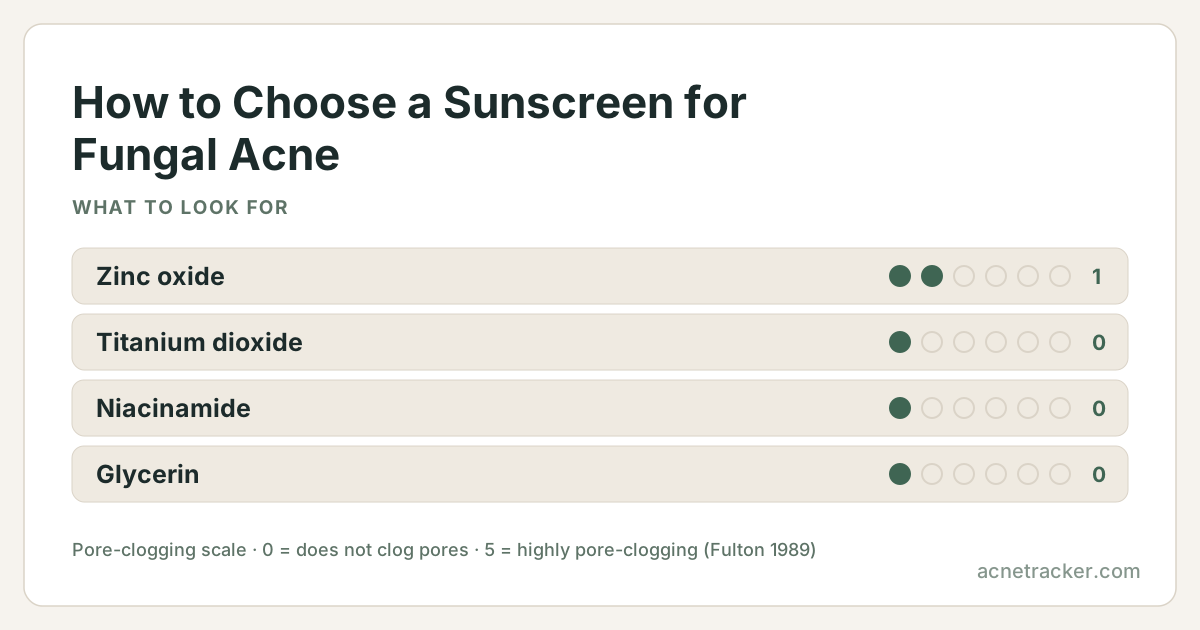
Ingredients to look for
| Ingredient | Why it matters |
|---|---|
| Zinc oxide | A mineral filter with no fatty-acid content to feed the yeast, plus mild soothing and oil-absorbing properties. |
| Titanium dioxide | The other inert mineral filter; it protects without the esters or oils Malassezia can metabolise. |
| Niacinamide | A safe, non-feeding supporting ingredient that calms and helps regulate oil on Malassezia-prone skin. |
| Glycerin | A simple humectant that hydrates without any fatty acids or esters, so it does not feed the yeast. |
| Water-gel or simple mineral bases free of fatty esters | A light, ester-free vehicle protects without supplying the lipids that drive a fungal-acne flare. |
Ingredients to avoid
| Ingredient | Why it matters |
|---|---|
| Fatty acids and many esters (e.g. isopropyl palmitate, glyceryl stearate, many '-ate' esters) | These are direct food for Malassezia and are the most common trigger of fungal-acne flares in skincare. |
| Plant oils and butters (coconut, olive, shea and similar) | Rich in the fatty acids the yeast metabolises, they commonly worsen fungal acne even when marketed as natural. |
| Fermented ingredients and some polysorbates | Certain ferments and polysorbate emulsifiers are widely reported to trigger flares in Malassezia-prone skin. |
| Lanolin and fatty alcohols in rich formulas | Occlusive, lipid-rich ingredients can feed the yeast and trap it against the skin, prolonging a flare. |
How to choose
Fungal acne is about ingredients, not texture, so read the full list rather than trusting an 'acne-safe' claim. Malassezia feeds on many fatty acids and esters, so the safest bet is usually a simple mineral sunscreen built on zinc oxide or titanium dioxide, which are inert, in a base free of fatty esters and plant oils. Screen the list for common triggers — isopropyl palmitate, glyceryl stearate, coconut oil and similar '-ate' esters and oils — and prefer water-gel or lightly formulated mineral bases with humectants like glycerin instead. Note that ingredient tolerance varies between people, so some experimentation is normal. Screening the list this hard shrinks the shortlist, but do not let it drag the filter level down: SPF 30 broad-spectrum remains the minimum. Because fungal acne can look like regular acne but does not respond to acne treatment, a doctor's diagnosis is worthwhile if bumps persist despite a careful routine.
How to apply
Apply a simple, ester-free sunscreen every morning as usual, a full two fingers' length for the face, and keep the rest of your routine equally lean in fatty ingredients so nothing feeds the yeast. Reapply every two hours outdoors; a mineral powder SPF is a convenient, low-lipid way to top up. Avoid layering rich, oily products under or over the sunscreen during a flare. If you sweat heavily, cleanse promptly afterwards, since warmth and trapped moisture encourage Malassezia to overgrow on skin already prone to it.
Frequently asked questions
What sunscreen ingredients trigger fungal acne?
Malassezia feeds on many fatty acids and esters, so common triggers include isopropyl palmitate, glyceryl stearate, plant oils like coconut, and similar lipids. Screen the full ingredient list rather than relying on 'acne-safe' claims.
Is mineral sunscreen safe for fungal acne?
Usually yes, if the whole base is clean. Zinc oxide and titanium dioxide are inert and do not feed the yeast, but the surrounding formula must also be free of fatty esters and oils to be genuinely fungal-acne-safe.
Why do 'acne-safe' sunscreens still trigger my fungal acne?
Because acne-safe means non-comedogenic, not free of the fatty acids and esters that feed Malassezia. A product can avoid clogging pores while still containing the exact lipids that fuel a fungal-acne flare.
How do I know if it is fungal acne or regular acne?
Fungal acne tends to be uniform, itchy small bumps that do not respond to acne treatment. Regular acne varies in size with blackheads and whiteheads. If bumps persist despite a careful routine, a doctor can diagnose it properly.
Sources & further reading
There is no single study of this exact question. The guidance here is reasoned from the ingredient profiles below, each of which carries its own references:
- Zinc Oxide2 refs
- Titanium Dioxide3 refs
- Niacinamide2 refs
- Glycerin3 refs
Show every reference behind this page (8)
- FDA — Sunscreen: How to Read a Label and drug factscited by Zinc Oxide
- PubChem — Zinc Oxide compound summarycited by Zinc Oxide
- PubChem — Titanium dioxide compound summarycited by Titanium Dioxide
- European Commission CosIng database — Titanium Dioxide (CI 77891)cited by Titanium Dioxide, Niacinamide, Glycerin
- DermNet — Sunscreencited by Titanium Dioxide
- Niacinamide: mechanisms of action and its topical use in dermatology (PubMed)cited by Niacinamide
- PubChem — Glycerol compound summarycited by Glycerin
- DermNet — Moisturiserscited by Glycerin
Medical disclaimer
Ingredients mentioned on this page
Find your personal acne triggers
Our free Acne Tracker lets you log breakouts, sleep, stress and diet, and shows you which factors correlate with your flare-ups.