Uvinul A Plus: Comedogenic Rating & Ingredient Analysis
Uvinul A Plus, known by the shorthand DHHB, is a modern UVA-specific sunscreen filter that has become a favourite alternative to avobenzone in European and Asian formulas. Where avobenzone protects against UVA but degrades in light, DHHB covers a similar long-UVA range while staying remarkably photostable. That makes it valuable for reliable, all-day UVA defence, the wavelengths most responsible for photoaging and pigmentation. It is approved in the EU and many other regions, but not by the US FDA, so it does not appear in American sunscreens. It is frequently combined with broad-spectrum filters like Tinosorb S.
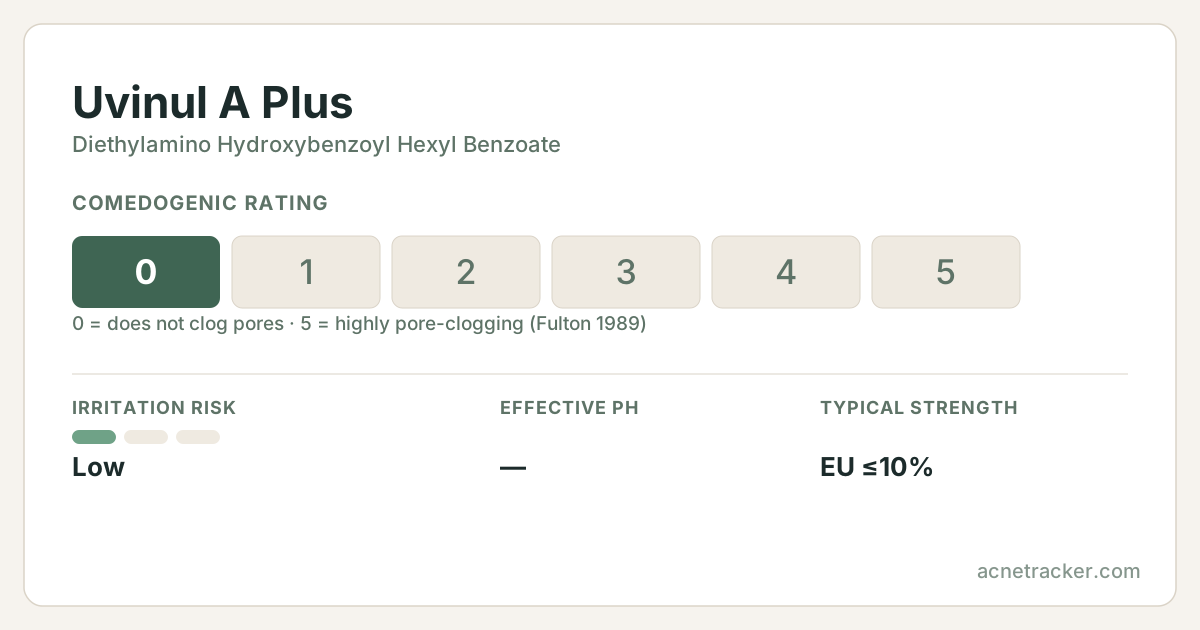
Quick facts
- Comedogenic rating
- our estimate — not measured
- Irritation risk
- Low
- Effective pH
- —
- Typical strength
- EU ≤10%
- Pregnancy
- Considered safe
- Suits skin types
- oilydrycombinationsensitivenormalacne-pronemature
Where this number comes from
No one has published a comedogenic rating for this ingredient. Fulton's 1989 table tested about 250 raw materials and this was not among them, and we found no later study measuring it. The figure shown is our own reasoning from the ingredient's chemistry and how it is used — treat it as an estimate, not a measurement.
Fulton read his own scale as 0-1 not significant, 2-3 borderline, 4-5 positive. The assay is the rabbit ear at 10% dilution, which the paper itself calls extremely sensitive and not fully predictive of human skin. Ratings describe the raw ingredient; concentration and formulation change real-world behaviour.
Caution profile
The four published fields on this page, on one 0–5 scale. Further from the centre means more care is needed — never that the ingredient is worse.
Derived, not measured: pore-clogging is the published comedogenic rating; irritation maps low/moderate/high to 1/3/5; pregnancy maps safe/caution/avoid to 0/3/5; skin-type limits is how many of the seven skin types this entry does NOT list. Every input is printed in words in the quick-facts card above.
Show the numbers
| Metric | 0–5 | Published field |
|---|---|---|
| Pore-clogging | 0 | 0/5 |
| Irritation | 1 | Low |
| Skin-type limits | 0 | 7/7 |
| Pregnancy | 0 | Considered safe |
Working pH and typical strength
Where this ingredient is formulated to sit, and at what concentration.
Both bars come from the fields above: the pH window and the typical strength range published for this ingredient. The tinted column is healthy skin's surface pH (about 4.7–5.75).
Show the numbers
| Metric | 0–5 |
|---|---|
| Typical strength | EU ≤10% |
What is it?
Uvinul A Plus is an oil-soluble organic filter with peak absorption around 354 nanometres, squarely in the long-UVA region. Its defining property is photostability: unlike avobenzone it does not break down meaningfully in sunlight, so it delivers steady UVA protection without needing a stabilizer, and it can help balance a formula alongside UVB filters. Because it targets UVA specifically, it is paired with UVB or broad-spectrum filters such as Uvinul T 150 or Tinosorb S to reach a full SPF. It has a low irritation profile and is well suited to lightweight, cosmetically elegant sunscreens.
Benefits
Photostable UVA protection
DHHB covers long UVA like avobenzone but stays stable in sunlight, giving dependable protection against aging and pigmenting wavelengths all day.
A cleaner avobenzone alternative
Because it does not degrade, it can replace or supplement avobenzone, simplifying formulas that would otherwise need extra stabilizers like octocrylene.
Gentle and light
It has a low irritation profile and an elegant, oil-soluble texture, suiting sensitive and acne-prone skin in daily broad-spectrum sunscreens.
Team player
It pairs neatly with UVB filters and broad-spectrum options like tinosorb-s, and layers over antioxidant serums with vitamin-e for extra defence.
How to use
You will encounter DHHB inside finished EU, UK, Australian and Asian sunscreens, used as part of your daily broad-spectrum SPF. Apply generously each morning and reapply every two hours in the sun. Since DHHB handles UVA, look for a partner UVB filter on the label so the product is truly broad-spectrum. Its stability means the protection holds well over the day. It layers cleanly under makeup and over vitamin-c or vitamin-e serums. US shoppers will need to buy internationally to access it.
Side effects
Uvinul A Plus is well tolerated, with low rates of irritation and contact allergy. Its good photostability means it is not associated with the breakdown products that concern some older filters, and it is not tied to the systemic-absorption issues raised for oxybenzone. As always, keep sunscreen out of the eyes to avoid stinging. EU safety assessments support its use within approved concentration limits.
Who should avoid it
There is no group that specifically needs to avoid Uvinul A Plus; it is gentle and generally considered acceptable in pregnancy. People in the US cannot buy it domestically due to FDA status. Anyone with a rare allergy to it should use a mineral sunscreen with zinc-oxide or titanium-dioxide instead.
Pairs well with
Frequently asked questions
What is DHHB used for?
DHHB, or Uvinul A Plus, is a photostable long-UVA filter used mainly in EU and Asian sunscreens as a stable alternative or supplement to avobenzone.
Is Uvinul A Plus better than avobenzone?
It covers a similar UVA range but is far more photostable, so it does not break down in light. Many modern formulas prefer it or use it alongside avobenzone.
Is Uvinul A Plus available in the US?
No. It is approved in the EU and many other regions but not by the FDA, so it is not found in sunscreens sold in the United States.
Does DHHB provide UVB protection?
No. It targets UVA specifically, so it is combined with UVB or broad-spectrum filters such as Uvinul T 150 or Tinosorb S to reach a full SPF.
Where this ingredient shows up here
Counted across this database, not the web — these are the pages on this site that reason about this ingredient.
Sources & further reading
Medical disclaimer
Find your personal acne triggers
Our free Acne Tracker lets you log breakouts, sleep, stress and diet, and shows you which factors correlate with your flare-ups.