Silica: Comedogenic Rating & Ingredient Analysis
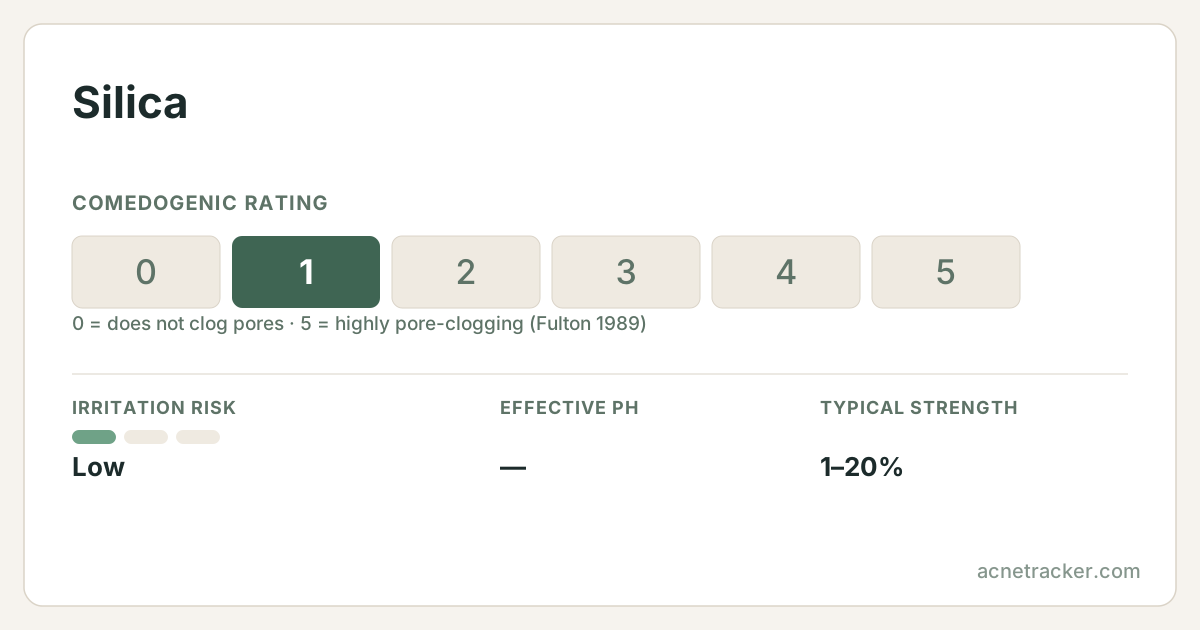
Silica is silicon dioxide, one of the most abundant minerals on earth, and a workhorse ingredient in both skincare and makeup. In cosmetics it is used primarily for its physical properties: it absorbs oil, mattifies shine, gives products a silky slip and, in the form of tiny spheres, can softly blur the look of pores and fine lines. It is chemically inert and generally very well tolerated on the skin. Its main safety note concerns loose powder and inhalation during manufacture rather than everyday use of finished cosmetics.
Quick facts
- Comedogenic rating
- our estimate — not measured
- Irritation risk
- Low
- Effective pH
- —
- Typical strength
- 1–20%
- Pregnancy
- Considered safe
- Suits skin types
- oilycombinationnormal
Where this number comes from
No one has published a comedogenic rating for this ingredient. Fulton's 1989 table tested about 250 raw materials and this was not among them, and we found no later study measuring it. The figure shown is our own reasoning from the ingredient's chemistry and how it is used — treat it as an estimate, not a measurement.
Fulton read his own scale as 0-1 not significant, 2-3 borderline, 4-5 positive. The assay is the rabbit ear at 10% dilution, which the paper itself calls extremely sensitive and not fully predictive of human skin. Ratings describe the raw ingredient; concentration and formulation change real-world behaviour.
Caution profile
The four published fields on this page, on one 0–5 scale. Further from the centre means more care is needed — never that the ingredient is worse.
Derived, not measured: pore-clogging is the published comedogenic rating; irritation maps low/moderate/high to 1/3/5; pregnancy maps safe/caution/avoid to 0/3/5; skin-type limits is how many of the seven skin types this entry does NOT list. Every input is printed in words in the quick-facts card above.
Show the numbers
| Metric | 0–5 | Published field |
|---|---|---|
| Pore-clogging | 1 | 1/5 |
| Irritation | 1 | Low |
| Skin-type limits | 2.9 | 3/7 |
| Pregnancy | 0 | Considered safe |
Working pH and typical strength
Where this ingredient is formulated to sit, and at what concentration.
Both bars come from the fields above: the pH window and the typical strength range published for this ingredient. The tinted column is healthy skin's surface pH (about 4.7–5.75).
Show the numbers
| Metric | 0–5 |
|---|---|
| Typical strength | 1–20% |
What is it?
Silica in cosmetics is a processed form of silicon dioxide, engineered into fine powders and microspheres. These particles can soak up oil, which is why silica is a common mattifying agent in primers, foundations, powders and oil-control skincare. The spherical forms also roll light and sit smoothly on the skin, producing a soft-focus, pore-blurring optical effect and a pleasant, velvety texture. Because it is inert and sits on the surface, silica does not act like a biological active; its benefits are physical and cosmetic. It is distinct from silicones, which are a different family of ingredients, and from crystalline silica dust, which is an inhalation hazard in industrial settings rather than a concern in a finished cream.
Benefits
Absorbs oil and mattifies
Silica soaks up excess sebum, reducing shine and helping oily and combination skin look matte, which is why it features in primers, powders and oil-control products.
Blurs pores and lines
Spherical silica particles scatter light and sit smoothly on the skin, creating a soft-focus effect that visually softens the appearance of pores and fine lines.
Improves product texture
Silica gives creams, primers and powders a silky, smooth slip and helps them spread and set evenly, improving how a product feels and wears.
Inert and well tolerated
As a chemically inert mineral, silica sits on the surface without irritating or reacting, making it a low-risk ingredient across many skin types.
How to use
Silica needs no special routine — you simply use the products that contain it, such as mattifying primers, setting powders, foundations and oil-control moisturisers. Apply as you would any of those products. Silica layers well with other skincare and makeup, and its blurring, mattifying effect is most noticeable on oily or combination skin. There is no adjustment period or exfoliation risk. If a mattifying product feels drying, follow with a hydrating layer to keep balance.
Side effects
In finished cosmetics, silica is inert and rarely causes any problem on the skin. Very oil-absorbing formulas may feel drying on already dry skin. The real caution around silica concerns inhalation of loose crystalline silica dust in occupational settings, which is a lung hazard during manufacture — not something that applies to normal use of a cream or pressed powder. If loose powder makes you cough, avoid inhaling it, but skin contact is not the concern.
Who should avoid it
There is little reason to avoid silica on the skin, as it is inert and non-reactive. Dry skin may simply prefer less strongly mattifying, oil-absorbing formulas. Take sensible care not to inhale clouds of loose powder, but this is a general dust precaution rather than a skin-specific contraindication.
Pairs well with
Frequently asked questions
Is silica the same as silicone?
No. Silica is silicon dioxide, a mineral powder used to absorb oil and blur the skin. Silicones are a separate family of ingredients used mainly for slip and smoothing. They are chemically different.
Is silica good for oily skin?
Yes. Silica absorbs excess oil and mattifies shine, so it is a useful ingredient in primers, powders and oil-control products for oily and combination skin.
Does silica blur pores?
Spherical silica particles scatter light and sit smoothly on the skin, creating a soft-focus optical effect that visually softens the look of pores and fine lines, though it does not shrink them.
Is silica in skincare safe?
In finished cosmetics, yes — silica is inert and well tolerated on the skin. The known hazard is inhaling crystalline silica dust during manufacture, which does not apply to using a cream or pressed powder.
Does silica clog pores?
Silica has a very low comedogenic rating and sits on the surface without penetrating, so it is unlikely to clog pores for most people; any pore concerns usually come from other ingredients in a formula.
Where this ingredient shows up here
Counted across this database, not the web — these are the pages on this site that reason about this ingredient.
Sources & further reading
Medical disclaimer
Find your personal acne triggers
Our free Acne Tracker lets you log breakouts, sleep, stress and diet, and shows you which factors correlate with your flare-ups.