How to Choose a Sunscreen for Dark Skin Tones
The biggest complaint about sunscreen on deep skin tones is the grey or ashy cast that mineral formulas leave behind — a genuine problem, not vanity, because a product you dread wearing gets skipped. Melanin offers some natural protection but nowhere near enough, and deeper skin is especially prone to stubborn hyperpigmentation from sun and inflammation. The goal is protection that disappears into the skin. This guide explains why the white cast happens, which filter types and tints avoid it, and what to look for so daily SPF looks invisible and still shields against UVA-driven pigment and damage.
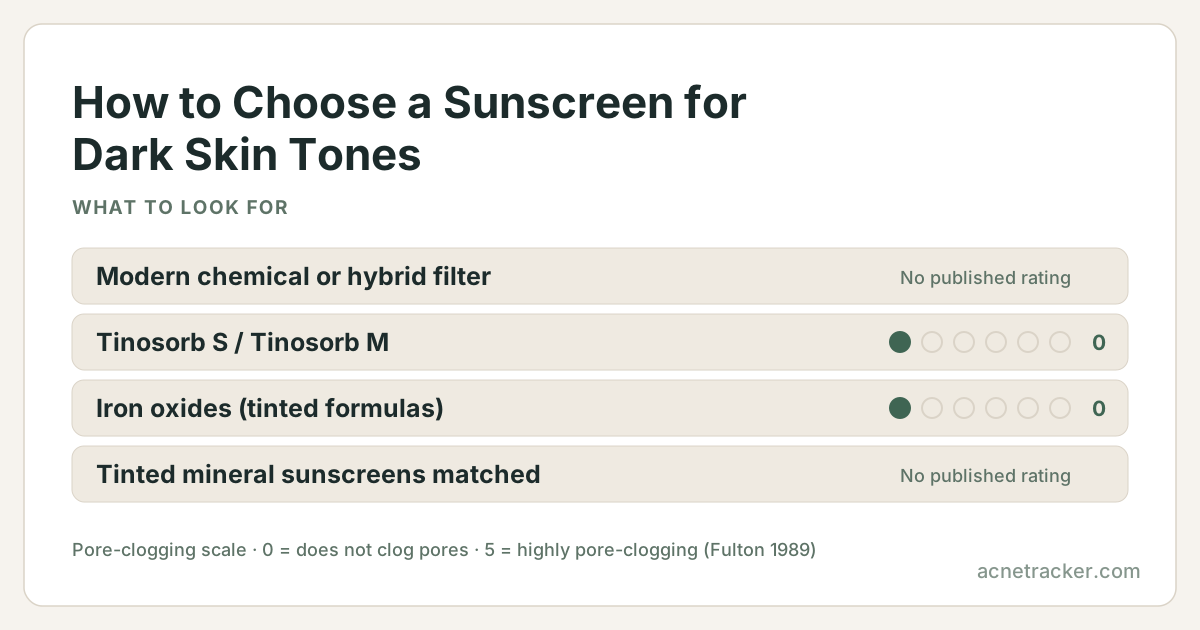
Ingredients to look for
| Ingredient | Why it matters |
|---|---|
| Modern chemical or hybrid filter systems | Chemical filters absorb into a clear film rather than leaving the white mineral residue that ghosts on deep skin tones. |
| Tinosorb S / Tinosorb M | Elegant broad-spectrum filters (EU and non-US markets) that formulate into sheer, cast-free bases suited to dark skin. |
| Iron oxides (tinted formulas) | Pigments that add warmth and colour, cancelling any grey cast while also shielding against visible light that drives pigmentation. |
| Tinted mineral sunscreens matched to deeper shades | Adding colour to zinc or titanium offsets their whiteness, letting mineral protection blend on dark skin. |
| Niacinamide | A supporting ingredient that helps fade the hyperpigmentation deeper skin is prone to, useful under daily SPF. |
Ingredients to avoid
| Ingredient | Why it matters |
|---|---|
| Untinted, high-percentage mineral (zinc oxide, titanium dioxide) formulas | The white mineral particles scatter light and leave a grey or ashy cast that is most visible on deep skin tones. |
| Thick, heavy mineral pastes | The more mineral filter and the thicker the base, the stronger the white cast and the harder it is to blend out. |
| 'Brightening' claims taken to mean lightening the skin | The goal is even tone and protection, not lightening; treat vague brightening marketing with scepticism. |
| Skipping SPF because 'darker skin doesn't burn' | Melanin reduces but does not remove UV risk; deep skin still suffers pigmentation, ageing and, less often, cancer. |
How to choose
Understand the white cast first: mineral filters (zinc oxide, titanium dioxide) are white powders that scatter light, so on deep skin they can leave a grey veil, especially at high percentages in thick bases. Two routes avoid it. First, modern chemical or hybrid filters — including Tinosorb and Uvinul filters available outside the US — absorb into a clear film and generally leave no cast. Second, tinted sunscreens use iron oxides to add colour that offsets whiteness and, as a bonus, blocks visible light that drives pigmentation on deeper skin. If you prefer mineral, choose a tinted version matched to a deeper shade. Whichever route you take, hold the line at SPF 30 broad-spectrum: melanin reduces UV risk but does not remove it, and the pigmentation deeper skin is prone to is UVA-driven. Swatch on the jaw in daylight if you can, since 'no white cast' claims vary, and judge how it looks after it fully dries down rather than on first application.
How to apply
Apply a full two fingers' length and give it a minute to dry down before judging any cast — many formulas look pale at first and settle as they set. With tinted sunscreens, blend along the jaw and hairline so there is no visible edge, and pick a shade that disappears rather than lightens. Reapply every two hours outdoors; a tinted stick or cushion matched to your tone makes touch-ups seamless without greying. If a formula still ghosts after drying, it is the wrong one — switch to a chemical or better-matched tint rather than living with the cast.
Frequently asked questions
Why does sunscreen leave a white cast on dark skin?
Mineral filters like zinc oxide and titanium dioxide are white powders that scatter light, leaving a grey veil most visible on deep skin tones. Chemical or tinted formulas avoid this by absorbing into a clear or colour-matched film.
Do dark skin tones really need sunscreen?
Yes. Melanin offers some protection but not enough. Deeper skin is especially prone to lasting hyperpigmentation from sun and inflammation, and still faces ageing and cancer risk, so daily broad-spectrum SPF matters.
Are tinted sunscreens better for dark skin?
Often, yes. The iron oxides that add colour cancel any grey cast and also block visible light, which drives pigmentation on deeper skin. A tint matched to your tone can look invisible where an untinted mineral formula ghosts.
Can I use a chemical sunscreen to avoid white cast?
Yes. Modern chemical and hybrid filters absorb into a clear film and generally leave no cast, making them a good cast-free option. In the EU and many markets, Tinosorb-based formulas are especially sheer.
Sources & further reading
There is no single study of this exact question. The guidance here is reasoned from the ingredient profiles below, each of which carries its own references:
- Tinosorb S2 refs
- Iron Oxides2 refs
- Niacinamide2 refs
Show every reference behind this page (4)
- European Commission CosIng — Bis-Ethylhexyloxyphenol Methoxyphenyl Triazinecited by Tinosorb S, Iron Oxides, Niacinamide
- SCCS opinions on organic UV filterscited by Tinosorb S
- Lyons AB et al. Photoprotection beyond ultraviolet radiation: A review of tinted sunscreens. J Am Acad Dermatol 2021 May (PubMed)cited by Iron Oxides
- Niacinamide: mechanisms of action and its topical use in dermatology (PubMed)cited by Niacinamide
Medical disclaimer
Ingredients mentioned on this page
Find your personal acne triggers
Our free Acne Tracker lets you log breakouts, sleep, stress and diet, and shows you which factors correlate with your flare-ups.