Tinosorb S: Comedogenic Rating & Ingredient Analysis
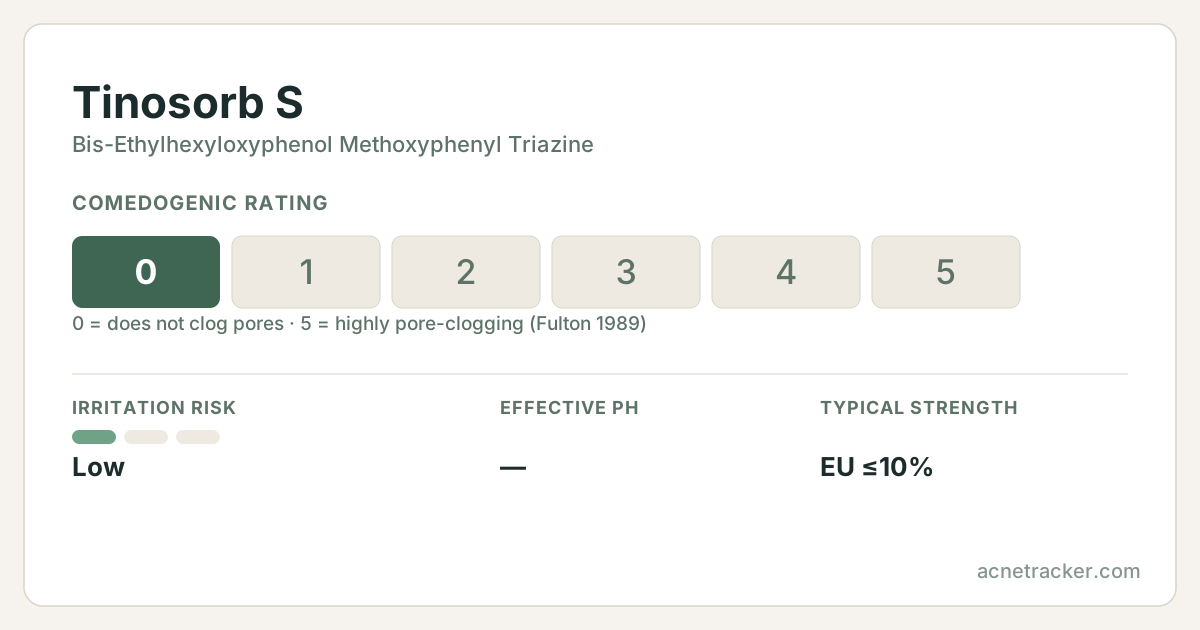
Tinosorb S, chemically bemotrizinol, is widely regarded as one of the best modern sunscreen filters available. It absorbs across both UVA and UVB, is exceptionally photostable, and can even stabilize other, more fragile filters like avobenzone. Dermatologists often point to it as a reason European and Asian sunscreens can feel more elegant while offering strong protection. The catch for American readers is regulatory: Tinosorb S is approved throughout the EU, UK, Australia and much of Asia, but is not yet approved by the US FDA, so it does not appear in sunscreens sold in the United States.
Quick facts
- Comedogenic rating
- our estimate — not measured
- Irritation risk
- Low
- Effective pH
- —
- Typical strength
- EU ≤10%
- Pregnancy
- Considered safe
- Suits skin types
- oilydrycombinationsensitivenormalacne-pronemature
Where this number comes from
No one has published a comedogenic rating for this ingredient. Fulton's 1989 table tested about 250 raw materials and this was not among them, and we found no later study measuring it. The figure shown is our own reasoning from the ingredient's chemistry and how it is used — treat it as an estimate, not a measurement.
Fulton read his own scale as 0-1 not significant, 2-3 borderline, 4-5 positive. The assay is the rabbit ear at 10% dilution, which the paper itself calls extremely sensitive and not fully predictive of human skin. Ratings describe the raw ingredient; concentration and formulation change real-world behaviour.
Caution profile
The four published fields on this page, on one 0–5 scale. Further from the centre means more care is needed — never that the ingredient is worse.
Derived, not measured: pore-clogging is the published comedogenic rating; irritation maps low/moderate/high to 1/3/5; pregnancy maps safe/caution/avoid to 0/3/5; skin-type limits is how many of the seven skin types this entry does NOT list. Every input is printed in words in the quick-facts card above.
Show the numbers
| Metric | 0–5 | Published field |
|---|---|---|
| Pore-clogging | 0 | 0/5 |
| Irritation | 1 | Low |
| Skin-type limits | 0 | 7/7 |
| Pregnancy | 0 | Considered safe |
Working pH and typical strength
Where this ingredient is formulated to sit, and at what concentration.
Both bars come from the fields above: the pH window and the typical strength range published for this ingredient. The tinted column is healthy skin's surface pH (about 4.7–5.75).
Show the numbers
| Metric | 0–5 |
|---|---|
| Typical strength | EU ≤10% |
What is it?
Tinosorb S is a triazine-based organic filter with two absorption peaks, one in the UVB range and one in UVA, giving genuinely broad-spectrum coverage from a single molecule. Unlike avobenzone, it barely degrades in sunlight, and it actively donates its stability to neighbouring filters, which is why formulators add it both for protection and to keep a whole formula photostable. It is oil-soluble and cosmetically light, with a very low irritation profile and negligible skin penetration because of its large molecular size. These properties have made it a cornerstone of high-performance European sun care, frequently paired with its sister filter Tinosorb M.
Benefits
True broad-spectrum in one molecule
Tinosorb S absorbs both UVA and UVB, so a single filter delivers balanced protection against burning and deep aging wavelengths.
Exceptional photostability
It hardly breaks down in sunlight and stabilizes fragile partners like avobenzone, keeping a formula's protection intact through long exposure.
Gentle and low-penetration
Its large molecule barely enters the skin and rarely irritates, making it a strong choice for sensitive and acne-prone skin in daily sunscreens.
Elegant to formulate
Oil-soluble and light, it builds cosmetically pleasant textures that layer well over vitamin-c and vitamin-e antioxidant serums.
How to use
You will find Tinosorb S in finished European, UK, Australian and Asian sunscreens; use them as your daily SPF, applied generously and reapplied every two hours in sun. Because it is broad-spectrum and photostable, formulas built around it tend to hold up well over a day and feel light on the skin. It pairs beautifully with antioxidants and with mineral filters like zinc-oxide for those wanting extra reassurance. If you shop in the US, you will not find it, so look for it when buying sunscreen abroad or online from EU retailers.
Side effects
Tinosorb S has an excellent tolerability record, with very low rates of irritation and contact allergy, partly because its large molecule penetrates the skin very little. It is not associated with the systemic-absorption concerns raised for oxybenzone. As with any sunscreen, it can sting if it gets into the eyes. There is no meaningful evidence of hormonal activity at cosmetic use levels, and EU safety reviews support its use within limits.
Who should avoid it
There is essentially no group that must avoid Tinosorb S; it is one of the gentlest filters and is considered fine in pregnancy. People in the United States simply cannot buy it domestically due to FDA approval status. Anyone with a specific allergy to it, which is rare, should switch to a mineral sunscreen with titanium-dioxide.
Pairs well with
Frequently asked questions
Why isn't Tinosorb S available in the US?
The FDA has not approved it. New sunscreen filters face a slow US approval pathway, so Tinosorb S, though widely used in Europe and Asia, is not sold in American sunscreens.
Is Tinosorb S better than avobenzone?
It offers broad-spectrum coverage and far better photostability than avobenzone, and can even stabilize avobenzone. Many consider it a superior modern filter where it is approved.
Is Tinosorb S safe for sensitive skin?
Yes. It has a very low irritation and allergy rate and barely penetrates the skin, making it a good option for sensitive and acne-prone skin.
Does Tinosorb S cover UVA and UVB?
Yes. It absorbs both UVA and UVB from a single molecule, which is why it is prized as a broad-spectrum filter, often paired with Tinosorb M.
Where this ingredient shows up here
Counted across this database, not the web — these are the pages on this site that reason about this ingredient.
Sources & further reading
Medical disclaimer
Find your personal acne triggers
Our free Acne Tracker lets you log breakouts, sleep, stress and diet, and shows you which factors correlate with your flare-ups.