How to Choose a Sunscreen for Mature Skin
Sunscreen is the most evidence-backed anti-ageing product there is: the great majority of visible skin ageing — lines, laxity, uneven tone, textural change — is driven by cumulative UV exposure, and UVA in particular. For mature skin, that makes daily broad-spectrum protection the highest-value step in any routine. The practical challenge is finding a formula that hydrates drier, thinner skin, gives strong UVA cover, and settles smoothly without emphasising fine lines. This guide describes the bases, filters and supporting ingredients that suit mature skin, so protection is comfortable, flattering and genuinely preventive.
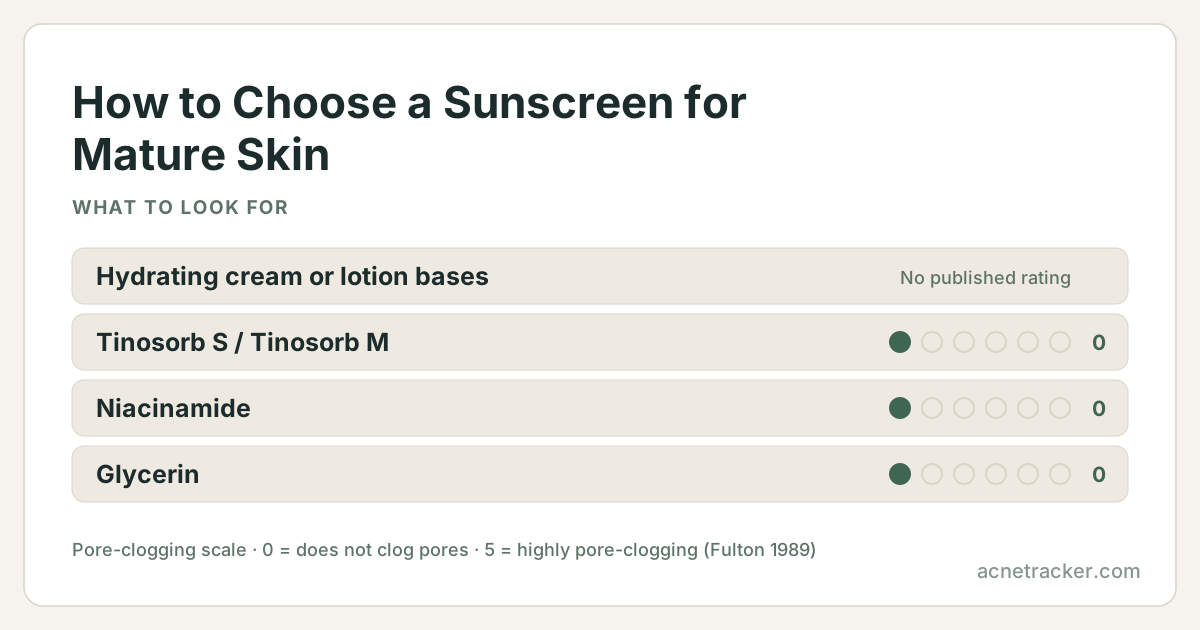
Ingredients to look for
| Ingredient | Why it matters |
|---|---|
| Hydrating cream or lotion bases | Mature skin is often drier and thinner, so an emollient base keeps it comfortable and helps SPF sit smoothly. |
| Tinosorb S / Tinosorb M | Strong, photostable UVA filters matter most for ageing, since UVA drives wrinkles, laxity and pigment over time. |
| Niacinamide | Supports the barrier, improves the look of uneven tone, and pairs well with daily sun protection on mature skin. |
| Glycerin | A humectant that plumps the surface so fine lines look softer and the sunscreen does not cling to creases. |
| Iron oxides (tinted) | A light tint evens out age-related discoloration and gives a flattering finish while adding visible-light protection. |
Ingredients to avoid
| Ingredient | Why it matters |
|---|---|
| Heavily mattifying, alcohol-drying fluids | They accentuate dryness and fine lines on mature skin, making the surface look more creased rather than smoother. |
| Formulas with weak UVA protection | Since UVA drives most photoageing, a high SPF with poor UVA cover misses the whole anti-ageing point. |
| Very thick, poorly spreading pastes | They settle into expression lines and around the eyes, emphasising texture instead of blurring it. |
| Fragrance-heavy formulas on thinning, reactive skin | Mature skin can be more easily irritated, and fragrance adds a needless trigger to a daily leave-on product. |
How to choose
Since photoageing is mostly UVA-driven, prioritise strong, photostable UVA protection — Tinosorb, Uvinul or well-stabilised avobenzone, or a good mineral formula — over chasing the highest possible SPF number. Choose a hydrating cream or lotion base, because mature skin is usually drier and a dewy finish looks smoother than a matte one that clings to lines. Look for humectants and barrier support like glycerin and niacinamide. A light tint with iron oxides flatters uneven tone and adds visible-light cover, useful if age spots are a concern. Avoid strongly mattifying, alcohol-heavy fluids that emphasise creases. Aim for at least SPF 30, broad-spectrum, worn daily and year-round. The most effective anti-ageing sunscreen is simply the one comfortable enough that you protect your skin every single day.
How to apply
Apply a full two fingers' length each morning after your moisturizer and any serums have absorbed, pressing gently around the eyes and expression lines so the formula does not settle into them. A dewy, hydrating sunscreen tends to look smoother on mature skin than a matte one. Reapply every two hours outdoors; a hydrating stick or cushion refreshes protection without disturbing makeup or drying the surface. Wear it every day of the year, including winter and indoors near windows, since UVA reaches skin through cloud and glass and drives ageing regardless of season.
Frequently asked questions
Is sunscreen really the best anti-ageing product?
Yes. The large majority of visible skin ageing comes from cumulative UV exposure, especially UVA. Daily broad-spectrum sunscreen prevents new damage and is the most evidence-backed anti-ageing step you can take.
Why does UVA matter most for mature skin?
UVA penetrates deep and drives wrinkles, laxity and pigment, and it reaches skin through cloud and glass year-round. Strong, photostable UVA protection matters more for ageing than a very high SPF number alone.
How do I stop sunscreen settling into fine lines?
Choose a hydrating rather than mattifying base, apply over well-absorbed moisturizer, and press gently around lines rather than rubbing. Thinner, dewy formulas settle into creases far less than thick, matte ones.
Should mature skin use a tinted sunscreen?
It is a good option. A light tint evens out age-related discoloration for a flattering finish, and the iron oxides add visible-light protection that helps with sun spots, all while providing daily UV cover.
Sources & further reading
There is no single study of this exact question. The guidance here is reasoned from the ingredient profiles below, each of which carries its own references:
- Tinosorb S2 refs
- Niacinamide2 refs
- Glycerin3 refs
- Iron Oxides2 refs
Show every reference behind this page (6)
- European Commission CosIng — Bis-Ethylhexyloxyphenol Methoxyphenyl Triazinecited by Tinosorb S, Niacinamide, Glycerin, Iron Oxides
- SCCS opinions on organic UV filterscited by Tinosorb S
- Niacinamide: mechanisms of action and its topical use in dermatology (PubMed)cited by Niacinamide
- PubChem — Glycerol compound summarycited by Glycerin
- DermNet — Moisturiserscited by Glycerin
- Lyons AB et al. Photoprotection beyond ultraviolet radiation: A review of tinted sunscreens. J Am Acad Dermatol 2021 May (PubMed)cited by Iron Oxides
Medical disclaimer
Ingredients mentioned on this page
Find your personal acne triggers
Our free Acne Tracker lets you log breakouts, sleep, stress and diet, and shows you which factors correlate with your flare-ups.