Iron Oxides: Comedogenic Rating & Ingredient Analysis
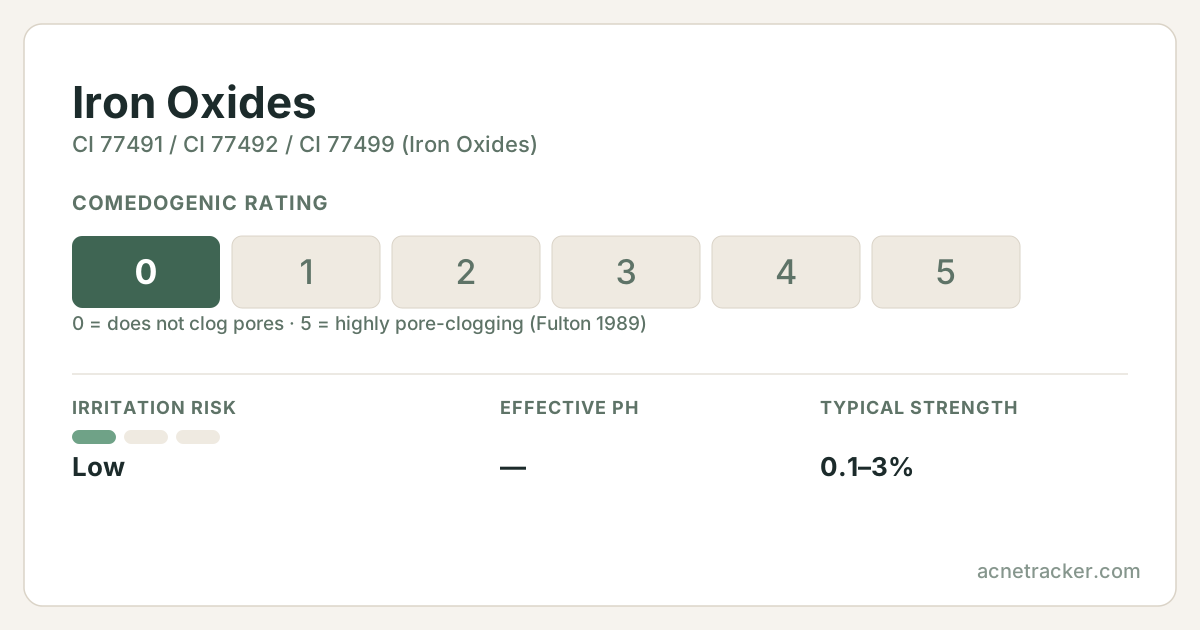
Iron oxides are the workhorse mineral pigments of the cosmetics world, giving foundations, concealers and tinted sunscreens their range of yellows, reds, browns and blacks. Beyond colour, they have become a genuine skincare talking point because they help protect against visible light, including the high-energy blue light from the sun and screens. Visible light is not blocked by ordinary sunscreens, yet research shows it can worsen melasma and post-inflammatory pigmentation in deeper skin tones. Tinted sunscreens that combine iron oxides with mineral filters like zinc-oxide are now recommended by dermatologists specifically for pigmentation-prone skin.
Quick facts
- Comedogenic rating
- measured (Fulton 1989)
- Irritation risk
- Low
- Effective pH
- —
- Typical strength
- 0.1–3%
- Pregnancy
- Considered safe
- Suits skin types
- oilydrycombinationsensitivenormalacne-pronemature
Where this number comes from
Read directly from Table I of Fulton's 1989 paper — the primary source, not one of the copied tables that circulate online.
Fulton read his own scale as 0-1 not significant, 2-3 borderline, 4-5 positive. The assay is the rabbit ear at 10% dilution, which the paper itself calls extremely sensitive and not fully predictive of human skin. Ratings describe the raw ingredient; concentration and formulation change real-world behaviour.
Caution profile
The four published fields on this page, on one 0–5 scale. Further from the centre means more care is needed — never that the ingredient is worse.
Derived, not measured: pore-clogging is the published comedogenic rating; irritation maps low/moderate/high to 1/3/5; pregnancy maps safe/caution/avoid to 0/3/5; skin-type limits is how many of the seven skin types this entry does NOT list. Every input is printed in words in the quick-facts card above.
Show the numbers
| Metric | 0–5 | Published field |
|---|---|---|
| Pore-clogging | 0 | 0/5 |
| Irritation | 1 | Low |
| Skin-type limits | 0 | 7/7 |
| Pregnancy | 0 | Considered safe |
Working pH and typical strength
Where this ingredient is formulated to sit, and at what concentration.
Both bars come from the fields above: the pH window and the typical strength range published for this ingredient. The tinted column is healthy skin's surface pH (about 4.7–5.75).
Show the numbers
| Metric | 0–5 |
|---|---|
| Typical strength | 0.1–3% |
What is it?
Iron oxides are inorganic compounds of iron and oxygen, listed by colour index numbers: CI 77491 (red), CI 77492 (yellow) and CI 77499 (black), blended to create skin-tone shades. They are inert, non-reactive and among the most stable, well-tolerated colorants available, which is why they dominate mineral makeup. Their skincare value comes from absorbing and scattering visible light: when combined with the UV protection of mineral filters, the tint adds a layer of defence against wavelengths that ordinary sunscreen ignores. This is the reason a tinted mineral sunscreen can outperform an invisible one for people managing melasma, even at the same SPF.
Benefits
Shields against visible light
Iron oxides absorb and scatter visible and blue light, which regular sunscreens miss but which can darken melasma and post-acne marks in deeper skin tones.
Provides natural-looking tint
Blended reds, yellows and blacks match a wide range of skin tones, letting tinted sunscreens and foundations even out colour without a heavy mask.
Very stable and gentle
They are inert, non-comedogenic and among the least irritating colorants, suiting sensitive and acne-prone skin in daily wear.
Boosts mineral sunscreen
Paired with zinc-oxide or titanium-dioxide and brighteners like niacinamide, they turn a mineral SPF into fuller-spectrum protection for pigmentation-prone skin.
How to use
You will find iron oxides in tinted sunscreens, foundations, BB creams and mineral makeup. For pigmentation concerns, choose a tinted mineral sunscreen listing iron oxides alongside zinc-oxide or titanium-dioxide, and apply it as your daily SPF, reapplying in strong sun. The tint should roughly match your skin so it blends invisibly. Layer it over treatment serums with niacinamide or vitamin-c, which target pigment from a different angle. Because iron oxides are pigments, a little goes a long way and heavy layering is unnecessary.
Side effects
Iron oxides are among the safest and best-tolerated cosmetic ingredients, with a very low rate of irritation or allergy and a comedogenic rating of essentially zero. They are inert and do not react with skin. The only practical downsides are cosmetic: choosing a shade that does not match can leave a slight cast, and pigmented products can transfer onto clothing. There are no meaningful systemic concerns.
Who should avoid it
Almost no one needs to avoid iron oxides; they are considered safe in pregnancy and suitable for sensitive and acne-prone skin. People who cannot find a matching shade may prefer an untinted mineral sunscreen, though they will lose the visible-light benefit. Genuine allergy to iron oxides is very rare.
Pairs well with
Frequently asked questions
Do iron oxides protect against blue light?
Yes. Iron oxides absorb and scatter visible and blue light, which ordinary sunscreens do not block, helping reduce pigmentation triggered by these wavelengths.
Why are tinted sunscreens better for melasma?
Tinted sunscreens contain iron oxides that shield against visible light, a known trigger for melasma, giving fuller protection than clear sunscreens at the same SPF.
Are iron oxides comedogenic?
No. Iron oxides are inert mineral pigments with a comedogenic rating around zero, so they are suitable for acne-prone skin.
Are iron oxides safe in pregnancy?
Yes. They are inert, non-absorbed mineral pigments considered safe during pregnancy and breastfeeding, and common in tinted mineral sunscreens.
Where this ingredient shows up here
Counted across this database, not the web — these are the pages on this site that reason about this ingredient.
Sources & further reading
Medical disclaimer
Find your personal acne triggers
Our free Acne Tracker lets you log breakouts, sleep, stress and diet, and shows you which factors correlate with your flare-ups.